Wide Temperature Lithium Battery Applications in Urban Delivery and Cold Chain Logistics
With the rapid growth of urban distribution and cold chain logistics, New Energy Logistics Vehicles (NELVs) face significant operational challenges during winter low-temperature conditions, including reduced driving range, increased energy consumption, and lower operational efficiency.
In extreme environments ranging from -10°C to -30°C, conventional lithium batteries experience noticeable performance degradation, directly impacting real-world vehicle operation. As a result, wide temperature lithium batteries have become a critical solution for winter logistics applications.

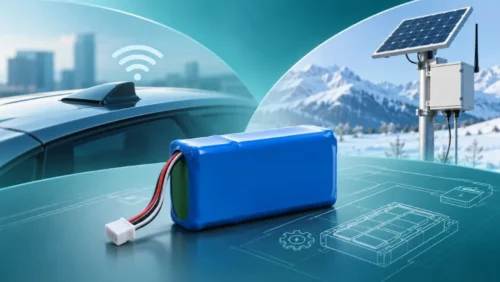
Ultraxel wide-temperature battery
1. Key Winter Challenges for New Energy Logistics Vehicles
1️⃣ Significant Range Reduction
Low temperatures reduce electrolyte activity and slow down lithium-ion migration, leading to:
- Increased internal resistance
- Decreased discharge capability
- Reduced usable capacity
In winter conditions, actual driving range may decrease by 20%–40% compared to normal temperatures.
2️⃣ Increased Overall Energy Consumption
During winter operation, additional energy is required for:
- Cabin heating systems
- Battery heating systems
- Thermal management systems
This increases charging frequency and reduces fleet turnover efficiency.
3️⃣ BMS Low-Temperature Protection Limits Output
To protect battery lifespan, the Battery Management System (BMS) may:
- Limit discharge power
- Restrict charging current
- Reduce available capacity
This further shortens effective vehicle range in low-temperature environments.
2. UltraXel Wide Temperature Lithium Battery Solution
UltraXel has developed an advanced wide temperature battery system through material optimization, thermal management integration, and intelligent BMS coordination.
The system is engineered specifically for low-temperature logistics applications and delivers stable performance in harsh winter environments.
Ultraxel automotive applications
Core Technologies Include:
- Low-temperature optimized battery cells
- Liquid cooling thermal management system
- Battery preheating strategy
- Intelligent BMS control algorithms
- System-level energy coordination
3. Urban Delivery Application Case
Application Scenario
- Winter ambient temperature: -5°C to -10°C
- Daily delivery route: 120–150 km
- High-frequency short-distance operations
Performance Results
- Driving range improved by approximately 25%
- Reduced mid-route charging frequency
- Battery operating temperature maintained within 15°C–35°C optimal range
Operational Benefits
- Improved on-time delivery rate
- Increased fleet turnover efficiency
- More stable winter operation
4. Cold Chain Logistics Application Case
Application Scenario
- Transport temperature: -10°C to -20°C
- Fresh food transportation
- Frozen goods distribution
Performance Results
- Stable discharge performance in low temperatures
- Winter range loss controlled at approximately 20%
- More consistent energy output
Operational Benefits
- Improved cold chain continuity
- Reduced intermediate stops
- Lower risk caused by insufficient range
5. Long-Distance Logistics Application Case
Application Scenario
- Winter routes exceeding 300 km
- Operation in low-temperature regions
Performance Results
- Combined battery preheating strategy
- Intelligent BMS dynamic control
- Reduced battery degradation in low-temperature operation
Operational Benefits
- Shorter charging waiting time
- Improved long-haul reliability
- Lower overall operating costs
6. Performance Comparison Data
| Temperature | Conventional Battery Range Loss | UltraXel Wide Temperature Battery Range Loss |
| -10°C | ~30% | ~15% |
| -20°C | ~40% | ~20% |
| -30°C | ~50% | ~25% |
The data shows that, by integrating wide temperature battery technology with vehicle thermal management and intelligent BMS control, winter range loss can be reduced by approximately 50%.
This ensures stable vehicle operation in low-temperature logistics environments.
7. Comprehensive Winter Range Optimization Strategies
1️⃣ Integrated Vehicle Thermal Management
Battery systems, drive systems, and cabin heating operate collaboratively to improve overall energy efficiency.
2️⃣ Intelligent Preheating & Charging Strategy
Based on:
- Route planning
- Weather conditions
- Operational schedules
Battery preheating can be initiated in advance to reduce low-temperature energy loss.
3️⃣ Lightweight & Aerodynamic Optimization
- Reduce vehicle weight
- Optimize aerodynamic design
- Improve energy utilization efficiency
4️⃣ Low Rolling Resistance Tires & Energy Recovery
- Regenerative braking system
- Low rolling resistance tires
- Enhanced overall driving range
8. Value of Wide Temperature Batteries in Logistics
In urban delivery, cold chain logistics, and long-distance transportation, wide temperature lithium batteries can:
- Improve winter range stability
- Reduce operational risk
- Increase vehicle availability
- Decrease charging frequency
- Lower overall operating costs
As the new energy logistics industry continues to expand, wide temperature battery technology is becoming a foundational solution for reliable winter operation.
9. Frequently Asked Questions (FAQ)
Q1: What is the minimum operating temperature of a wide temperature lithium battery?
A: Our wide temperature lithium batteries can operate stably at temperatures as low as -40°C, and the specific minimum operating temperature may vary depending on the actual product model and system design.
Q2: What is the difference between wide temperature batteries and conventional batteries?
Wide temperature batteries feature optimized low-temperature electrolytes, advanced thermal management systems, and intelligent BMS control strategies to significantly reduce winter range degradation.
Q3: Is winter range reduction normal?
Yes. Low temperatures naturally affect lithium-ion mobility. However, wide temperature technology can greatly minimize performance loss.
Q4: Is an additional heating system required?
It is recommended to integrate the battery system with vehicle thermal management and intelligent preheating strategies for optimal performance.
10. Conclusion
UltraXel wide temperature lithium batteries provide a system-level engineering solution for low-temperature logistics applications.
In urban delivery, cold chain logistics, and long-distance transportation scenarios, the technology helps:
- Improve winter driving range
- Enhance operational efficiency
- Reduce overall costs
- Increase transportation reliability
As the new energy logistics industry continues to evolve, wide temperature battery technology is becoming a key enabler for stable and efficient winter operations.
UltraXel Wide Temperature Lithium Battery