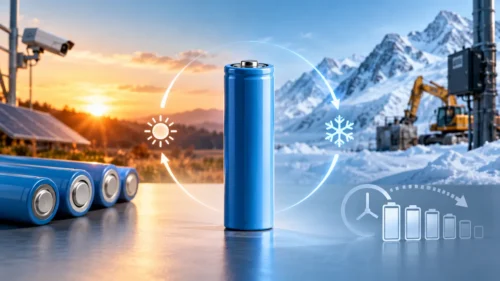
LFP (Lithium Iron Phosphate) batteries are a type of rechargeable lithium-ion battery known for their long cycle life, thermal stability, and cost efficiency.
They are widely used in electric vehicles, energy storage systems, and industrial equipment.
This article covers their key characteristics, advantages, limitations, and applications, with a focus on extreme-temperature performance and industrial battery selection.
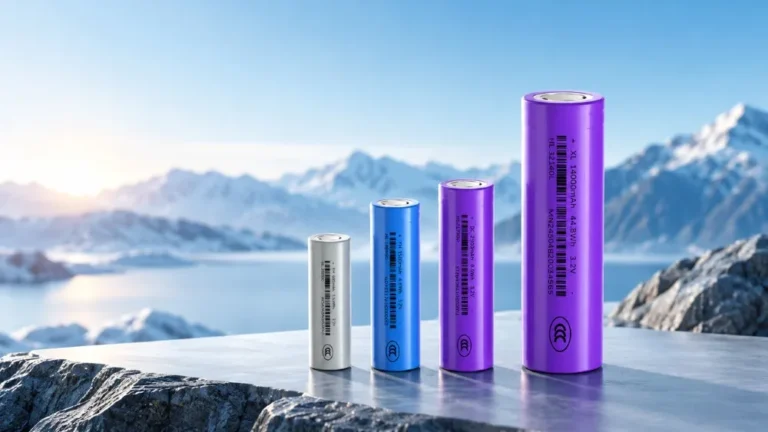
What Is an LFP Battery?
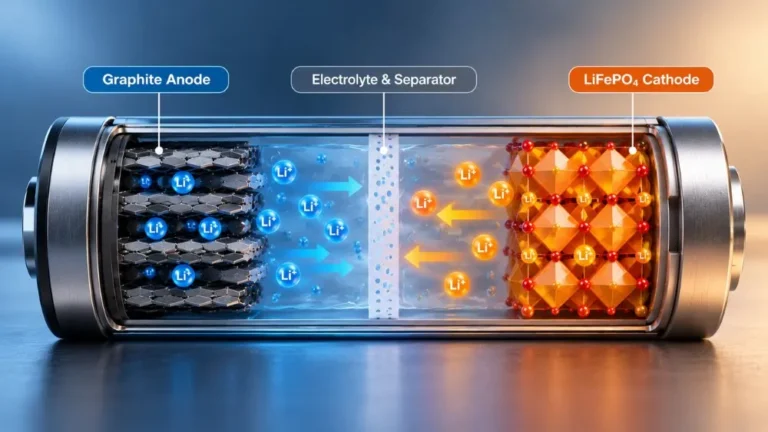
LFP and LiFePO4 refer to the same battery chemistry, which uses lithium iron phosphate as the cathode material and typically graphite as the anode. Unlike NMC batteries (another common type of Li-ion battery) that contain nickel, manganese, and cobalt in their cathodes, LFP batteries use iron and phosphate.
During charging, lithium ions move from the cathode to the anode through the electrolyte. During discharging, they move back to the cathode, generating an electric current through the external circuit.
Key Characteristics of LFP Batteries
| Specification | Typical LFP Battery Characteristics |
| Nominal voltage | 3.2V per cell |
| Maximum charging voltage | Approx. 3.65V per cell |
| Cycle life | 2,000–5,000+ cycles |
| Energy density | Lower than NMC batteries |
| Thermal stability | Higher than NMC batteries |
| Charging temperature | 0°C to 45–55°C (standard cells) |
| Discharging temperature | -20°C to 60°C (standard cells) |
Note: Values are typical for standard LFP cells and vary by manufacturer, cell design, and operating conditions.
What Are the Pros and Cons of LFP Batteries?
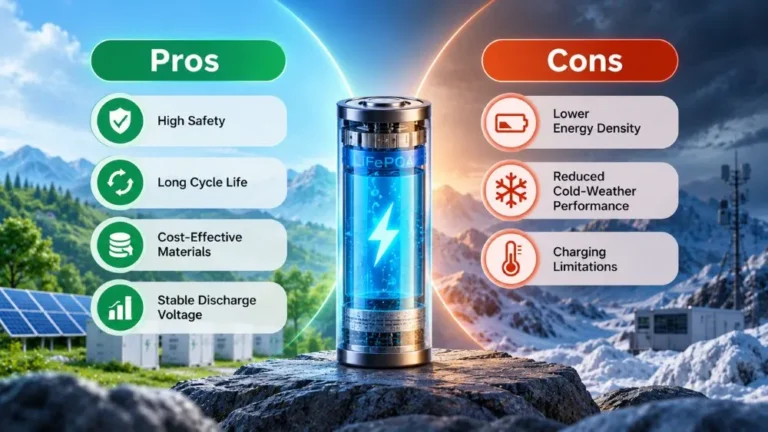
LFP batteries offer excellent thermal stability, long cycle life, and cost-effective materials. However, their lower energy density and cold-weather limitations make them less suitable for certain applications.
| Feature | Description | |
| Pros | High Safety | Better thermal stability and lower thermal runaway risk than many nickel-rich lithium-ion batteries. |
| Long Cycle Life | Typically 1,000–3,000+ cycles | |
| Cost-Effective Materials | Uses abundant iron and phosphate instead of nickel and cobalt. | |
| Stable Discharge Voltage | Maintains a relatively flat voltage profile throughout much of the discharge cycle. | |
| Cons | Lower Energy Density | Generally requires more space or weight than NMC batteries for the same stored energy. |
| Reduced Cold-Weather Performance | Available capacity and discharge power decrease at low temperatures. | |
| Charging Limitations | Standard LFP cells generally restrict charging below 0°C (32°F) to reduce lithium plating risks. |
LFP vs NMC vs Lead-Acid Batteries
LFP, NMC, and lead-acid batteries have different characteristics that make them suitable for different applications.
The following table summarizes their key differences.
| Feature | LFP Battery | NMC Battery | Lead-Acid Battery |
| Battery chemistry | Lithium Iron Phosphate | Nickel Manganese Cobalt | Lead and lead dioxide |
| Nominal cell voltage | 3.2V | 3.6–3.7V | 2.0V |
| Charging Voltage | ~3.65V/cell | ~4.2V/cell | ~2.4–2.45V/cell |
| Energy density | 90–160 Wh/kg | 150–250 Wh/kg | 30–50 Wh/kg |
| Cycle life | 1,000–3,000+ cycles | 1,000–2,000 cycles | 300–1,000 cycles |
| Thermal stability | Higher than NMC | Lower than LFP | Different safety characteristics |
| Common applications | ESS, EVs, industrial equipment | EVs, portable electronics | Automotive starting, backup power |
LFP vs NMC: NMC batteries generally offer higher energy density, making them attractive for applications where space and weight are critical. LFP batteries are often preferred when long cycle life, thermal stability, and material cost are priorities.
LFP vs Lead-Acid: LFP batteries typically offer longer cycle life, lower weight, and higher usable energy for many deep-cycle applications. Lead-acid batteries may still be attractive where initial purchase cost is the primary consideration.
Where Are LFP Batteries Used?
LFP batteries are used in a wide range of applications because of their safety characteristics, long cycle life, and relatively stable performance.
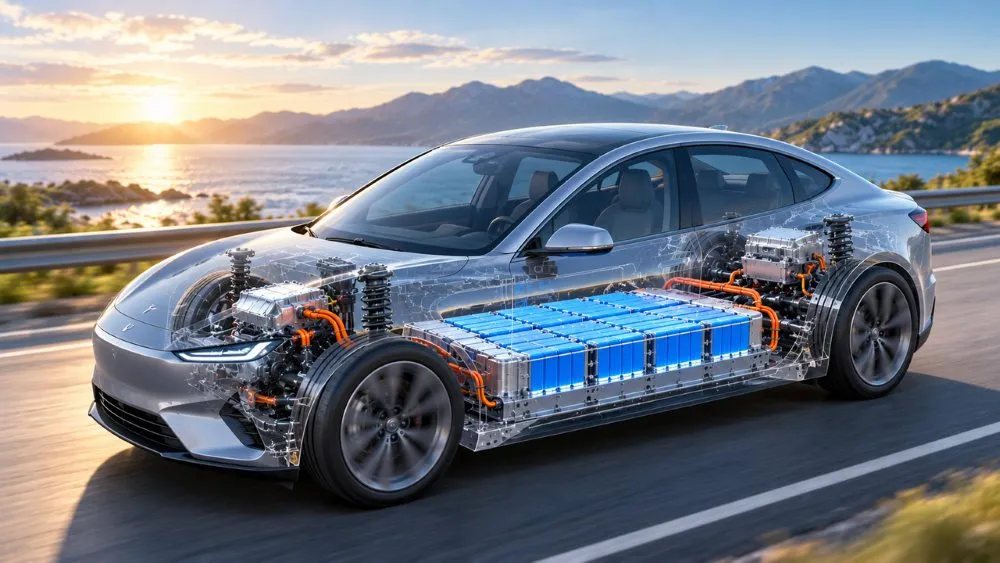
Battery for Electric Vehicles
LFP batteries are widely used in electric vehicles, particularly standard-range passenger cars, electric buses, and commercial vehicles.
Their long cycle life and relatively low material cost are suitable for vehicles where need durability and affordability.
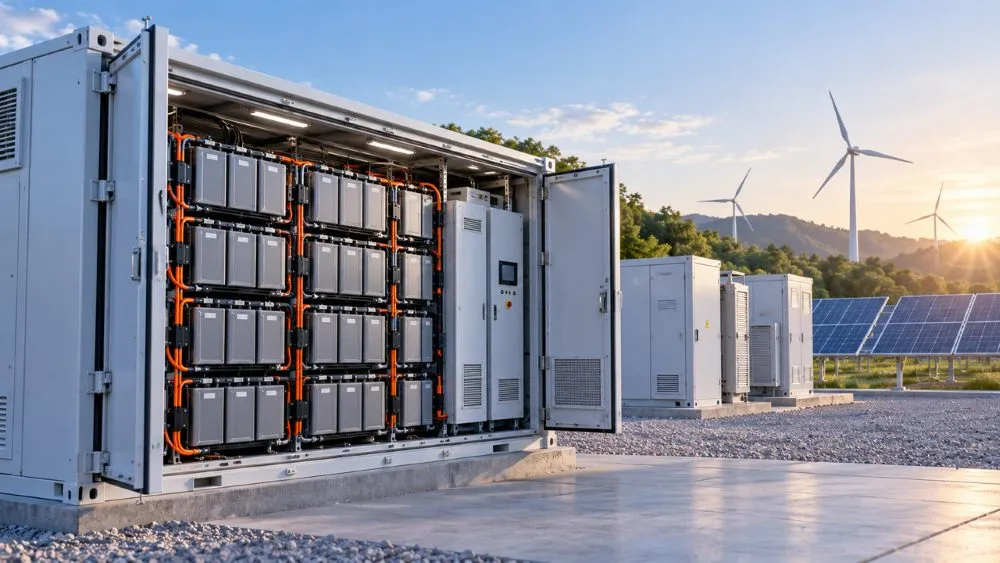
Battery for Energy Storage Systems
LFP is a popular chemistry for residential, commercial, and utility-scale energy storage systems.
Common applications include solar energy storage, renewable energy integration, and stationary backup power.
Because these systems often require frequent charging and discharging over many years, LFP’s cycle-life characteristics can be especially valuable.
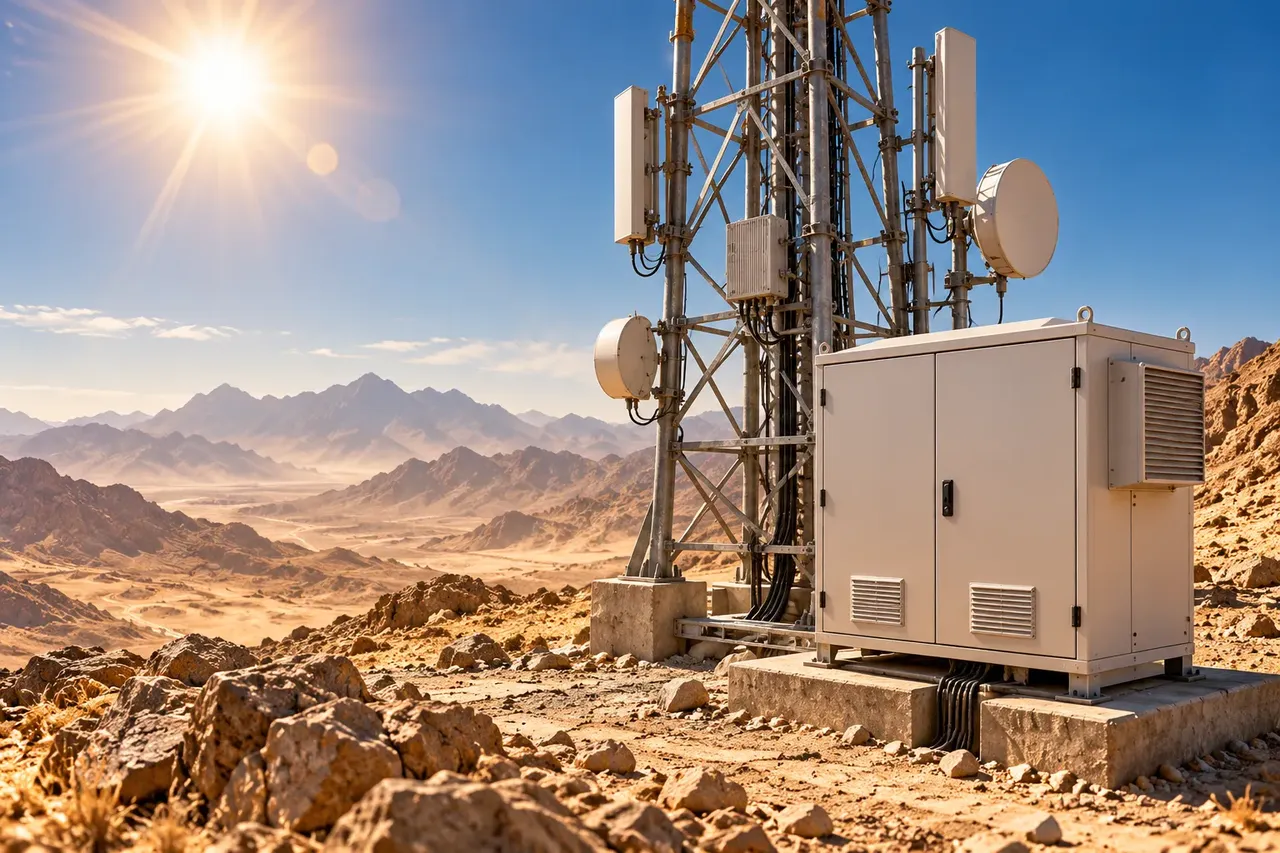
Battery for Backup Power Systems
LFP batteries are widely used in backup power applications, including telecom cabinets, uninterruptible power supplies (UPS), industrial control cabinets, emergency lighting, and security systems.
These applications require reliable power during outages to maintain critical operations. With their long cycle life, low maintenance requirements, and stable discharge characteristics, LFP batteries provide a dependable solution.

Battery for Industrial Equipment and Outdoor Devices
LFP batteries can also power industrial electronic equipment, including:
- Industrial IoT devices
- Remote monitoring systems
- Data loggers and sensors
- Outdoor communication equipment
- Automotive electronic equipment
Can LFP Batteries Work in Extreme Temperatures?
Yes, LFP batteries can operate in extreme temperatures, but their charging and discharging capabilities depend on cell design and operating conditions.
Standard LFP cells typically support discharge down to -20°C, while charging below 0°C is generally restricted. Specialized wide-temperature LFP cells can extend these operating limits for demanding environments.
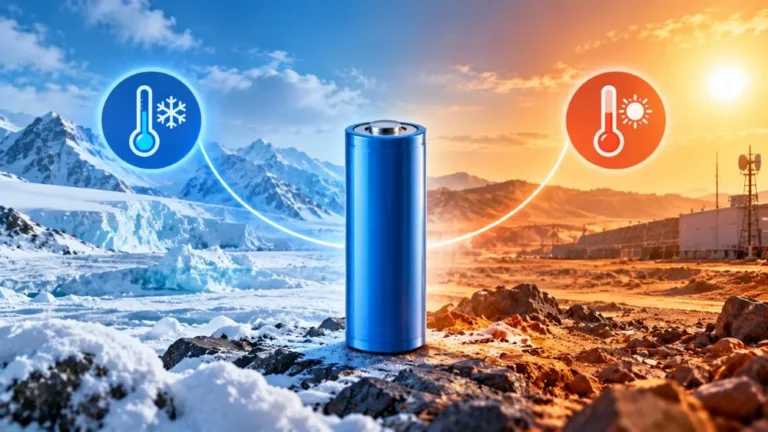
How Does Temperature Affect LFP Battery Performance?
Low temperatures affect charging and discharging differently:
- Discharging: As temperature decreases, internal resistance increases, reducing available capacity, discharge power, and voltage under load.
- Charging: Below 0°C, slower electrochemical reactions increase the risk of lithium plating, which can cause capacity loss and safety concerns.
High temperatures can also accelerate battery degradation, reducing cycle life even when the cell remains within its specified operating range.
Wide-temperature LFP cells use specialized designs to improve performance under these conditions.
| Performance Factor | Standard LFP Battery | Wide-Temperature LFP Battery |
| Discharge Temperature | -20°C to +60°C | -40°C to +85°C |
| Charging Temperature | 0°C to +45–55°C | -20°C to +60°C |
| Low-Temperature Capacity | Decreases as temperature falls | Optimized for improved capacity retention |
| High-Temperature Performance | Accelerated aging at elevated temperatures | Designed for a wider operating range |
| Typical Applications | EVs, indoor ESS, general equipment | Outdoor monitoring, industrial IoT, harsh-environment equipment |
Note: Wide-temperature values represent capabilities available in UltraXel’s cells.
When Should You Choose a Wide-Temperature LFP Battery?
For industrial equipment operating in extreme environments, the minimum discharge temperature alone is not enough to determine battery suitability.
Wide-temperature LFP batteries are particularly relevant for outdoor monitoring systems, remote sensors, industrial IoT devices, and equipment exposed to extreme seasonal temperatures.
For these applications, selecting a cell with validated temperature performance can help reduce the risk of unexpected shutdowns and support reliable operation in demanding environments.
UltraXel Wide-Temperature LFP Battery Solutions
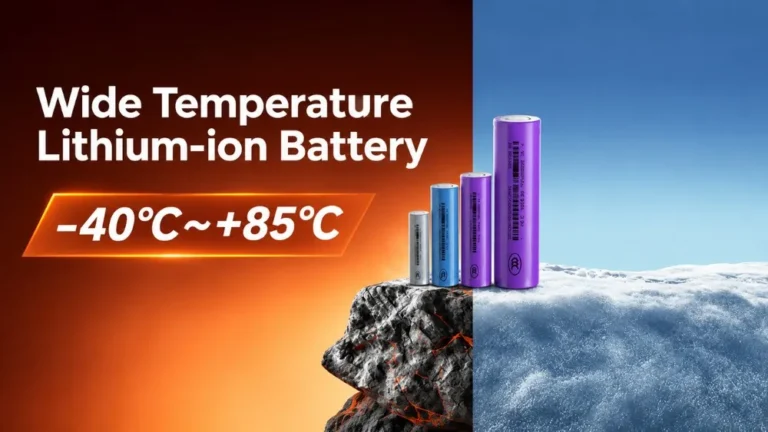
For industrial equipment operating in extreme temperatures, battery selection requires more than standard voltage and capacity specifications.
UltraXel offers wide-temperature LiFePO4 battery cells for reliable operation in demanding environments, with discharge temperature ratings as low as -40°C.
| Battery Model | Key Specs | Target Applications | Project Challenges Addressed |
| HL14500S | 3.2V / 500mAh / -40°C to +85°C | Remote sensors, compact data loggers, portable industrial devices | Limited installation space; low-temperature operation in compact equipment |
| HL18650G | 3.2V / 1600mAh / -40°C to +85°C | Outdoor monitoring systems, industrial IoT gateways, backup electronics | Balancing battery capacity and size; maintaining power availability in harsh environments |
| HL21700D | 3.2V / 2500mAh / -40°C to +85°C | High-power industrial tools, motor-driven equipment | High discharge capability for power-demanding devices operating across a wide temperature range. |
| HL32140L | 3.2V / 15000mAh / -40°C to +85°C | Remote monitoring stations, industrial backup systems, solar street lights | Higher energy requirements; reducing the number of cells needed to achieve target capacity |
Beyond individual cells, UltraXel also supports customized wide temperature battery pack solutions, including cell selection, battery pack configuration, and PCM/BMS integration.
Battery solutions can be evaluated based on voltage, capacity, discharge requirements, operating temperature, and installation constraints.
Explore UltraXel’s wide-temp LFP battery cells or contact our team to discuss your project requirements.
FAQ
Are LFP and LiFePO4 Batteries the Same?
Yes. LFP stands for lithium iron phosphate, while LiFePO4 is the chemical formula for the cathode material. Both terms refer to the same lithium-ion battery chemistry.
Are LFP Batteries Lithium-Ion Batteries?
Yes. LFP batteries are a type of lithium-ion battery. The main difference between LFP and other lithium-ion chemistries, such as NMC, is the cathode material.
LFP batteries use lithium iron phosphate, while NMC batteries use lithium nickel manganese cobalt oxides.
How Long Do LFP Batteries Last?
Many LFP batteries are rated for approximately 2,000–5,000 or more charge-discharge cycles under specified conditions.
However, actual lifespan depends on depth of discharge, temperature, charging rate, and operating conditions.
Can LFP Batteries Be Charged to 100%?
Yes. LFP batteries can be charged to 100% state of charge when using the manufacturer’s specified charging voltage and an appropriate charging system.
This does not mean that keeping an LFP battery at 100% charge continuously is always best for longevity.
Do LFP Batteries Need a BMS?
LFP battery packs generally require appropriate battery management and protection. For multi-cell battery packs, a BMS may also provide cell balancing.