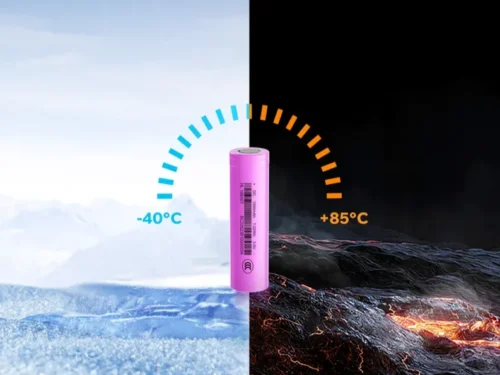
LFP and NMC are two widely used lithium-ion battery chemistries. LFP batteries generally offer longer cycle life and greater thermal stability, while NMC batteries typically provide higher energy density, making them attractive for applications where size and weight are limited.
When batteries must operate in extreme temperatures, choosing between LFP and NMC becomes more complicated.
For outdoor electronics and industrial equipment, the cathode chemistry alone does not determine battery performance. Cell design, operating temperature, discharge current, and charging conditions can be equally important.
This guide compares LFP and NMC batteries, explains their performance under extreme temperatures, and helps engineers and equipment manufacturers select suitable battery solutions.
What Are LFP and NMC Batteries?
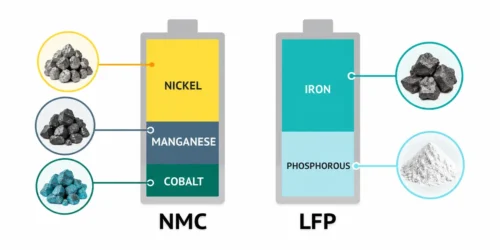
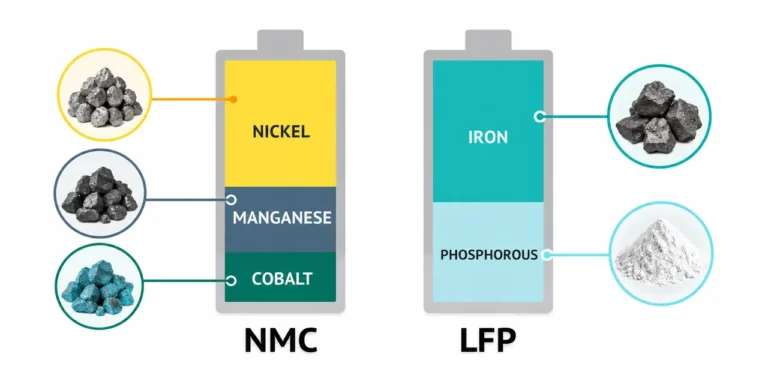
LFP and NMC are both lithium-ion battery chemistries. Their main distinction lies in the materials in the positive electrode (cathode).
What Is an LFP Battery?
LFP stands for Lithium Iron Phosphate (LiFePO₄). It uses lithium iron phosphate as the cathode material and typically has a nominal cell voltage of approximately 3.2V.
LFP batteries are known for their relatively strong thermal stability, long cycle life, and the absence of nickel and cobalt in their cathode chemistry.
These characteristics make LFP attractive for applications that prioritize long-term reliability, frequent cycling, and safety over maximum energy storage in a limited space.
However, LFP generally has lower energy density than NMC, meaning a larger or heavier battery may be required to store the same amount of energy.
What Is an NMC Battery?
NMC stands for Lithium Nickel Manganese Cobalt Oxide, a family of cathode materials containing nickel, manganese, and cobalt in varying proportions.
NMC battery cells typically have a nominal voltage of approximately 3.6–3.7V.
One of NMC’s main advantages is its higher energy density, allowing more energy to be stored within a given battery volume or weight.
They are attractive for portable electronics, compact industrial devices, and applications requiring longer runtime without increasing battery size.
However, NMC cells generally require careful thermal management and appropriate protection to maintain safe operation and long-term performance.
LFP vs NMC Battery: Key Differences at a Glance
The following table summarizes the main differences between conventional LFP and NMC lithium-ion batteries.
| Comparison | LFP Battery | NMC Battery |
| Cathode material | Lithium iron phosphate (LiFePO₄) | Lithium nickel manganese cobalt oxide (LiNiₓMnᵧCoᵤO₂) |
| Nominal cell voltage | Typically 3.2–3.3V | Typically 3.6–3.7V |
| Gravimetric energy density | Approx. 90–180 Wh/kg | Approx. 150–260 Wh/kg |
| Volumetric energy density | Approx. 220–450 Wh/L | Approx. 350–700 Wh/L |
| Cycle life (to 80% capacity) | Approx. 2,000–5,000+ cycles | Approx. 1,000–2,000 cycles |
| Thermal stability | Higher cathode thermal stability | Lower cathode thermal stability |
| Safety | Lower relative thermal runaway susceptibility | Higher relative thermal runaway susceptibility |
| Material cost | Lower | Higher |
| Typical standard-cell discharge range | Around -20°C to +60°C | Around -20°C to +60°C |
| Common applications | Industrial equipment, energy storage, long-life systems | Portable electronics, compact industrial devices, high-energy systems |
LFP vs NMC: Performance, Safety, Lifespan and Cost
Energy Density and Battery Size
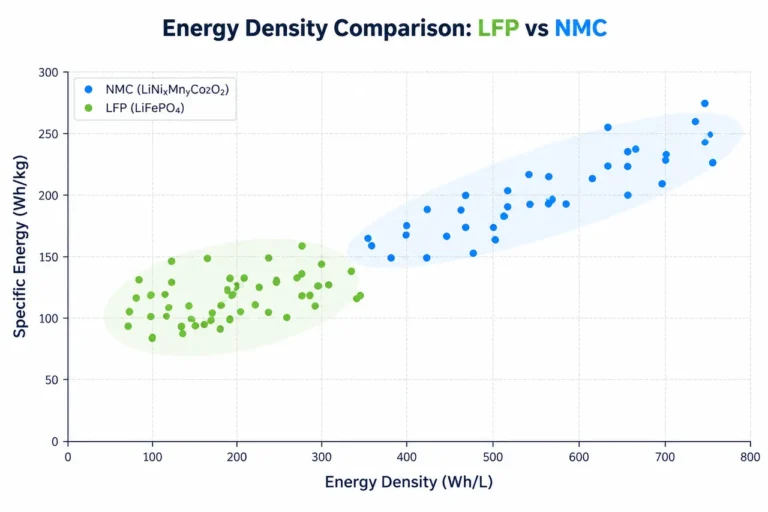
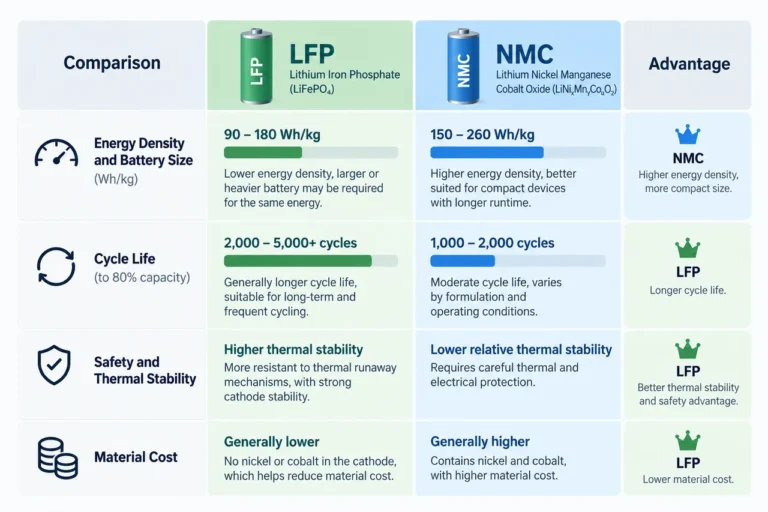
NMC wins in energy density, making it a better choice when battery space is limited. Typical NMC cells offer approximately 150–260 Wh/kg, compared with 90–180 Wh/kg for LFP cells.
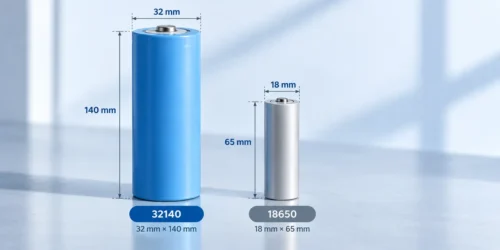
For example, two UltraXel 18650 batteries have the same cylindrical form factor but different nominal energy capacities:
| Battery Model | Chemistry | Nominal Energy |
| HL18650G | LFP | 5.12 Wh (3.2V, 1600mAh) |
| HL18650Y | NMC | 11.52 Wh (3.6V, 3200mAh) |
Takeaway: NMC is often preferable for compact devices requiring longer runtime, while LFP is worth considering when energy density is less important than durability.
Cycle Life and Long-Term Durability
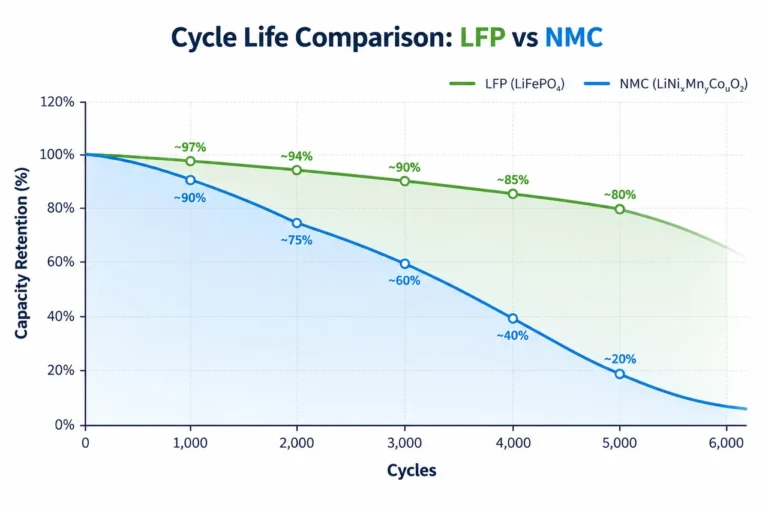
LFP generally lasts longer under repeated charge-discharge cycling. Typical LFP cells may deliver approximately 2,000–5,000+ cycles, compared with around 1,000–2,000 cycles for many NMC cells, depending on test conditions.
However, cycle life is not the only measure of durability. Batteries also experience calendar aging over time, even with limited cycling.
For remote sensors and long-term outdoor equipment, temperature, state of charge, and storage conditions can significantly affect service life.
Takeaway: LFP is often attractive for frequently cycled, long-life systems. For equipment deployed for years with limited cycling, compare calendar-life performance rather than cycle count alone.
Safety and Thermal Stability
LFP has an advantage in cathode thermal stability, making it generally more resistant to certain thermal runaway mechanisms than NMC.
However, neither chemistry is completely immune to overheating, overcharging, short circuits, or thermal runaway.
Both require appropriate protection circuitry, temperature monitoring, and thermal management, especially in demanding industrial environments.
Takeaway: LFP is often preferred when thermal stability is a major priority, but the safety of either chemistry ultimately depends on cell design and system-level protection.
Cost and Total Cost of Ownership
LFP generally offers lower material costs, as its cathode contains no nickel or cobalt. NMC typically costs more at the material level but provides higher energy density.
For industrial equipment, the overall cost also depends on battery lifespan, replacement frequency, maintenance, and system size.
- LFP: May reduce long-term replacement costs in frequently cycled systems.
- NMC: May reduce space and weight requirements where compact energy storage is essential.
Takeaway: LFP often has an advantage in material cost and cycle life, while NMC may provide better value when space, weight, and runtime are the main constraints.
LFP vs NMC Battery Temperature Performance
Both chemistries experience performance limitations in extreme cold and accelerated aging under excessive heat.
Generally speaking, NMC has an advantage in cold-weather discharge, while LFP offers better thermal stability at high temperatures.
For industrial and outdoor equipment, actual performance depends on the cell’s temperature rating, discharge capacity, charging limits, and design.
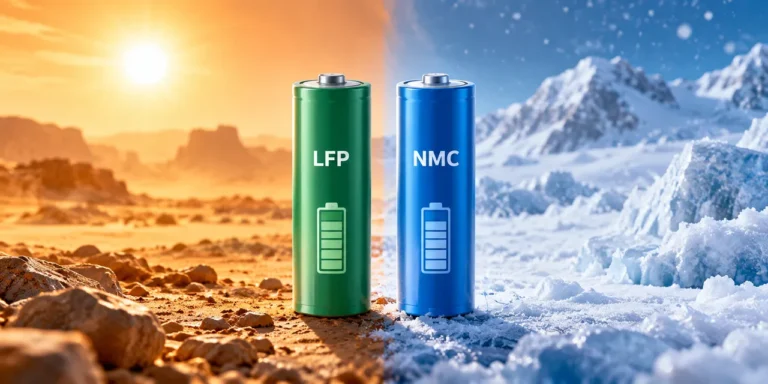
Which Battery Performs Better in Cold Weather?
NMC generally has an edge over conventional LFP cells in low-temperature discharge performance, although results vary.
At temperatures such as -20°C or -40°C, both chemistries experience increased internal resistance, reduced usable capacity, and greater voltage drop under load.
NMC is often a strong starting point for cold-weather applications, but for applications at -30°C or -40°C, low-temperature battery should be considered as a better choice.
| Comparison | LFP | NMC |
| Discharge capacity at -20°C | Around 50–65% in some conventional-cell examples | Around 70–80% in some conventional-cell examples |
| Cold-weather power capability | Reduced by increased internal resistance | Also reduced |
| Key advantage | Cycle life and thermal stability | Higher energy density and potentially better cold-weather discharge |
Which Battery Handles High Temperatures Better?
LFP generally wins in cathode thermal stability. It is attractive for applications where heat resistance and safety are major priorities.
However, both LFP and NMC batteries experience accelerated aging at elevated temperatures.
| Comparison | LFP | NMC |
| Cathode thermal stability | Generally higher | Generally lower |
| Typical discharge temperature limit | Around +55°C to +60°C | Around +55°C to +60°C |
| High-temperature aging | Accelerates with heat | Also accelerates with heat |
| High-temperature suitability | Strong thermal stability advantage | Specialized designs may support demanding conditions |
Takeaway: LFP is often preferable when thermal stability is the main concern. Also, a specialized high-temperature cell may also be suitable for hot environments when its operating range and aging performance are validated.
A cell rated for discharge at +85°C is not necessarily suitable for charging at that temperature or prolonged high-temperature storage.
Why Specialized Wide-Temperature LFP and NMC Cells Matter
Chemistry determines the baseline characteristics, but specialized cell design determines how well a battery performs under extreme temperatures.
Conventional LFP and NMC cells may struggle with reduced capacity in freezing conditions or accelerated aging under high heat.
Specialized wide-temperature cells use optimized electrolytes, electrode designs, and other cell-level modifications to support operation beyond conventional temperature limits.
| Comparison | Conventional LFP/NMC | UltraXel Wide-Temperature LFP/NMC |
| Low-temperature discharge | Often limited below -20°C | Selected cells support discharge down to -40°C |
| High-temperature discharge | Commonly rated up to around +60°C | Selected cells support discharge up to +85°C |
| Low-temperature charging | Often restricted below 0°C | Support controlled charging below freezing |
| Primary advantage | General-purpose performance | Extended operating temperature range for extreme applications |
For example, selected UltraXel wide-temperature LFP and NMC cylindrical cells support discharge from -40°C to +85°C, providing options for equipment exposed to extreme cold and heat.
Which Is Better for Your Project Requirements?
For industrial and outdoor equipment, the right battery depends on what matters most: energy density, service life, thermal stability, or operating temperature.
Rather than choosing by application name alone, start with the battery’s most important performance requirement.
| Priority | Recommended Chemistry | Why? |
| Compact size and longer runtime | NMC | Higher energy density in limited battery space |
| Long cycle life and frequent charging | LFP | Generally better cycle-life performance |
| Thermal stability and safety | LFP | More thermally stable cathode chemistry |
| Low-temperature operation | Specialized low-temp battery | Maintain usable capacity and discharge performance in freezing conditions |
| High-temperature operation | Specialized high-temp battery | Withstand elevated operating temperatures and support reliable discharge performance |
When Should You Choose a Wide-Temperature Battery?
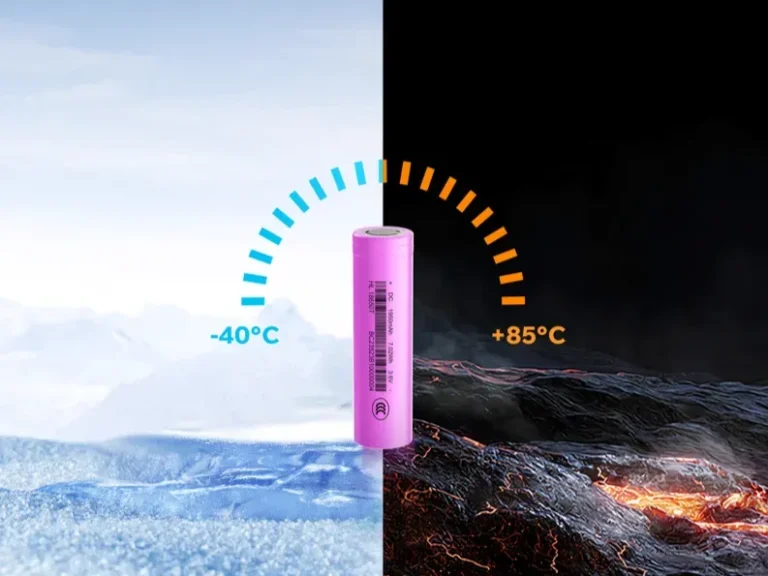
If your equipment operates beyond the temperature limits of conventional lithium-ion cells, chemistry is not enough.
This is especially relevant for outdoor security cameras, automotive electronics, GPS trackers, and industrial monitoring equipment exposed to freezing winters, hot enclosures, or significant temperature fluctuations.
In these conditions, a specialized wide-temperature LFP or NMC cell may be necessary to maintain reliable discharge performance.
Before selecting a battery, verify its operating temperature range, usable capacity at the required temperature, discharge current, charging limits, and expected service life.
UltraXel Wide-Temperature LFP and NMC Battery Solutions
UltraXel offers wide-temperature lithium-ion battery solutions for industrial and outdoor applications, including LFP and NMC cylindrical cells with different characteristics.
| Battery Model | Chemistry | Nominal Voltage | Typical Capacity | Main Selection Priority |
| HL14500S | LFP | 3.2V | 500mAh | Compact size and long cycle life |
| HL14500R | NMC | 3.6V | 750mAh | Higher energy in a compact cell |
| HL18650G | LFP | 3.2V | 1600mAh | Long cycle life and thermal stability |
| HL18650Y | NMC | 3.6V | 3200mAh | Higher capacity and longer potential runtime |
| HL18650V | NMC | 3.6V | 2900mAh | Low-temperature discharge applications |
| HL18650T | NMC | 3.6V | 2000mAh | High-temperature standby applications |
| HL18650F | NMC | 3.6V | 3000mAh | High-current discharge requirements |
| HL32140L | LFP | 3.2V | 15000mAh | Higher-capacity, long-life systems |
For long cycle life and thermal stability
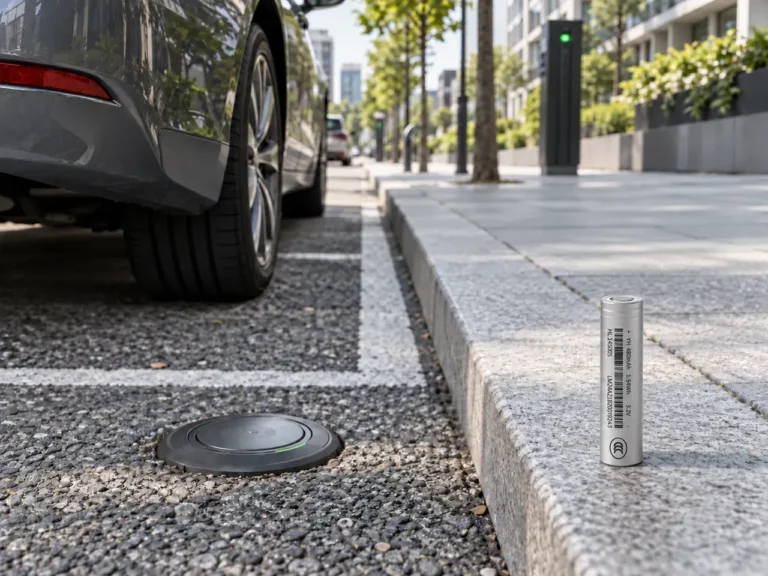
Recommended Models: HL14500S (LFP) / HL18650G (LFP)
These wide-temperature LFP cells prioritize long cycle life and thermal stability, making them suitable candidates for industrial equipment requiring reliable long-term operation.
Typical Applications: Solar-powered security cameras, outdoor environmental monitoring stations, industrial data loggers, and solar-powered IoT sensors.
For higher energy density and longer runtime
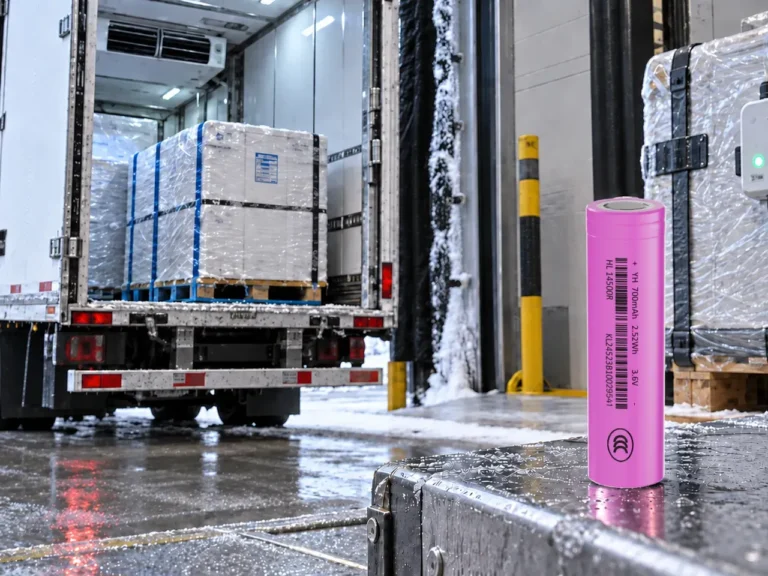
Recommended Models: HL14500R (NMC) / HL18650Y (NMC)
These NMC cells provide higher nominal energy capacity within compact cylindrical formats, making them attractive for space-constrained devices requiring extended runtime.
Typical Applications: GPS tracking devices, portable industrial data terminals, wireless security sensors, and compact outdoor communication devices.
For demanding low-temperature discharge
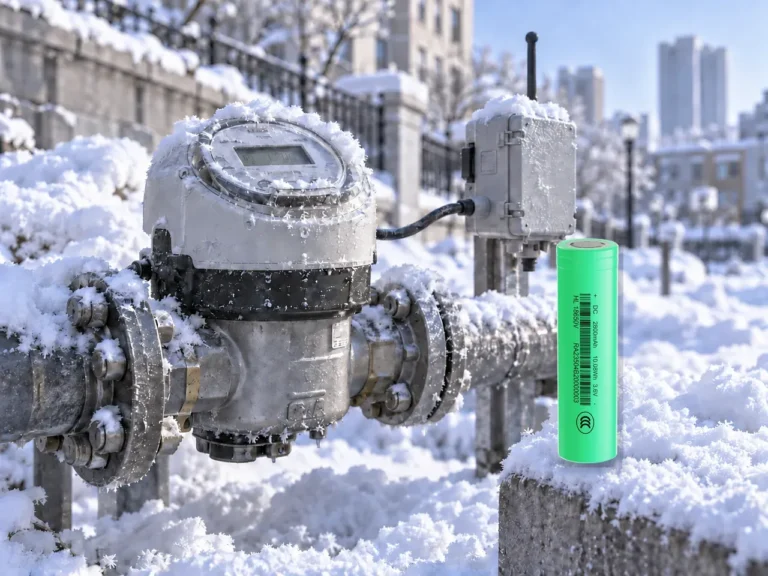
Recommended Model: HL18650V (NMC)
Designed for low-temperature discharge applications, the HL18650V is a candidate for equipment that must maintain usable capacity and stable voltage in freezing conditions.
Typical Applications: Cold-region GPS trackers, outdoor surveillance cameras, remote weather stations, and industrial monitoring equipment deployed in freezing environments.
For high-temperature standby or high-current operation
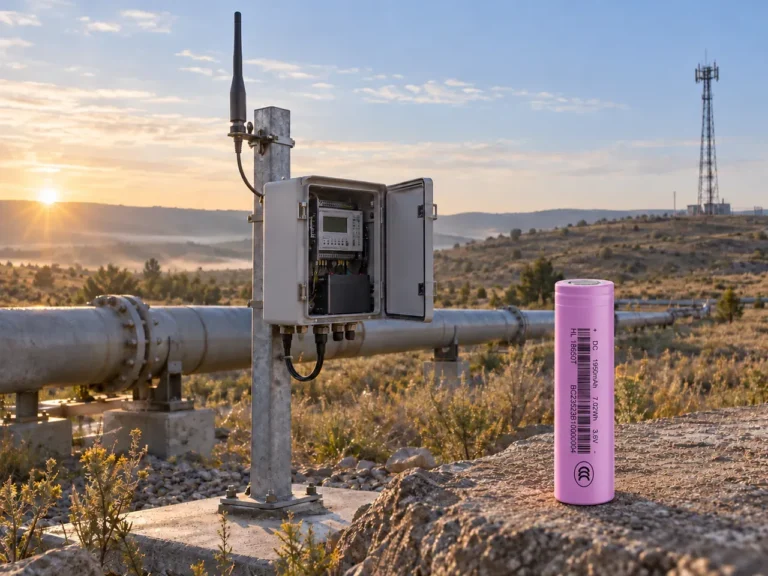
Recommended Models: HL18650T (NMC) / HL18650F (NMC)
The HL18650T is a candidate for applications prioritizing high-temperature standby performance, while the HL18650F is intended for designs requiring higher discharge current.
Typical Applications:
- HL18650T: Automotive T-Box and eCall backup systems, vehicle telematics modules, and industrial monitoring devices in hot enclosures.
- HL18650F: High-power portable industrial instruments, wireless communication equipment with high peak-current demands, and battery-powered industrial inspection devices.
or applications requiring multiple cells, additional protection, or a specific mechanical configuration, cell selection should also account for the complete battery pack.
UltraXel can support application-based battery evaluation, including cell selection, battery-pack configuration, protection circuitry, and customized battery solutions.
Need Help Choosing Between LFP and NMC for Extreme Temperatures?
UltraXel can help evaluate suitable wide-temperature LFP and NMC cells and customized battery configurations for your application.
Contact UltraXel for Wide-Temperature Battery Solutions
FAQ
Is LFP better than NMC?
Neither chemistry is universally better. LFP generally offers longer cycle life, stronger thermal stability, and lower material costs. NMC generally provides higher energy density, making it attractive for compact applications requiring more stored energy.
Is NMC better than LFP in cold weather?
Some conventional NMC cells perform better than conventional LFP cells at low temperatures, but results vary by cell design and test conditions. Specialized wide-temperature LFP cells may provide better cold-weather performance than standard NMC cells.
Can LFP batteries work at -40°C?
Some specially designed LFP cells support discharge at -40°C under specified conditions. This does not mean every LFP battery can operate at that temperature or retain its room-temperature capacity. Charging limits and load-dependent performance must be checked separately.
Can LFP and NMC batteries be used interchangeably?
Not automatically. LFP and NMC cells have different nominal voltages, charging profiles, voltage limits, and discharge characteristics. Even cells with identical physical dimensions may require different charging circuits, protection thresholds, or device configurations. Compatibility must be verified before replacement.
Do wide-temperature batteries need special charging protection?
Yes. A wide discharge-temperature range does not eliminate charging restrictions. Charging must remain within the cell manufacturer’s specified temperature, current, and voltage limits.