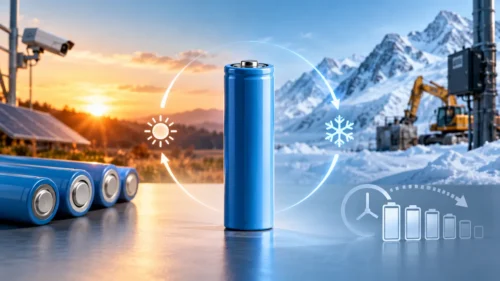
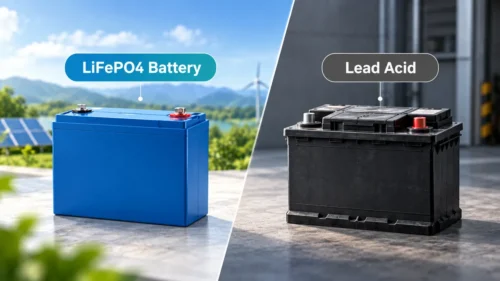
Lithium-ion 18650 batteries typically last 2–5 years or several hundred to over 1,000 charge cycles, depending on their chemistry, operating conditions, and usage patterns.
For 18650 batteries, lifespan varies significantly between cell types. Temperature, charging habits, and depth of discharge all affect how quickly a battery loses capacity.
This guide explains 18650 battery life expectancy, what affects it, and how to estimate battery service life for everyday and industrial applications.
How Long Do 18650 Batteries Last?
Most conventional 18650 lithium-ion batteries last approx. 300–1,000 charge cycles. Some long-cycle-life designs can exceed this range under specified conditions.
In terms of years, many 18650 batteries provide around 2–5 years of service, depending on how frequently they are used and the operating conditions.
Distinguishing between two types of aging, cycle aging and calendar aging, helps understand why battery lifespan varies. Both of them affect how long an 18650 battery remains usable.
Cycle Life vs. Calendar Life
| Measurement | Definition | Main Influencing Factors |
| Cycle Life | Number of charge-discharge cycles before capacity falls to a specified level, often 80% of initial capacity | Depth of discharge, temperature, charge/discharge rates |
| Calendar Life | Battery aging over time, even when it is not being cycled | Temperature, storage charge level, time |
For example, an 18650 battery rated for 1,000 cycles does not necessarily last 1,000 days. A battery used occasionally may reach its calendar-life limit before completing its rated cycles.
Reaching 80% capacity does not always mean the battery stops working. Its usable service life depends on the equipment’s capacity and power requirements.
What Affects 18650 Battery Lifespan?
1. Battery Chemistry
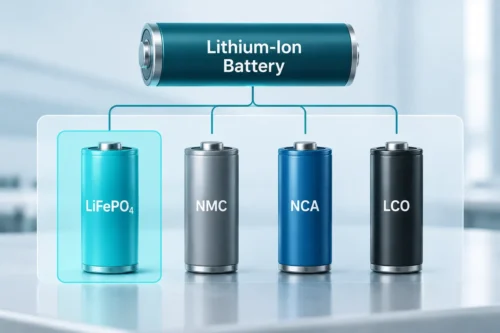
Two common options are nickel manganese cobalt oxide (NMC) and lithium iron phosphate (LiFePO4).
Here we take two UltraXel’s 18650 batteries as an example:
| Feature | HL18650Y (NMC) | HL18650G (LiFePO4) |
| Nominal Voltage | 3.6V | 3.2V |
| Typical Capacity | 3200mAh | 1600mAh |
| Cycle Life | 500 cycles | 1,500+ cycles |
| Discharge Temperature | -40°C to +85°C | -40°C to +85°C |
| Key Advantage | Higher capacity and longer runtime | Longer cycle life and thermal stability |
| Typical Applications | Outdoor monitoring, long-runtime devices | Solar lighting, industrial equipment, long-life battery packs |
LiFePO4 batteries are often preferred when long cycle life is a priority, while NMC batteries are useful when higher energy density is required.
2. Operating Temperature
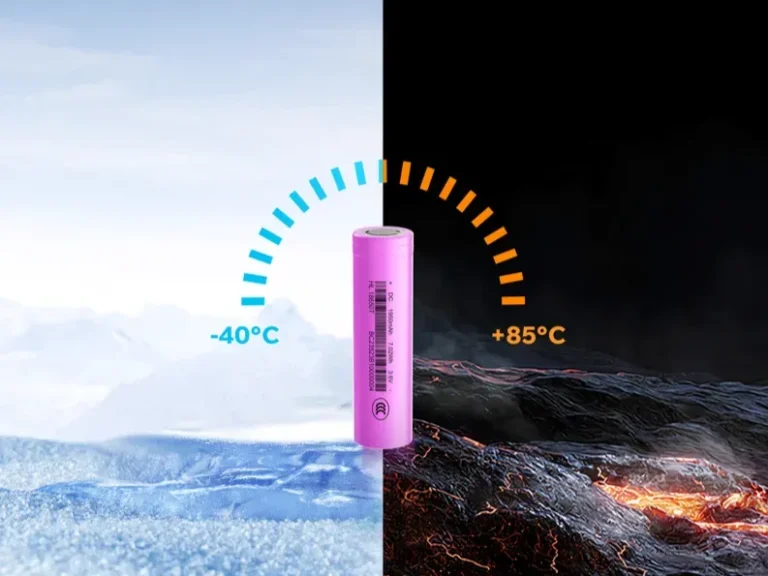
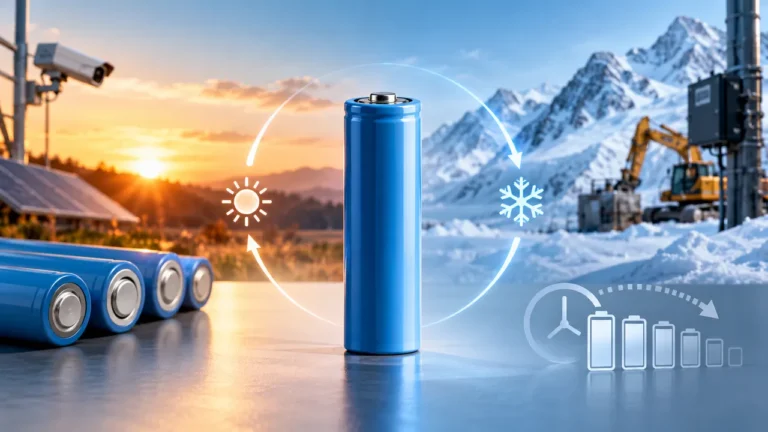
Temperature affects both battery performance and long-term aging. For equipment operating in extreme climates, selecting a battery for the required temperature range.
- High temperatures: Accelerate chemical degradation, potentially causing faster capacity loss and increased internal resistance.
- Low temperatures: Temporarily reduce available capacity and increase voltage drop under load.
- Charging below freezing: Cause lithium plating in cells not approved for low-temperature charging, leading to permanent damage.
3. Depth of Discharge (DOD)
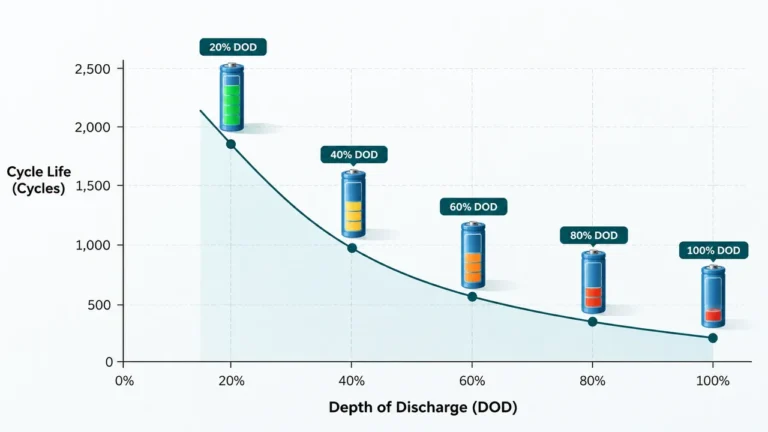
Depth of discharge (DOD) directly affects 18650 battery cycle life. Repeatedly discharging an 18650 cell close to its lower voltage limit generally causes more cycling stress than using only part of its capacity.
For example, an 18650 battery cycled at 100% DOD will typically reach its specified capacity-loss threshold in fewer cycles than the same cell cycled at 50% DOD under comparable conditions.
For applications requiring longer battery life, limiting discharge depth can help reduce degradation.
4. Charging and Discharging Conditions
Repeated fast charging and high-current discharging can increase heat generation and accelerate cell aging.
For example, a standard 3.7V 18650 Li-ion cell typically uses a 4.2V charging limit. Exceeding this voltage can accelerate degradation and create safety risks.
Similarly, operating an 18650 cell near its maximum discharge current for extended periods may increase temperature and shorten cycle life.
To extend 18650 battery lifespan, follow the cell manufacturer’s specified charging voltage, current limits, and discharge ratings.
5. Storage Conditions
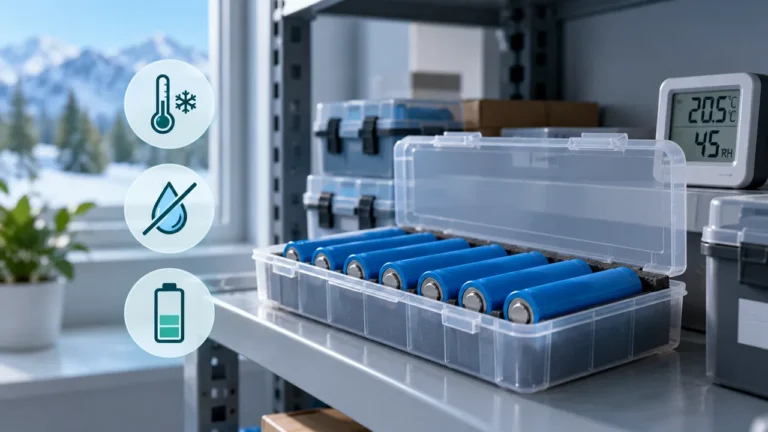
Unused 18650 batteries can remain serviceable for years under suitable conditions, but they gradually age even without regular cycling.
For long-term storage:
- Keep batteries in a cool, dry environment.
- Avoid prolonged exposure to high temperatures.
- Store at a moderate state of charge, commonly around 40–60% for many conventional lithium-ion cells.
- Periodically check battery condition and voltage according to the manufacturer’s recommendations.
Avoid storing batteries fully depleted, as self-discharge and protection-circuit consumption may eventually cause excessive discharge.
How to Estimate 18650 Battery Life in Years
A simple way to estimate battery life is to divide its rated cycle life by the number of equivalent full cycles completed each year.
Estimated Cycle-Life Years = Rated Cycle Life ÷ Annual Equivalent Full Cycles
For example, consider an 18650 battery rated for 1,000 cycles.
| Usage Pattern | Equivalent Full Cycles per Year | Estimated Years to 1,000 Cycles |
| One full cycle daily | 365 | 2.7 years |
| One full cycle every two days | 183 | 5.5 years |
| One full cycle weekly | 52 | 19.2 years |
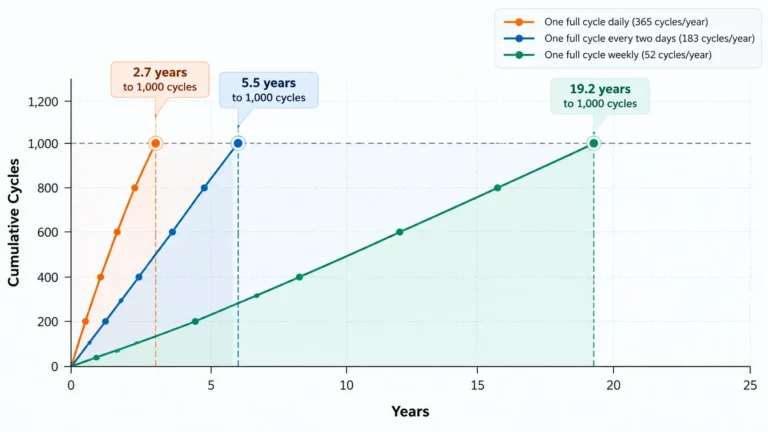
Note: These figures only estimate the time required to reach the specified cycle count.
A battery used once a week is not guaranteed to last 19 years because calendar aging continues regardless of cycling frequency.
For industrial equipment, a more realistic lifespan assessment should consider:
- Expected operating temperature
- Charging and discharging frequency
- Depth of discharge
- Continuous and peak current requirements
- Minimum acceptable capacity and voltage
How to Extend the Life of an 18650 Battery
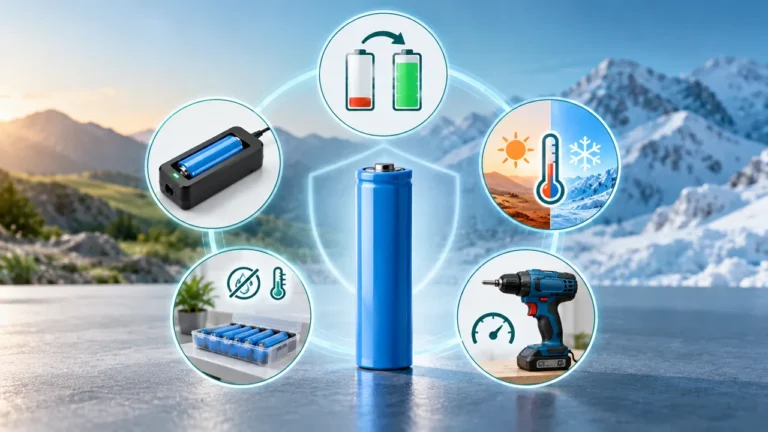
1. Avoid unnecessary deep discharges
Recharge before the battery reaches its minimum allowable voltage. For applications where maximum cycle life matters, consider a shallower operating SOC range.
2. Use the correct charger
Follow the manufacturer’s recommended charging voltage, current, and temperature limits. Do not assume that all 18650 batteries use the same charging voltage.
3. Control operating temperature
Avoid excessive heat and prevent charging outside the cell’s approved temperature range. If the battery has to work in extreme environments, choose a specialized low-temperature battery or high-temperature battery.
4. Store batteries properly
For extended storage, maintain a suitable partial charge and avoid hot or humid environments.
5. Keep discharge current within specifications
Avoid loads that exceed the battery’s continuous or pulse discharge ratings.
When Should You Replace an 18650 Battery?
Consider replacing an 18650 battery when its performance no longer meets the application’s requirements.
Common indicators include:
| Warning Sign | Possible Explanation |
| Noticeably shorter runtime | Reduced usable capacity |
| Frequent shutdowns under load | Increased internal resistance or insufficient voltage |
| Significant capacity loss | Battery aging |
| Unusual heating during normal operation | Excessive resistance or another battery fault |
| Swelling, leakage, or physical damage | Potential safety hazard |
A battery reaching 80% of its original capacity is not necessarily unusable.
Stop using batteries showing physical damage, swelling, leakage, or abnormal heating.
Choosing Long-Life 18650 Batteries for Industrial Applications
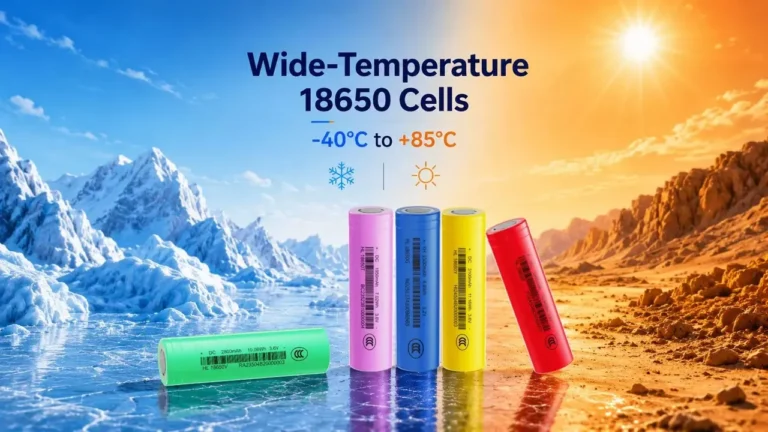
Extending 18650 battery life starts with proper use, but long-term industrial reliability also requires the right cell selection.
For demanding applications, UltraXel offers wide-temperature 18650 batteries for better performance.
| UltraXel Battery | Product Focus | Suitable Application Requirements |
| HL18650G | LiFePO4 chemistry and long-cycle-life applications | Equipment prioritizing cycle life and long-term reliability |
| HL18650Y | 3200mAh high capacity and extended runtime | Outdoor surveillance, GPS tracking, and remote IoT devices requiring longer operation time |
| HL18650T | High-temperature operating requirements | Equipment exposed to elevated temperatures |
| HL18650V | Low-temperature performance | Outdoor and industrial equipment operating in cold environments |
| HL18650F | 30A high-current discharge and wide-temp performance | Power tools, industrial robotics, and high-load equipment requiring stable power output in harsh environments |
If your applications require customized solutions, UltraXel can support cell selection, battery-pack configuration, and protection-system integration based on specific equipment requirements.
FAQ
Can an 18650 battery last 10 years?
Some 18650 batteries may remain usable for 10 years under favorable conditions. This is not for all standard cells.
A 10-year service-life target should be supported by appropriate manufacturer data and application-specific validation.
Do unused 18650 batteries expire?
Yes. Lithium-ion batteries gradually age even when they are not used.
High storage temperatures and prolonged storage at high states of charge can accelerate capacity loss. Proper storage slows degradation but does not stop it completely.
Does fast charging reduce 18650 battery lifespan?
Fast charging can accelerate battery aging, particularly when it increases temperature or approaches the cell’s charging limits.
The effect depends on cell design, charging current, temperature, and charge-control strategy. Always follow the manufacturer’s specified charging conditions.
Do LiFePO4 18650 batteries last longer than NMC batteries?
The LiFePO4 18650 battery generally offers longer cycle-life potential than conventional NMC cells.
Actual lifespan varies by manufacturer, cell design, and operating conditions. Compare cycle-life specifications using equivalent test conditions before selecting a battery.