Outdoor surveillance cameras often operate in environments where reliable power is difficult to maintain. Extreme heat and cold, continuous monitoring, wireless communication, night vision, and remote installation can all place additional demands on the battery.
For these applications, an outdoor camera battery needs to provide more than sufficient capacity.
It should maintain stable power delivery, withstand temperature extremes, support long operating periods, and minimize maintenance requirements.
Battery Challenges in Outdoor Surveillance
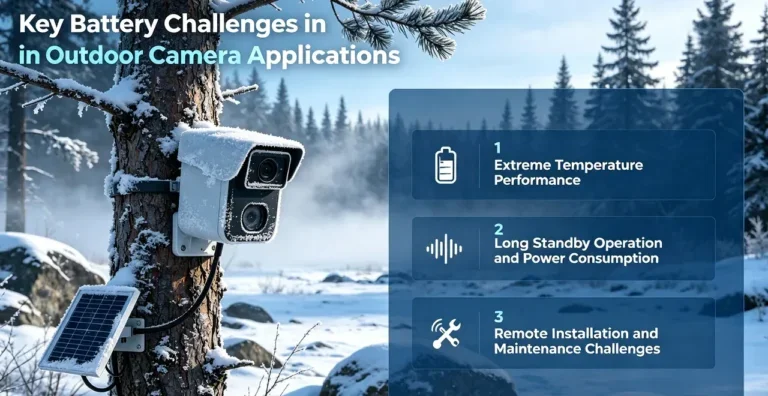
Extreme Temperature Performance
In high-temperature environments, excessive heat can accelerate battery aging and reduce long-term cycle life.
In cold environments, traditional lithium-ion batteries may experience:
- Increased internal resistance
- Reduced discharge capability
- Lower available capacity
- Shorter operating time
Long Standby Operation and Power Consumption
Battery powered surveillance cameras often operate differently from traditional electronic devices.
Sudden power demands from wireless communication or night vision functions can significantly impact battery performance.
A typical outdoor camera may switch between:
- Low-power standby mode
- Motion detection mode
- Wireless data transmission
- Infrared night vision operation
- High-resolution video recording
Remote Installation and Maintenance Challenges
Many outdoor surveillance systems are installed in locations that are difficult to access, including:
- Remote industrial areas
- Agricultural sites
- Transportation infrastructure
- Outdoor security zones
Different Battery Performances for Outdoor Surveillance
| Battery Type | Pros | Cons | Surveillance Suitability |
| Alkaline | Widely available, low upfront cost, simple to use | Limited performance in extreme temperatures, short service life | Basic or short-term outdoor cameras |
| Lead-acid | Mature technology, relatively low cost | Heavy, lower energy density, temperature-sensitive, higher maintenance | Stationary surveillance and backup power systems |
| Standard Li-ion | Better energy density, low maintenance, widely available | Limited in extreme conditions | General outdoor and portable surveillance equipment |
| LiFePO4 | Long cycle life and good thermal stability | Lower energy density and larger size | Solar / stationary systems |
| Wide-temperature Li-ion | High energy density, wide operating temperature capability, lightweight | Specialized cell technology and battery pack design | Harsh-environment, remote, and extreme-temperature surveillance |
Battery Solutions for Different Outdoor Surveillance Applications
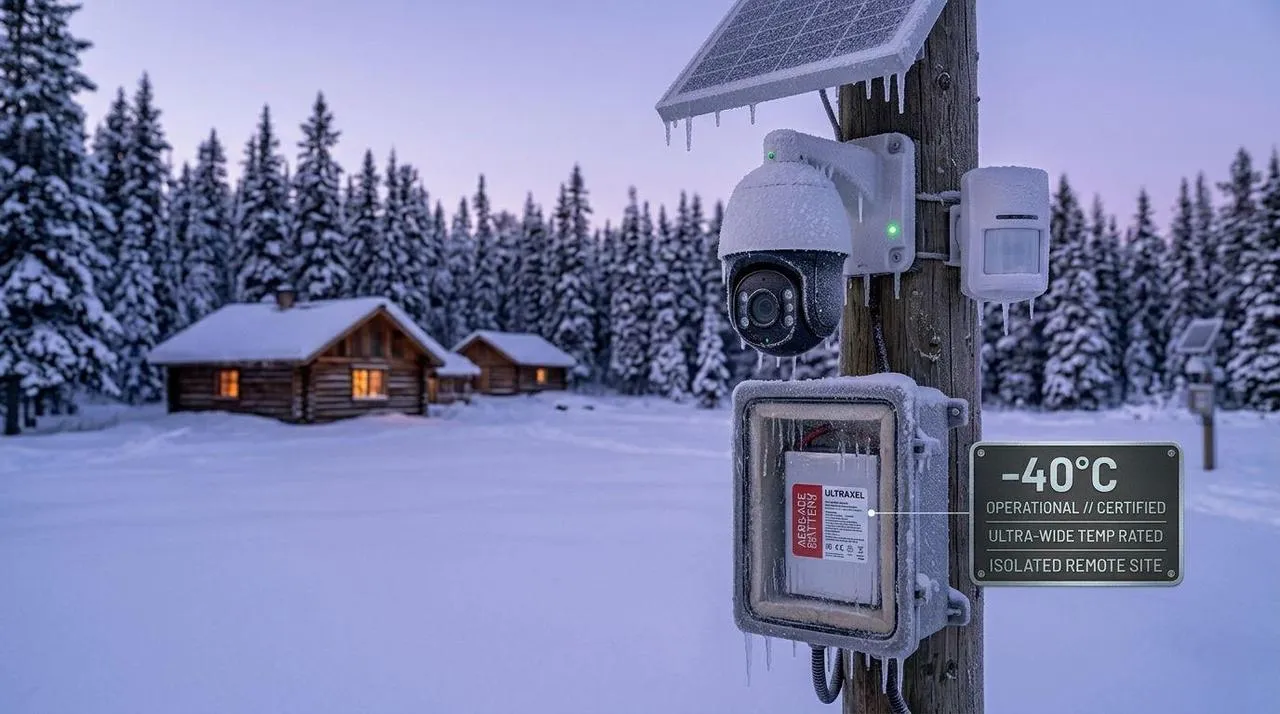
Wireless Outdoor Security Cameras
Wireless outdoor cameras typically require compact batteries with sufficient energy density, reliable discharge performance, and long standby capability.
Depending on the camera’s size and power requirements, 14500, 18650, or 21700 lithium battery solutions can provide different solutions.
For cameras operating in cold or hot outdoor environments, we recommend wide-temperature cells for additional operating margin.

Solar-Powered Surveillance Systems
Solar-powered surveillance systems rely on rechargeable batteries to store energy for nighttime, cloudy weather, and periods of limited solar generation.
LiFePO4 batteries are suitable for applications that require frequent charge/discharge cycles and long cycle life.
For systems exposed to extreme temperatures, wide-temperature lithium-ion batteries can provide more reliable performance across seasonal and environmental temperature changes.
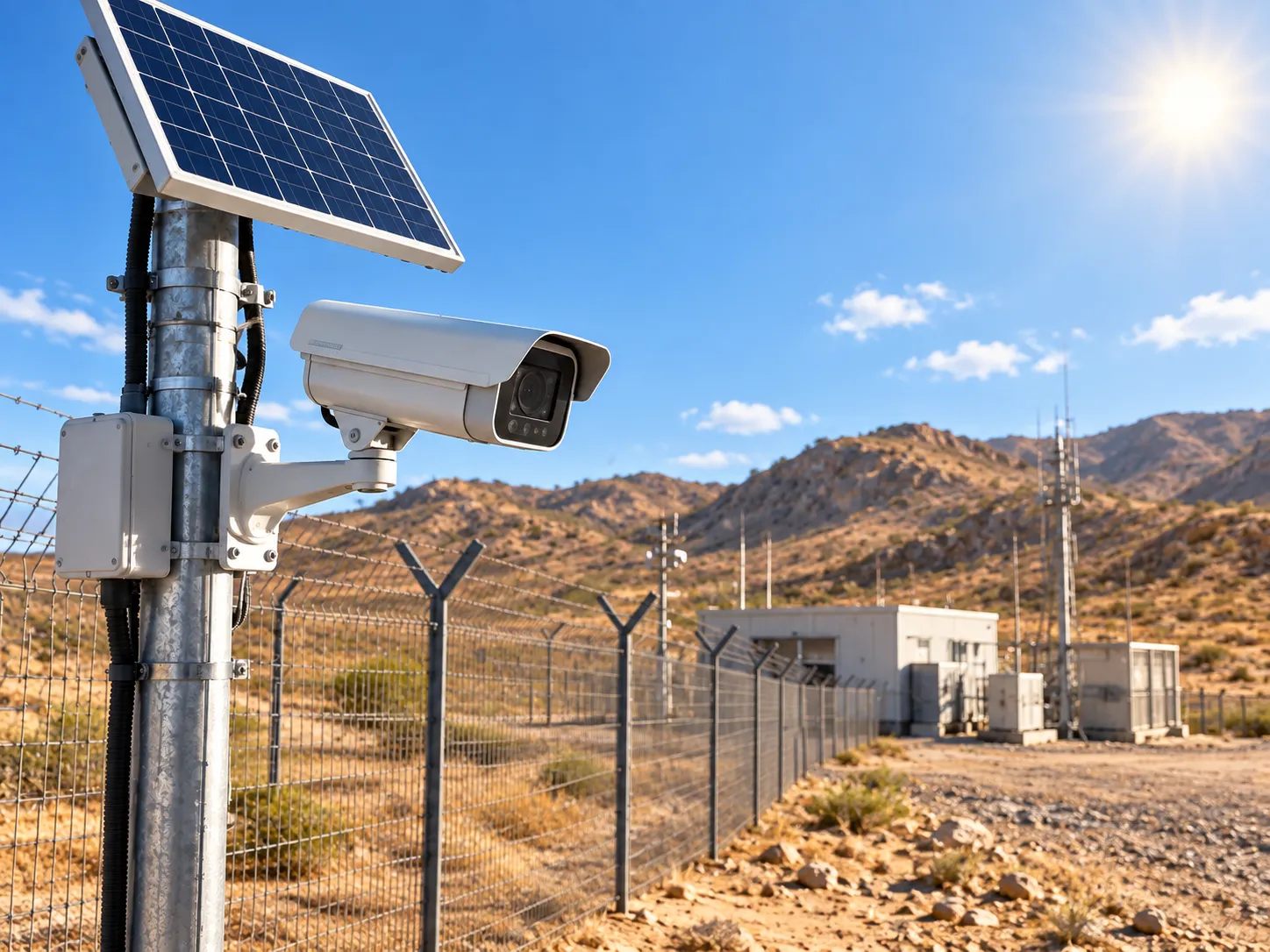
Remote and Industrial Surveillance
Remote surveillance systems used at construction sites, farms, infrastructure facilities, and industrial locations may be difficult to access for regular battery maintenance.
These applications typically require:
- Wide-temperature operation
- Long service life
- Stable power delivery
- Low maintenance
- Flexible battery configurations

Backup Power for Surveillance Equipment
Battery systems can also provide backup power for security cameras, access control systems, alarm equipment, and related monitoring devices.
For backup systems requiring compact, high-energy-density solutions, lithium-ion batteries can provide a practical alternative to conventional lead-acid batteries.
For more practical battery selection tips, read our guide: How to Choose the Right Battery for Outdoor Security Cameras?
What Makes a Battery Reliable in Harsh Surveillance Environments?
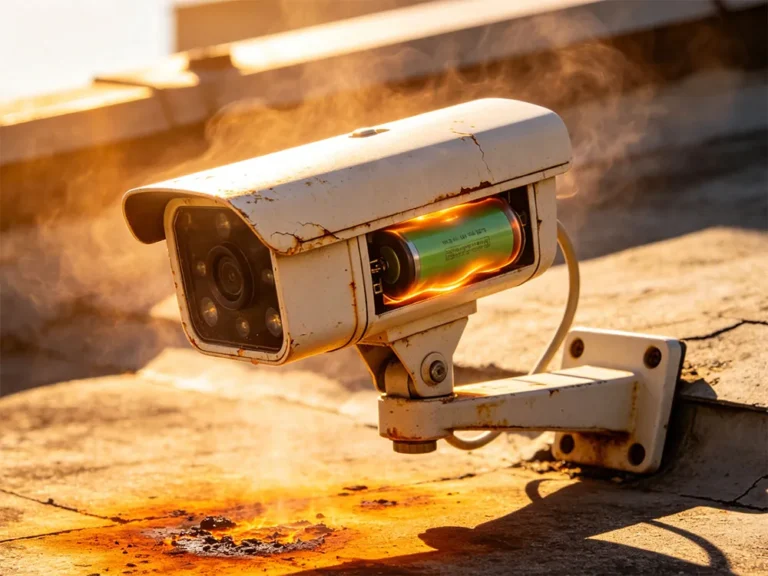
1. Wide Operating Temperature
A battery for harsh surveillance environments should maintain reliable discharge performance across the expected operating temperature range.
This is a key requirement for cameras installed outdoors year-round, where both extreme summer heat and winter cold can affect battery performance.
2. Stable Voltage and Discharge Performance
Sufficient capacity does not necessarily guarantee reliable operation. A battery may have adequate stored energy but still experience voltage drops when the camera or communication system requires additional power.
Stable voltage and discharge performance help reduce the risk of interruptions during recording, wireless transmission, infrared operation, or other higher-power events.
3. Sufficient Energy and Peak Power
Surveillance battery requirements involve both energy and power.
Energy capacity affects how long the camera can operate between charges or replacements, while peak power capability affects whether the battery can support short periods of increased demand.
A suitable battery therefore needs to balance runtime with the camera’s actual load profile.
4. Long Service Life
For remote surveillance, longer battery service life can reduce replacement frequency and maintenance visits.
This is particularly valuable for systems deployed across large outdoor areas or locations where battery access is difficult.
UltraXel Wide-Temperature Battery Solutions for Outdoor Surveillance Systems
UltraXel provides wide-temperature lithium battery solutions for outdoor surveillance equipment operating in demanding environments.
Selected UltraXel wide-temperature cells support operation from -40°C to +85°C, depending on the specific cell model and application configuration. This wide temperature capability can help surveillance equipment maintain reliable power across extreme outdoor conditions.
Currently available cell formats include:
- 14500 battery – compact applications with limited installation space
- 18650 battery – a balance of size, capacity, and output performance
- 32140 battery – larger-capacity applications and battery pack configurations
UltraXel can also provide custom wide-temperature battery packs based on different cell formats and applications.
For outdoor cameras and other surveillance equipment, this provides a flexible alternative to standard batteries when environmental conditions, runtime requirements, or installation constraints demand a more specialized power solution.
FAQ
What are the biggest challenges for outdoor cameras?
Outdoor camera systems face several challenges that can affect reliability, including extreme temperatures, moisture exposure, unstable connectivity, high power consumption, and limited maintenance access.
Why do outdoor cameras need wide-temperature batteries?
Outdoor surveillance cameras often operate in environments with extreme temperature changes, remote locations, and limited access to power sources.
Standard batteries may experience reduced performance in extreme conditions. Wide-temperature lithium batteries can provide more stable discharge performance and longer operational reliability.
How can battery powered outdoor cameras last longer?
Longer runtime depends on multiple factors, including camera power consumption, operating mode, battery capacity, environmental conditions, and battery technology.
What type of battery is best for outdoor surveillance systems?
For cameras in harsh environments, wide-temperature lithium batteries are often preferred because they provide more reliable performance under extreme temperature conditions compared with standard battery solutions.