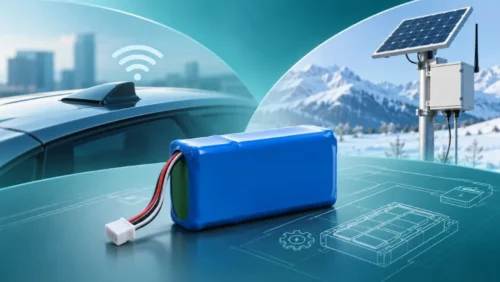
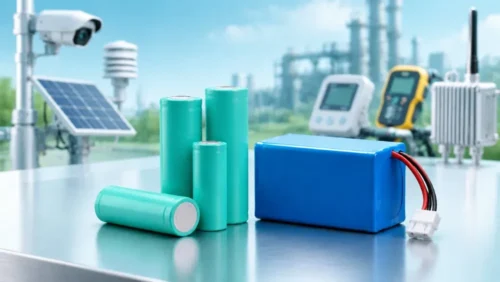
With the rapid growth of the Internet of Things (IoT), more devices are being deployed in outdoor and remote environments, such as weather monitoring stations, environmental sensors, agricultural monitoring systems, and remote data collection devices.
These systems typically require long-term stable power supply with minimal maintenance. However, outdoor environments often involve extreme temperature changes, humidity fluctuations, and harsh operating conditions.
Under these circumstances, conventional lithium batteries may experience performance degradation, reduced capacity, and shorter lifespan. As a result, wide temperature lithium batteries have become a preferred power solution for outdoor IoT applications.
This article explores the power challenges of outdoor IoT devices and explains how to choose the right battery for reliable long-term operation.
Power Challenges for Outdoor IoT Devices
Outdoor IoT equipment operates under much more demanding conditions compared with indoor devices.
Extreme Temperature Fluctuations
In remote areas, deserts, or high-altitude regions, devices may experience temperatures below -30°C in winter and above 60°C in summer.
Low temperatures can lead to:
- Reduced battery capacity
- Increased internal resistance
- Difficulty in battery startup
High temperatures may cause:
- Faster chemical reactions inside the battery
- Shorter cycle life
- Potential safety risks
These conditions make temperature performance one of the most critical factors when selecting a battery.
Long-Term Unattended Operation
Many IoT devices are deployed in locations where maintenance is difficult or expensive. For example:
- Mountain monitoring stations
- Forest environmental sensors
- Remote agricultural systems
In these cases, the battery must provide:
- Long cycle life
- Stable discharge performance
- High reliability
Compact Design and Energy Efficiency
Outdoor IoT devices are often compact and designed for low power consumption. Batteries must therefore offer:
- High energy density
- Efficient power management
- Stable long-term performance
Advantages of Wide Temperature Lithium Batteries
To address the challenges of harsh environments, wide temperature lithium batteries are designed with optimized materials and structures that allow them to operate reliably across a broader temperature range.
Compared with standard lithium batteries, wide temperature batteries offer significant advantages.
| Performance Metric | Standard Lithium Battery | Wide Temperature Battery |
| Operating Temperature | -20°C to 60°C | -40°C to 85°C |
| Low Temperature Startup | Limited | Strong |
| Cycle Life | 500–1000 cycles | 1000–2000 cycles |
| High Temperature Stability | Moderate | Excellent |
By optimizing electrolyte composition, electrode materials, and internal battery structure, wide temperature batteries can maintain stable performance in both extremely cold and hot environments.
Typical Applications of Outdoor IoT Batteries
Wide temperature lithium batteries are widely used in many outdoor IoT scenarios.
Weather Monitoring Stations
Weather stations operate continuously in outdoor environments and must remain functional during extreme weather conditions.
Environmental Monitoring Systems
Air quality monitoring, water quality sensors, and ecological monitoring systems often operate in remote locations where reliable power supply is essential.
Outdoor Sensor Networks
Smart agriculture, smart city infrastructure, and remote monitoring systems rely on distributed sensor networks powered by long-lasting batteries.
Solar-Powered Monitoring Devices
Many outdoor devices combine solar panels with battery storage. In these systems, batteries must support efficient charge and discharge cycles across varying temperatures.
How to Choose the Right Battery for Outdoor IoT Devices
When selecting a battery for outdoor IoT applications, companies should consider several key factors.
Operating Temperature Range
Ensure the battery can operate reliably within the actual environmental temperature range, particularly in extremely cold conditions.
Cycle Life
Longer cycle life reduces maintenance frequency and lowers operational costs.
Energy Density
Higher energy density allows devices to operate longer while maintaining compact designs.
Safety and Reliability
The battery should be designed with strong safety features and pass relevant transportation and safety tests.
System Integration Capability
Choosing a supplier capable of providing battery cells, modules, and battery management systems (BMS) helps improve overall system stability.
UltraXel Wide Temperature Battery Solutions
UltraXel specializes in the development of wide temperature lithium batteries and low temperature battery technologies for industrial equipment, automotive electronics, and outdoor IoT devices.
Key advantages of UltraXel battery solutions include:
- Wide operating temperature range: -40°C to +85°C
- Strong low-temperature startup performance
- Stable high-temperature cycling capability
- Integrated battery system solutions: cells, modules, and BMS
- Proven applications across multiple industries
Through optimized battery design and engineering validation, UltraXel provides reliable power solutions for devices operating in harsh environments.

Conclusion
As IoT devices continue to expand into outdoor and remote environments, reliable power supply becomes increasingly critical.
Compared with standard lithium batteries, wide temperature lithium batteries provide superior performance in extreme temperatures, longer cycle life, and improved operational stability.
For outdoor IoT applications that require long-term unattended operation, choosing a battery supplier with advanced temperature-resistant technology and system integration capabilities can significantly improve device reliability and reduce maintenance costs.