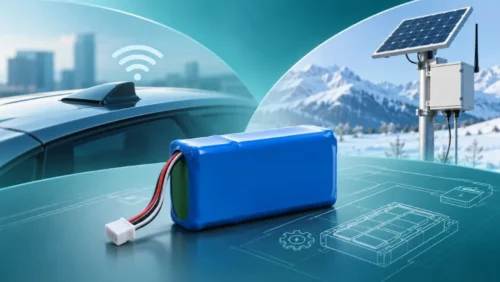
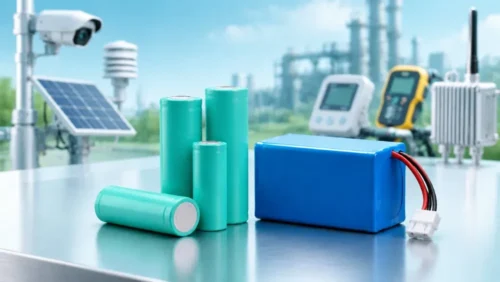
LiPo is generally considered part of the lithium-ion battery family. The main difference between lithium-ion (Li-ion) and lithium-polymer (LiPo) batteries lies in their electrolyte formulation and packaging.
Conventional Li-ion batteries typically use liquid electrolytes and rigid metal casings, while LiPo batteries commonly feature polymer-assisted electrolytes and lightweight pouch designs.
The right choice depends on your device’s size, energy needs, discharge requirements, operating temperature, and expected lifespan.
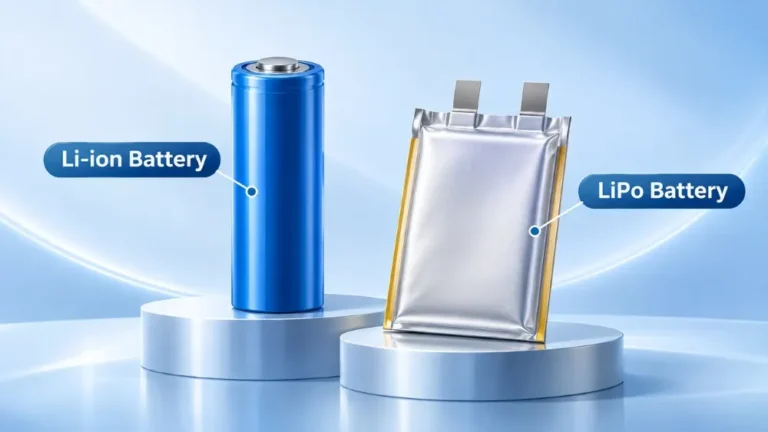
Lithium Ion vs Li Polymer Battery
Lithium-ion (Li-ion) batteries are rechargeable batteries available in cylindrical and prismatic formats. They are widely used in industrial equipment, power tools, and battery packs for high energy density and versatile performance.
Lithium-polymer (LiPo) batteries are a type of lithium-ion battery packaged in lightweight, flexible pouches. Their thin profiles and customizable dimensions are suitable for wearables, compact electronics, and space-constrained devices.
The table below compares the UltraXel HL18650T high-temp cell with a typical 3.7V 2000mAh LiPo pouch battery.
| Feature | Lithium-Ion (UltraXel HL18650T) | Lithium-Polymer (Typical 2000mAh LiPo) |
| Nominal Voltage | 3.6V | 3.7V |
| Capacity | 2000mAh | 2000mAh |
| Electrolyte | Liquid organic electrolyte | Gel or polymer-assisted electrolyte |
| Cell Construction | Cylindrical metal casing | Aluminum-laminated pouch |
| Size | 18.25 × 64.95 mm (D × H, nominal) | 4 × 45 × 102 mm (T × W × L) |
| Energy Density | Approx. 171 Wh/kg | Approx. 224 Wh/kg |
| Max. Continuous Discharge | 10A (5C) | 2A (1C) |
| Cycle Life | 500 cycles* | 500 cycles* |
| Charging Temperature | -20°C to +60°C | 0°C to +45°C |
| Discharging Temperature | -40°C to +85°C | -20°C to +60°C |
| Safety | Rigid metal casing | Pouch requires mechanical protection |
| Typical Applications | Industrial sensors, outdoor monitoring, backup power | Wearables, compact electronics, portable devices |
6 Key Differences Between Li-ion and LiPo Batteries
1. Electrolyte and Construction
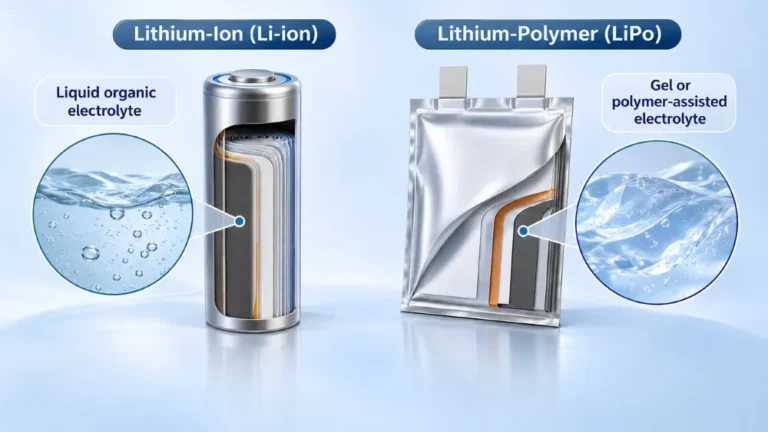
Conventional Li-ion batteries typically use liquid organic electrolytes and rigid cylindrical or prismatic metal casings.
LiPo batteries commonly use gel or polymer-assisted electrolyte systems and lightweight aluminum-laminated pouch packaging.
Li-ion and LiPo do not represent two separate electrochemical categories. Many commercial LiPo cells use lithium-ion chemistry, and lithium-ion cells can also be manufactured in pouch formats.
2. Size and Weight
Li-ion cylindrical batteries, such as 18650 cells and 21700 cells, offer standardized dimensions that simplify battery pack design and replacement.
Pouch LiPo batteries provide greater flexibility in thickness, length, and width, making them suitable for slim or space-constrained devices.
LiPo packaging can reduce enclosure weight, but the total weight depends on the required capacity, chemistry, and mechanical protection.
3. Energy Density
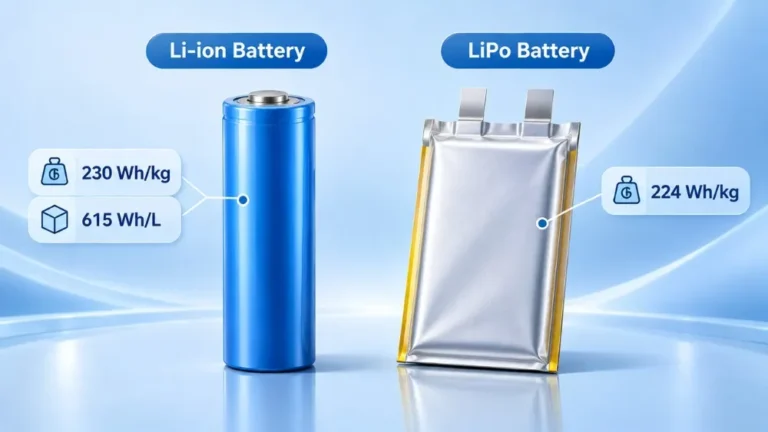
Both Li-ion and LiPo batteries offer high energy density, but the difference depends on the specific cell.
For example, a high-energy cylindrical Li-ion cell can provide 230 Wh/kg and 615 Wh/L. A 3.7V, 2000mAh LiPo pouch battery weighing 33g provides approx. 224 Wh/kg.
Compare both Wh/kg (energy per unit weight) and Wh/L (energy per unit volume) using the same measurement basis.
Pouch designs may fit thin enclosures more efficiently, even when their cell-level energy density is similar.
4. Discharge Rate
Discharge capability varies significantly between battery models, regardless of packaging.
For a 2000mAh battery, the discharge current at different C-rates is:
| Discharge Rate | Current |
| 1C | 2A |
| 5C | 10A |
| 10C | 20A |
| 20C | 40A |
For example, a typical 2000mAh LiPo pouch cell may be rated at 1C (2A), while the UltraXel HL18650T cylindrical cell is rated at 5C (10A). Specialized high-discharge cylindrical cells can reach 10C or higher.
High-rate LiPo batteries are also widely available for drones and RC equipment.
The key comparison is the manufacturer’s rated continuous discharge current, along with peak-current duration, voltage drop, and heat generation.
5. Cycle Life
Cycle life is usually measured by the number of charge-discharge cycles a battery completes before its capacity falls to a specified percentage of its original value.
For example, a cylindrical Li-ion cell may be rated for 500 cycles with at least 80% remaining capacity, under specified conditions.
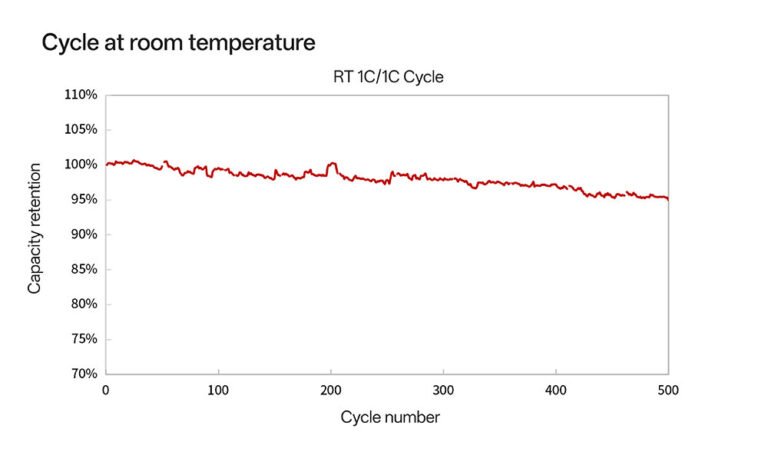
A LiPo battery may also list 500 cycles, but that does not indicate equivalent durability. Charging voltage, discharge current, temperature, and depth of discharge can all affect the result.
6. Safety
Both Li-ion and LiPo batteries can experience thermal runaway under severe abuse, including overcharging, internal short circuits, or excessive temperatures.
Their packaging creates different mechanical considerations:
- Cylindrical Li-ion: A rigid steel or aluminum casing provides protection against external mechanical damage, although excessive pressure and internal failure remain hazardous.
- Pouch LiPo: Lightweight aluminum-laminated packaging reduces enclosure mass but requires additional protection against puncture, compression, and swelling.
For practical safety evaluation, look for applicable testing under IEC 62133-2, which includes external short-circuit, thermal abuse, crush, and abnormal-charging tests.
Li-ion vs LiPo: Which Performs Better in Extreme Temperatures?
Neither standard Li-ion nor LiPo batteries are for extreme temperatures.
Both of them experience reduced capacity and increased internal resistance in cold conditions, while excessive heat can accelerate aging and increase safety risks.
Most conventional Li-ion and LiPo batteries have similar operating limits:
- Charging: Typically 0°C to 45°C (32°F to 113°F).
- Discharging: Commonly -20°C to 60°C (-4°F to 140°F).
For applications operating beyond these ranges, specialized wide-temperature lithium batteries are generally a more suitable choice.
UltraXel Wide-Temperature Li-ion Battery Solutions
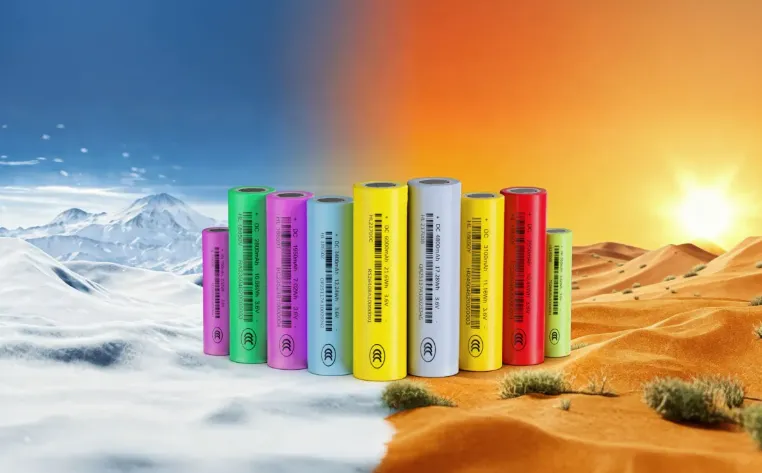
For outdoor monitoring systems, industrial sensors, and equipment exposed to demanding temperatures, UltraXel offers application-oriented wide-temperature lithium-ion battery solutions.
Depending on project requirements, solutions may involve suitable cylindrical cells, PCM/BMS protection, temperature monitoring, and charging control.
Which Battery Should You Choose for Your Application?
The following table provides a practical starting point.
| Application | Recommended Starting Point | Key Consideration |
| Drones and RC Equipment | High-discharge LiPo or Li-ion | Peak current, weight, and runtime |
| Wearables and Slim Electronics | Pouch LiPo | Thin profile and custom dimensions |
| Power Tools | High-rate cylindrical Li-ion | Current delivery and mechanical durability |
| Industrial Sensors | Li-ion or LiPo | Runtime, size, and temperature requirements |
| Outdoor Monitoring Equipment | Wide-temperature qualified lithium cells | Low-temperature capacity and charging limits |
| Custom OEM Devices | Application-specific Li-ion or LiPo pack | Voltage, dimensions, protection, and production volume |
Choosing a Battery for OEM Projects
For OEM and industrial applications, battery selection should begin with the device requirements rather than the battery type.
Before choosing between Li-ion and LiPo, confirm:
- Voltage and capacity: Required operating voltage, energy capacity, and runtime.
- Discharge requirements: Continuous current, peak current, and load profile.
- Dimensions: Available installation space and weight limitations.
- Operating temperature: Charging and discharging temperature ranges.
- Protection and reliability: PCM/BMS requirements, cycle life, and applicable safety standards.
UltraXel supports customized wide temperature lithium-ion battery solutions for industrial and OEM applications, including cell selection, custom battery pack configuration, protection circuit integration, and application-specific design. Contact us to find the right wide-temp battery solution.
FAQ
Is LiPo better than lithium-ion?
Not necessarily. LiPo batteries are often preferred for slim devices and applications requiring customized shapes.
Cylindrical Li-ion batteries are common for standardized battery packs and industrial equipment. The better option depends on the specific cell performance and device requirements.
Which battery lasts longer, Li-ion or LiPo?
Neither type consistently lasts longer. Cycle life depends on battery chemistry, operating temperature, charging conditions, and depth of discharge. Compare manufacturer cycle-life specifications under equivalent testing conditions rather than relying on general Li-ion or LiPo labels.
Which is safer, Li-ion or LiPo?
Both can be safe when properly designed and operated. Rigid Li-ion cells offer mechanical protection, while pouch LiPo cells require additional consideration for puncture and swelling.
Can you replace a LiPo battery with a Li-ion battery?
Yes, in some applications, but they are not always interchangeable. The replacement must match the device’s voltage range, charging requirements, discharge current, dimensions, and protection needs.
Are Li-ion and LiPo chargers interchangeable?
Some Li-ion and LiPo cells use compatible charging methods, but charger compatibility depends on the specific cell chemistry, charging voltage, and battery configuration. Never assume that a charger is suitable based only on the battery being labeled Li-ion or LiPo.