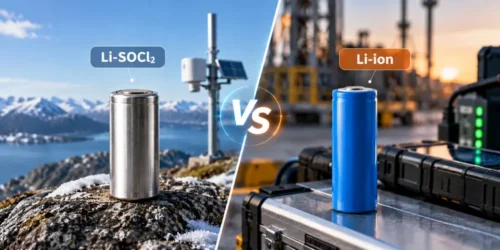
As electric vehicles, energy storage systems, and industrial equipment are increasingly deployed in cold climates, battery performance in low temperatures has become a critical factor.
Standard lithium batteries can suffer from reduced capacity, lower power output, slower charging, and increased internal resistance in cold environments. For example, at -20°C, standard batteries may experience 30–50% range reduction, affecting vehicle operation and industrial efficiency.
To address these challenges, low temperature lithium batteries and wide temperature lithium batteries have been developed to provide more stable performance under extreme conditions.

Key Differences Between Low Temperature and Standard Lithium Batteries
Low temperature lithium batteries differ from standard lithium batteries in design, technical approach, and performance, particularly for cold environment applications.

1. Operating Temperature Range
- Standard lithium batteries: Typically operate between 0°C and 45°C, with performance declining in cold conditions.
- Low temperature lithium batteries: Optimized materials and design allow operation at -20°C to -30°C.
- Wide temperature lithium batteries: Can operate reliably from -40℃~+85℃, offering stable performance across a broader range.
2. Low-Temperature Discharge Performance
Standard batteries lose significant capacity in cold environments:
- Around 20–30% at -10°C
- Around 40% at -20°C
Low temperature lithium batteries optimize electrode materials and electrolyte formulation to maintain stable discharge and power output under cold conditions.
3. Low-Temperature Charging Capability
Charging standard lithium batteries in cold conditions risks lithium plating, so the Battery Management System (BMS) often limits charging current. Low temperature and wide temperature batteries use optimized materials and control strategies to allow safer, more efficient charging in cold environments.
4. Battery Lifetime
Prolonged use in low temperatures can reduce the cycle life of standard batteries. Low temperature and wide temperature batteries incorporate structural and thermal management optimizations to maintain a more stable cycle life under cold conditions.
Main Application Scenarios
Low temperature lithium batteries are particularly suited for vehicles and equipment operating in cold environments:
Electric Logistics Vehicles
- Challenges: Winter range reduction and lower charging efficiency
- Solution: Low temperature batteries reduce range loss and improve operational efficiency
Cold Chain Transportation
- Challenges: Transporting perishable food and pharmaceuticals in subzero environments
- Solution: Batteries provide stable power for propulsion and refrigeration systems
Outdoor Industrial Equipment
- Applications: Polar monitoring devices, cold-region construction, and outdoor industrial equipment
- Solution: Maintain stable performance under extreme cold conditions
Advantages of Wide Temperature Lithium Batteries
As the industry evolves, low temperature batteries are developing into wide temperature lithium batteries. By optimizing materials, battery structure, and thermal management systems, wide temperature batteries maintain reliable performance across a broader temperature range.
For example, UltraXel wide temperature batteries, developed by Guangzhou Aochuang Technology, operate reliably from -40℃~+85℃, significantly reducing cold weather performance degradation.
Key advantages over standard lithium batteries include:
- Reduced winter range loss
- Stronger low-temperature start-up capability
- More stable cycle life
- Broader application suitability
Wide temperature batteries are increasingly used in electric logistics vehicles, cold chain systems, and outdoor industrial equipment.
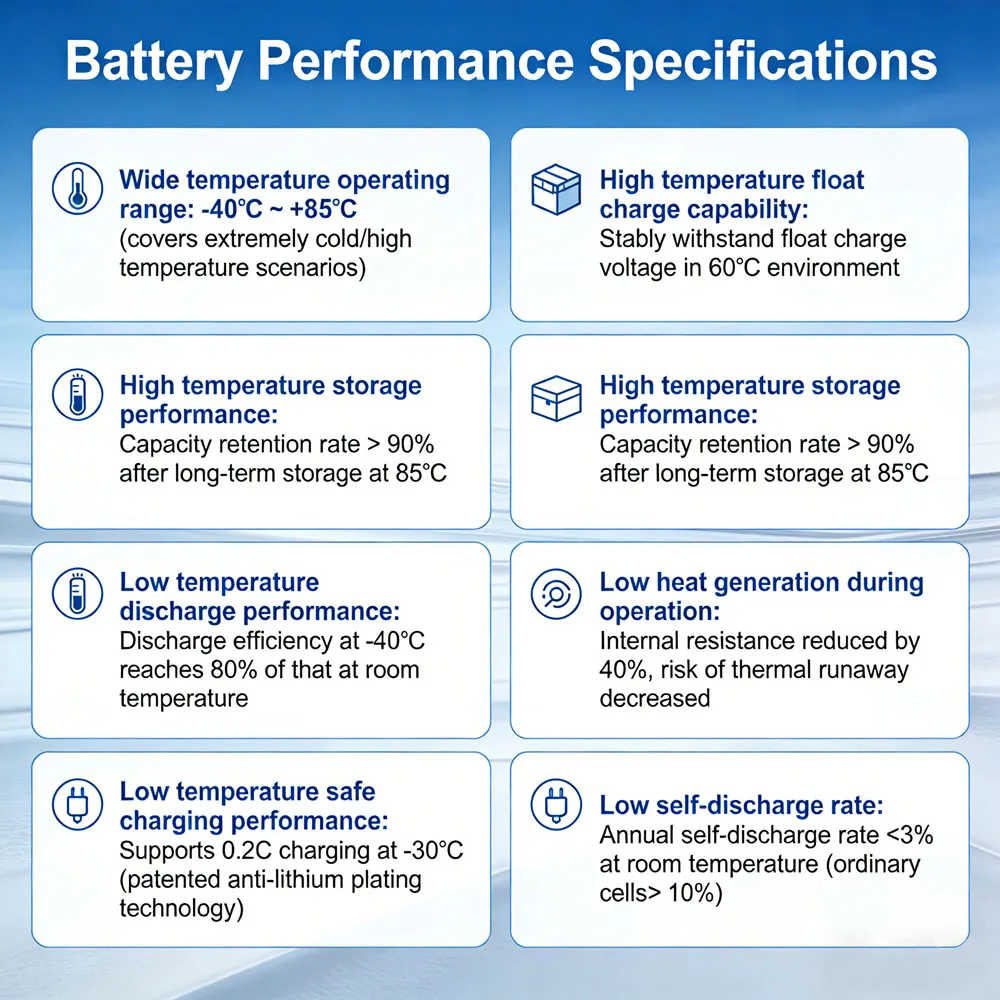
UltraXel Wide Temperature Battery Solutions
Guangzhou Aochuang Technology (UltraXel) focuses on the development of wide temperature lithium batteries to provide reliable energy solutions in extreme conditions.
Core technologies include:
- Optimized electrode materials and electrolytes
- Advanced battery thermal management system (BTMS)
- Intelligent BMS control strategies
UltraXel wide temperature batteries are applied in:
- Electric logistics vehicles
- Cold chain transportation fleets
- Industrial and outdoor equipment
These innovations ensure stable performance in cold environments and contribute to improved operational efficiency and battery longevity.
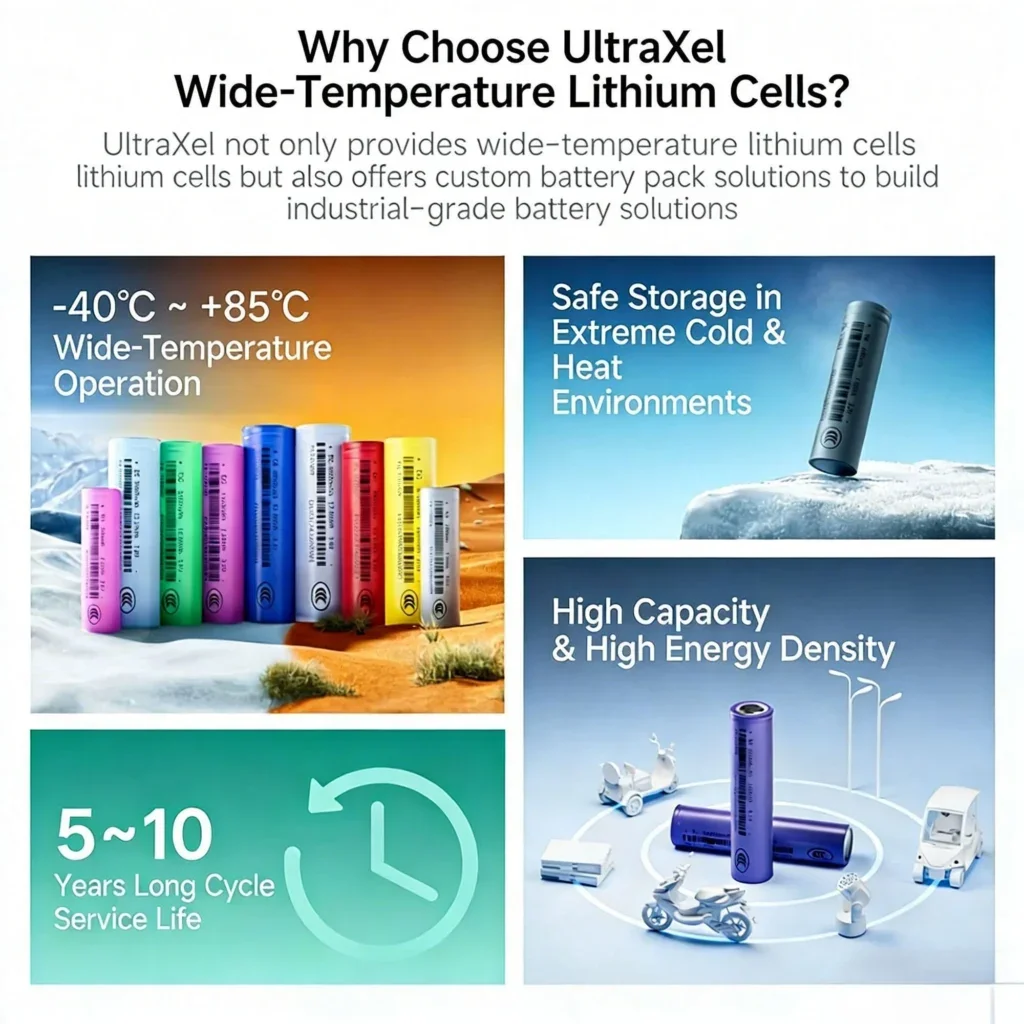
Driving the Future of Cold Climate Applications
As electric mobility and energy storage continue to expand, low temperature and wide temperature lithium battery technologies are becoming increasingly important for vehicles and equipment operating in cold climates.
By improving winter range stability, enhancing low-temperature charging efficiency, and maintaining battery life, wide temperature lithium batteries enable reliable operation in extreme environments.
With ongoing innovation from companies like Guangzhou Aochuang Technology (UltraXel), wide temperature batteries are supporting safer, more efficient, and more reliable energy solutions for global cold-climate applications.