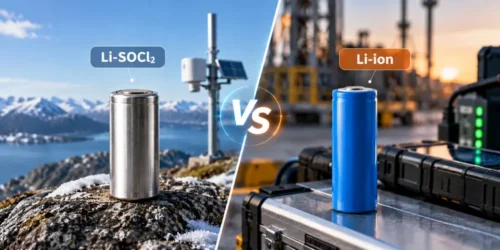
What Are Li-SOCl₂ and Li-ion Batteries?
Li-SOCl₂ batteries are non-rechargeable primary lithium batteries, known for their high energy density, extremely low self-discharge, and long storage life.
They are common in smart meters, remote sensors, and other low-power devices that must operate for over 10 years without replacement.
Li-ion batteries are rechargeable, suitable for equipment that requires repeated use, higher discharge currents, or regular charging.
Specialized wide-temperature Li-ion cells can also support industrial applications exposed to challenging environmental conditions.
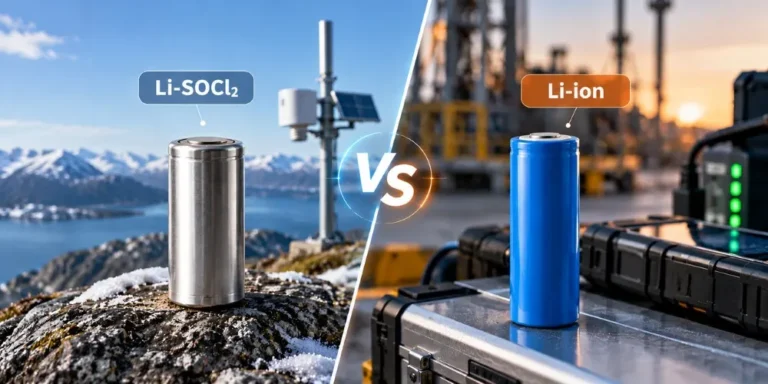
Li-SOCl₂ vs Li-ion: Key Specifications Compared
The following table compares typical Li-SOCl₂ battery with UltraXel wide-temp Li-ion cell specifications.
| Feature | Li-SOCl₂ Battery | UltraXel Wide-Temperature Li-ion Battery |
| Battery Type | Primary, non-rechargeable | Secondary, rechargeable |
| Nominal Voltage | 3.6V | 3.2V (LFP) / 3.6V (NMC) |
| Operating Voltage | Relatively flat discharge plateau | Approximately 3.0–4.2V |
| Operating Temperature | -55°C to +85°C | -40°C to +85°C |
| Self-Discharge | Typically ≤1% per year | Approximately 3% per month under referenced conditions |
| Lifespan | Can exceed 10 years | 5 years (Requires proper storage) |
| Energy Density | Approx. 500–590 Wh/kg | Lower than Li-SOCl₂ (varies by model) |
| Continuous Discharge | Low current for standard bobbin-type cells | Higher current capability, depending on model |
| Pulse Current | Approx. 150–200mA for 100ms | 1–2A |
| Passivation | May cause voltage delay | No equivalent Li-SOCl₂ passivation-related voltage delay |
| Rechargeability | No | Yes |
| Main Advantage | Long-term, low-maintenance power | Rechargeability and higher power capability |
| Best Applications | Smart meters, remote monitoring, low-power IoT | Wireless devices, industrial equipment, rechargeable IoT |
6 Key Differences Between Li-SOCl₂ and Li-ion Batteries
1. Rechargeability and Battery Life
Li-SOCl₂ batteries are for single-use operation, while Li-ion batteries can be recharged repeatedly.
Li-SOCl₂ batteries have extremely low self-discharge (typically ≤1% per year), making them ideal for low-power devices requiring years of maintenance-free operation.
Li-ion batteries have higher self-discharge and experience capacity loss over time, but their rechargeability reduces the need for frequent battery replacement.
Li-SOCl₂ is better for long-term remote monitoring, while Li-ion is more practical for frequently used industrial equipment with access to charging.
2. Voltage and Energy Density
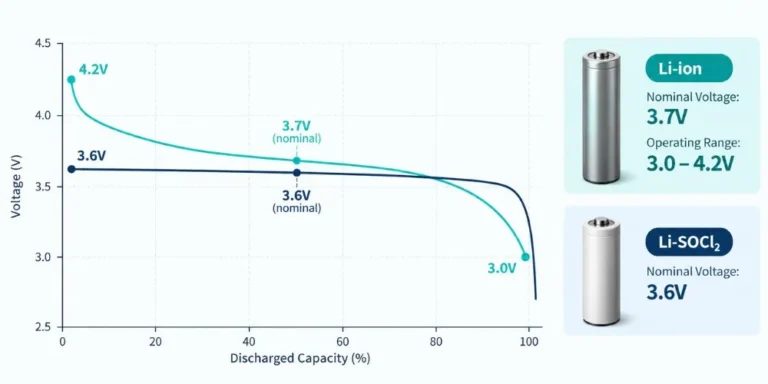
Li-SOCl₂ batteries provide a nominal voltage of 3.6V with a relatively flat discharge curve, while Li-ion batteries typically have a nominal voltage of 3.7V and an operating range of 3.0–4.2V.
Despite their similar nominal voltages, they are not directly interchangeable, as a fully charged Li-ion cell may exceed the device’s voltage limits.
Li-SOCl₂ batteries offer a high energy density of approx. 500–590 Wh/kg in certain designs, generally exceeding that of conventional Li-ion cells.
3. Continuous and Pulse Discharge Current
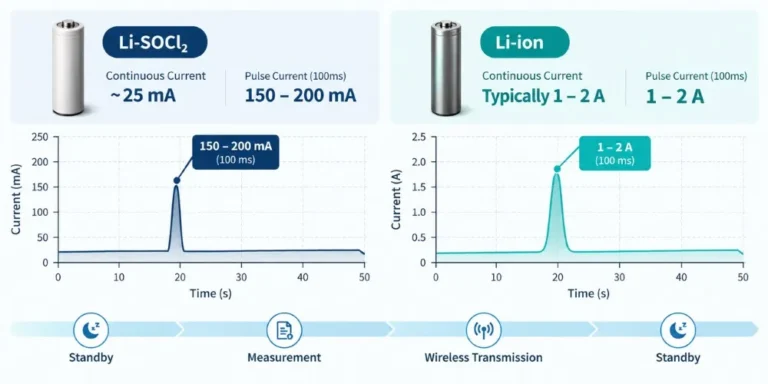
Standard bobbin-type Li-SOCl₂ batteries usually have low continuous current, with some models limited to approx. 25mA continuous discharge and 150–200mA pulses (100ms). (Higher-rate Li-SOCl₂ designs are also available.)
In comparison, Li-ion cells, take Ultraxel wide-temperature batteries for example, can deliver 1–2A pulse currents.
This makes Li-ion a potential alternative for industrial wireless probes, GPS trackers, and IoT devices requiring frequent high-current bursts.
4. Operating Temperature Range
Li-SOCl₂ batteries typically operate from -55°C to +85°C, offering an advantage in extremely cold environments.
UltraXel wide-temperature Li-ion cells support discharge temperatures from -40°C to +85°C. They are suitable for industrial applications requiring rechargeable power or higher discharge currents.
Temperature ratings alone do not guarantee performance. Available capacity, voltage stability, and discharge current must also be evaluated at the required temperature.
Li-ion charging limits require separate verification, as a cell capable of discharging at -40°C may not support charging at that temperature.
5. Passivation and Voltage Delay
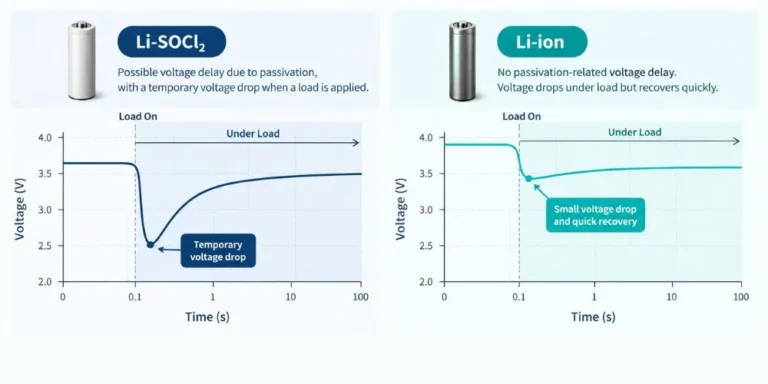
Li-SOCl₂ batteries can develop passivation in long-term storage or low-current operation, causing a temporary voltage drop when a load is applied.
The voltage delay may affect device startup and high-current pulses, especially at low temperatures.
Li-ion batteries do not experience the same passivation-related voltage delay. They are potentially more suitable for devices requiring immediate power delivery.
Li-ion cells can still experience voltage sag under low temperatures or heavy loads. For Li-SOCl₂ systems, pulse-assist capacitors or appropriate cell selection can help mitigate voltage delay without replacing the battery chemistry.
6. Safety, Maintenance, and Cost
Li-SOCl₂ batteries contain thionyl chloride, which presents chemical hazards if damaged.
Li-ion batteries avoid this chemical but require protection against overcharging, short circuits, and thermal runaway.
Li-SOCl₂ offers low maintenance requirements for devices operating for years without battery replacement.
In contrast, rechargeable Li-ion can reduce replacement frequency and associated labor costs.
Li-SOCl₂ is often more economical for long-term unattended devices, while Li-ion may offer lower total costs for frequently used equipment with convenient charging access.
Can You Replace Li-SOCl₂ with Li-ion? Key Considerations
Li-ion can replace Li-SOCl₂ in certain applications, but it is not a direct drop-in replacement.
When to Choose Li-ion vs Li-SOCl₂
| Application Requirements | Li-ion Is Preferable When | Li-SOCl₂ Is Preferable When |
| Charging & Maintenance | Regular charging is available, and batteries require frequent replacement. | The device must operate for years without charging or maintenance. |
| Discharge Current | Frequent high-current pulses or sustained higher loads are required. | Power consumption is low, with occasional pulses within the battery system’s capability. |
| Service Life | Repeated charging can reduce battery replacement and operating costs. | Extremely low self-discharge and long unattended operation are priorities. |
| Temperature | The application operates within the specified Li-ion charging and discharging limits. | Operation below -40°C is required and a suitable Li-SOCl₂ cell is available. |
| Startup Performance | Immediate pulse delivery is needed without Li-SOCl₂-type passivation-related voltage delay. | The existing cell and power-management design reliably meet startup requirements. |
Key Checks Before Replacing Li-SOCl₂ with Li-ion
| Evaluation Factor | Key Considerations |
| Voltage Compatibility | Verify that the device supports the Li-ion operating voltage range (typically 3.0–4.2V). |
| Battery Size | Confirm dimensions, terminal type, and installation compatibility. |
| Discharge Requirements | Check continuous current, peak current, pulse duration, and voltage drop under load. |
| Charging & Temperature | Ensure compatible charging and protection circuits, including appropriate temperature limits. |
| Service Life & Safety | Evaluate cycle life, maintenance intervals, and applicable safety requirements. |
Existing equipment may require modifications to its power-management circuits, charging system, or battery compartment before replacement.
Li-SOCl₂ vs Li-ion for Industrial Applications
Battery selection depends on the device’s power demand, operating environment, and charging availability.
Here are six industrial applications:

Industrial Wireless Sensors & IoT
Key Requirements: Low standby power · Wireless transmission · Long service life
Li-SOCl₂ is ideal for low-power sensors requiring years of unattended operation.
Li-ion is worth considering for rechargeable devices with frequent communication or higher pulse-current demands.
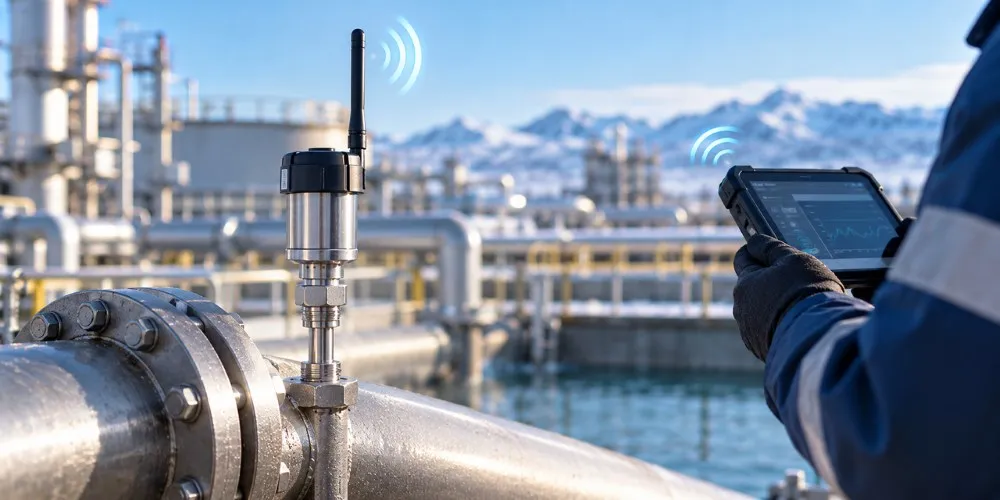
Industrial Wireless Probes
Key Requirements: Compact size · Reliable startup · Repeated operation
Rechargeable Li-ion may be suitable for frequently used wireless probes, provided the device supports the required voltage range and charging system.
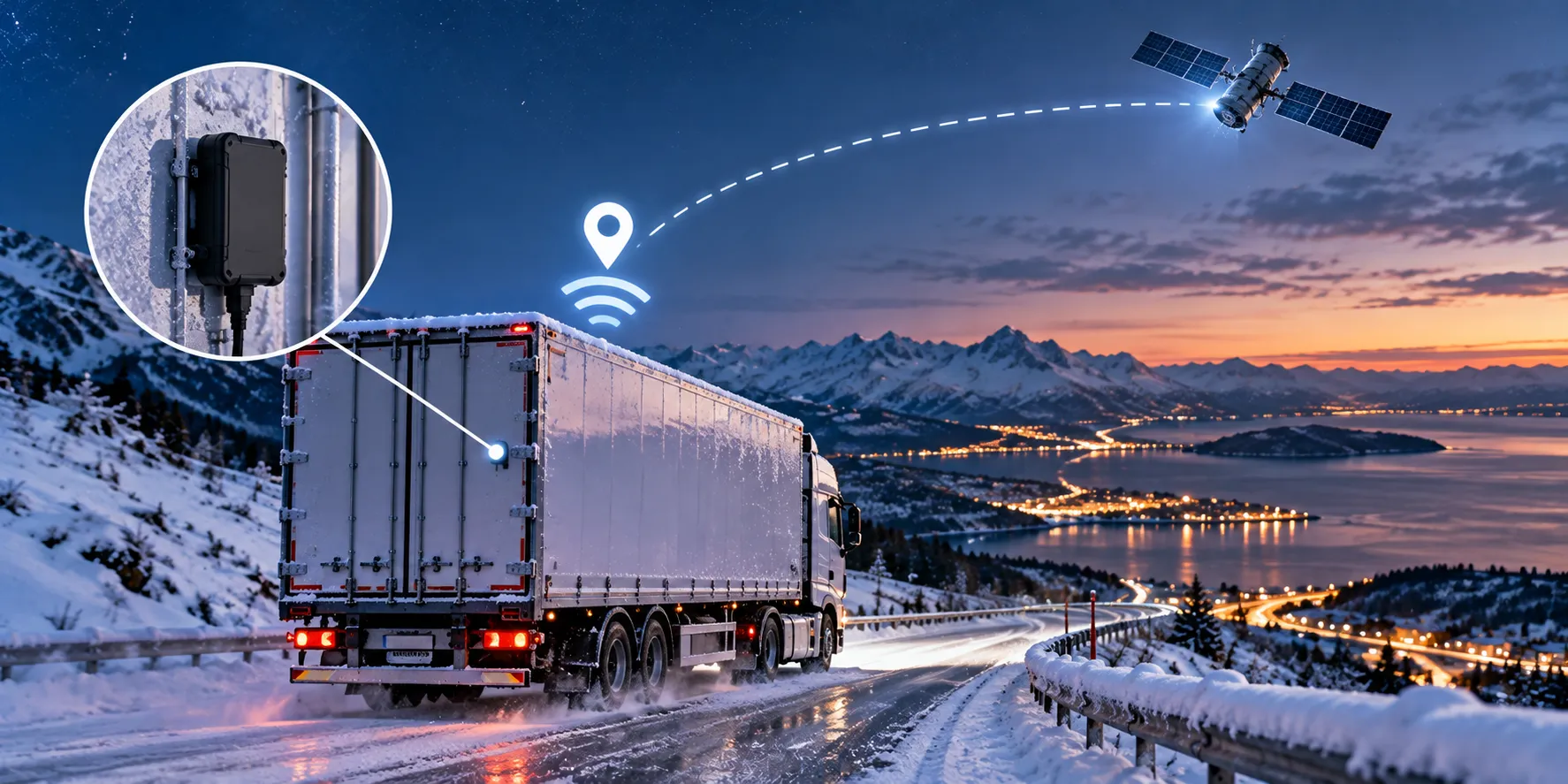
GPS Tracking & Outdoor Security
Key Requirements: Pulse current · Outdoor temperature tolerance · Wireless connectivity
Li-ion suits rechargeable devices with frequent location updates or wireless transmissions.
Li-SOCl₂ remains suitable for low-frequency tracking with long maintenance intervals.
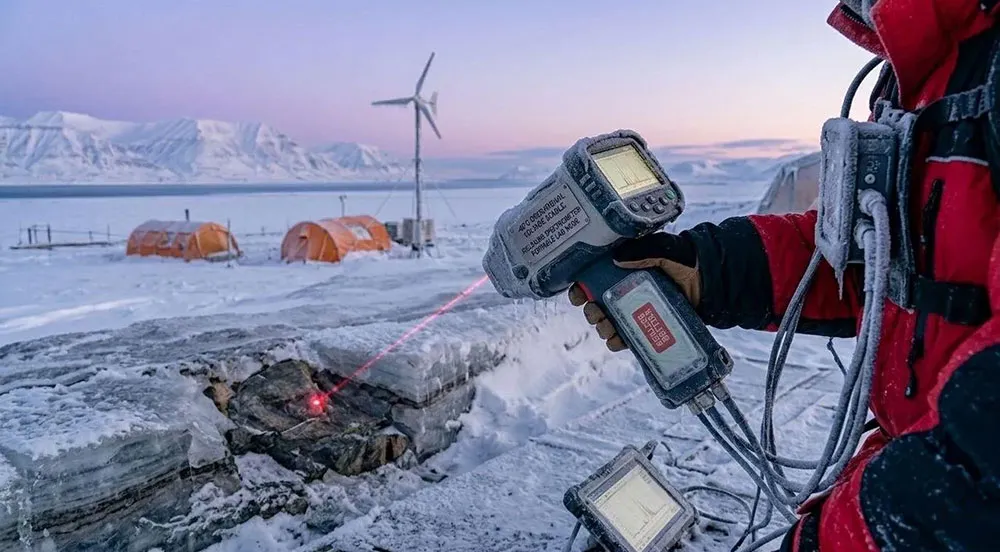
Industrial Handheld Equipment
Key Requirements: Higher discharge current · Frequent use · Rechargeability
Li-ion is generally more practical for handheld devices requiring regular operation and charging.

Scientific Instruments & Data Loggers
Key Requirements: Stable power · Periodic data collection · Predictable runtime
Li-ion suits reusable instruments with accessible charging, while Li-SOCl₂ is preferable for long-term unattended data logging.
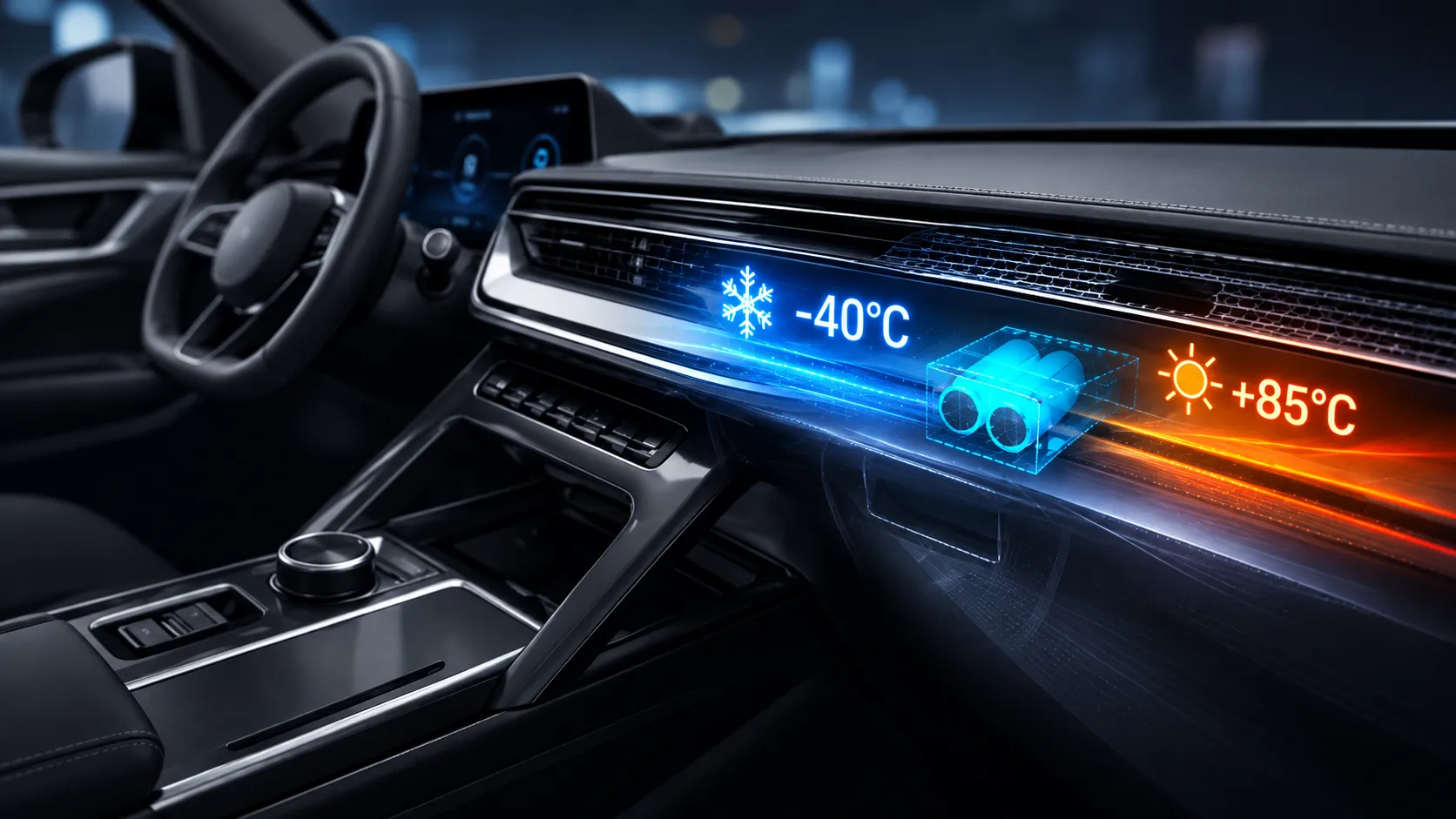
Automotive Aftermarket Devices
Key Requirements: Temperature tolerance · Communication pulses · Vehicle power integration
Rechargeable Li-ion batteries can support automotive aftermarket devices, such as GPS trackers, T-Boxes, OBD-II tracking devices, and fleet monitoring systems.
They are suitable for applications requiring frequent data transmission and reliable power delivery.
UltraXel Wide-Temperature Li-ion Battery Solutions
UltraXel offers wide-temperature rechargeable lithium battery cells for industrial OEMs evaluating alternatives to Li-SOCl₂.
Different models address specific requirements for battery size, discharge current, operating temperature, and cycle life.
| UltraXel Model | Key Specifications | Recommended Applications |
| HL14500R | 3.6V · 750mAh · Wide-temperature NCM | Compact wireless probes, GPS trackers, and electronic access control |
| HL18650T | 3.6V · 2000mAh · Wide-temperature NCM | Industrial IoT terminals, T-Box systems, and high-temperature standby applications |
| HL18650V | 3.6V · 2900mAh · Wide-temperature NCM | Outdoor GPS tracking, security monitoring, and cold-weather data collection |
| HL18650Y | 3.6V · 3200mAh · Wide-temperature NCM | Scientific instruments, portable monitoring equipment, and rechargeable data loggers |
| HL18650F | 3.6V · 3000mAh · NCM · Up to 30A discharge | High-power industrial devices, wireless security cameras, and equipment with demanding startup loads |
UltraXel also supports customized wide-temperature battery packs with PCM/BMS protection, temperature monitoring, and connector integration.
FAQ
Can Li-SOCl₂ batteries be recharged?
No. Li-SOCl₂ batteries are primary lithium batteries designed for single-use operation. Attempting to recharge them can create serious safety risks.
If your equipment requires rechargeable power, an appropriately designed Li-ion battery system may be a suitable alternative.
Can a 3.6V Li-SOCl₂ battery be replaced with a 3.7V Li-ion battery?
Not directly. Although their nominal voltages are similar, conventional 3.7V Li-ion cells can reach approximately 4.2V when fully charged. The device must support the complete operating voltage range, and an appropriate charging and protection system must be provided.
Which battery lasts longer, Li-SOCl₂ or Li-ion?
Li-SOCl₂ typically provides longer storage life and is well suited to low-power equipment operating for years without maintenance.
Li-ion can be recharged repeatedly, making it more practical for frequently used equipment with suitable charging arrangements.
Which battery is better for low-temperature IoT devices?
Li-SOCl₂ may be preferable for long-life, low-power IoT devices operating in severe cold, particularly where charging is unavailable.
Specialized wide-temperature Li-ion cells can be suitable for rechargeable IoT devices operating within their specified temperature and current limits.