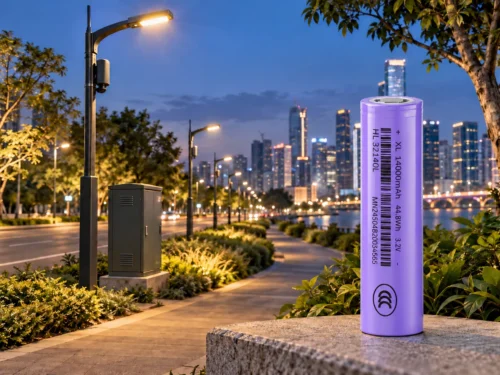
What Is a 32140 Battery?
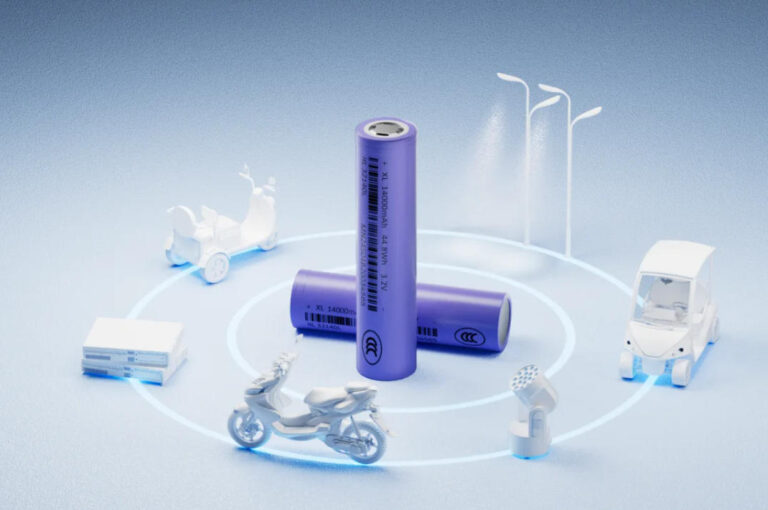
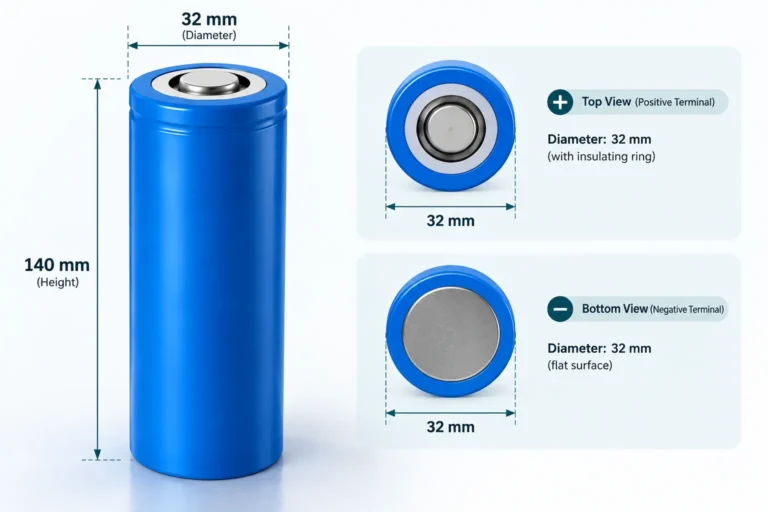
A 32140 battery is a cylindrical rechargeable battery cell with approximately 32 mm in diameter and 140 mm in length.
These cells are currently available in several battery chemistries, mainly including lithium iron phosphate (LiFePO4), sodium-ion, and lithium titanate (LTO).
Here are the typical parameters of 32140 batteries:
| Parameter | Standard 32140 Battery |
| Battery format | Cylindrical cell |
| Nominal diameter | Approximately 32 mm |
| Nominal length | Approximately 140 mm |
| Battery chemistry | LiFePO4, sodium-ion, LTO |
| Battery weight | 270–305g (15Ah LiFePO4 cells) 260–280g (10Ah Sodium-ion cells) 255–285g (9Ah LTO cells) |
| Terminal configuration | Flat, threaded, or welded-tab terminals |
32140 Battery Specifications: Voltage, Capacity and Performance
32140 battery specifications vary depending on the cell chemistry, capacity, and design. The following sections explain the key electrical and performance parameters, using the UltraXel HL32140L 15Ah LiFePO4 cell as a reference.
Voltage and Capacity
A 32140 LiFePO4 battery typically has a nominal voltage of 3.2V. Its capacity depends on the specific cell model and is measured in ampere-hours (Ah).
Battery energy can be estimated using:
Energy (Wh) = Nominal Voltage (V) × Capacity (Ah)
For example, the HL32140L has a nominal voltage of 3.2V and a capacity of 15Ah, providing approximately 48Wh of nominal energy per cell.
Charging and Discharging Performance
With a high discharge capability, the HL32140L can support industrial equipment with relatively high power requirements, provided the operating conditions remain within its specified limits.
| Specification | UltraXel HL32140L |
| Nominal Capacity | 15Ah |
| Maximum Charge Current | 4.5A |
| Discharge Capability | 45A |
Cycle Life and Operating Temperature
Actual cycle life depends on operating temperature, depth of discharge, charging conditions, and other test parameters.
For conventional lithium-ion batteries, a commonly referenced operating temperature range is about −20°C to +60°C for discharging, while charging is typically more restricted, often starting at 0°C.
Specialized wide-temperature cells can operate beyond these conventional limits.
The HL32140-L is for wide-temperature applications, with an operating temperature range extending from −40°C to +85°C.
| Specification | UltraXel HL32140L |
| Cycle Life | ≥2,000 cycles |
| Operating Temperature | −40°C to +85°C |
| Capacity Retention | About 70% capacity retention after around 1,800 cycles at 45°C |
Common Applications of 32140 Batteries
The 32140 cylindrical format is used in battery systems where relatively high capacity per cell, long service life, and reliable power delivery are important.

Solar Street Lighting
Solar street lights require batteries that support daily charging and nighttime operation. High-capacity 32140 LiFePO4 cells can provide energy storage for outdoor lighting systems exposed to seasonal temperature changes.

Industrial Backup Power
Industrial control cabinets, automation equipment, and remote power systems require dependable backup energy. 32140 batteries offer high capacity and long service life for industrial installations.
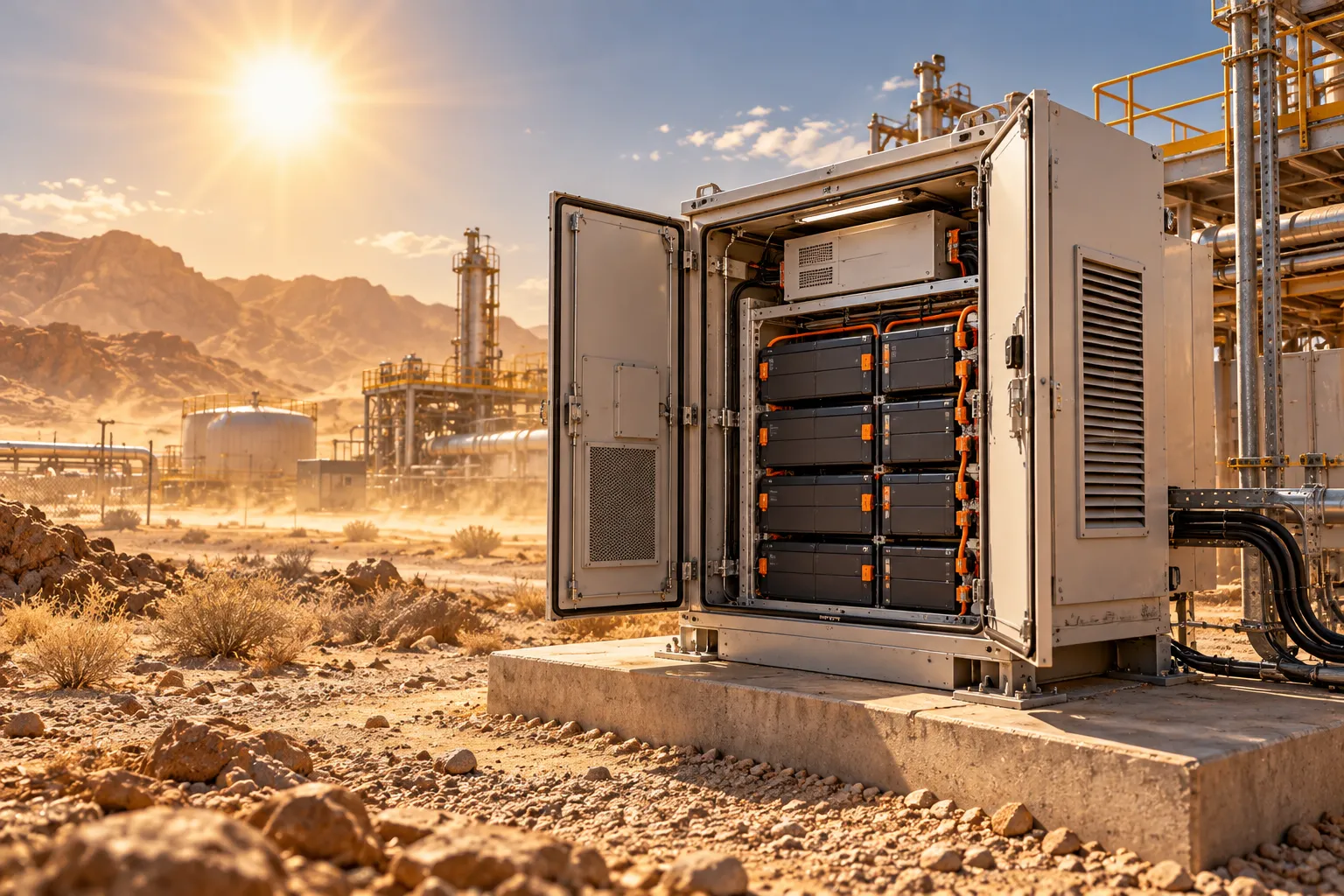
Outdoor Telecom Backup Power
Telecom cabinets, communication nodes, and remote base stations need reliable power during outages. Wide-temperature 32140 cells can support backup systems operating in harsh outdoor environments.

Remote Monitoring and RTU Equipment
Remote terminal units (RTUs), telemetry devices, and outdoor data loggers often operate with limited maintenance access. Long-life 32140 batteries can support extended operation in remote locations.

AGV and AMR Systems
Automated guided vehicles (AGVs) and autonomous mobile robots (AMRs) require stable power during movement and acceleration. High-discharge 32140 cells are suitable for industrial mobile equipment, including cold-storage applications.

Environmental Monitoring
Weather stations, hydrological sensors, and environmental monitoring systems require dependable outdoor power. Wide-temperature 32140 batteries can support long-term operation across changing seasonal conditions.
Different Chemistry Types of 32140 Battery
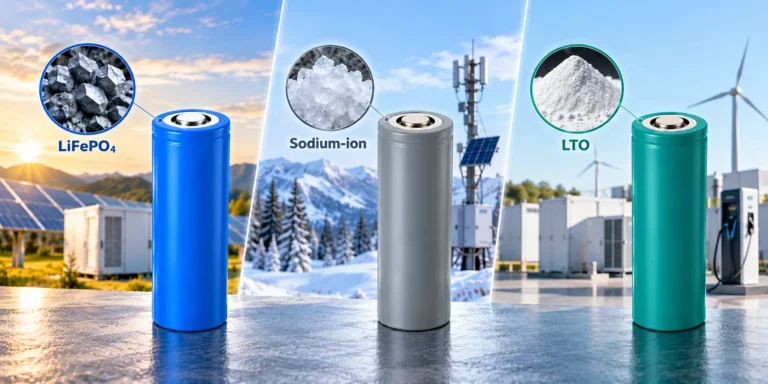
32140 cylindrical cells are available in different battery chemistries, including lithium iron phosphate (LiFePO4), sodium-ion, and lithium titanate (LTO). Although they share a similar physical format, their electrical characteristics and operating limits can differ.
| Feature | 32140 LiFePO4 | 32140 Sodium-Ion | 32140 LTO |
| Battery Chemistry | Lithium iron phosphate | Sodium-ion | Lithium titanate |
| Nominal Voltage | 3.2V | 3.0–3.1V | 2.3V |
| Reference Capacity | 15Ah | 10Ah | 9Ah |
| Nominal Energy | 48Wh | 30–31Wh | 20.7Wh |
| Cell Weight | Approx. 270–305g | Approx. 260–280g | Approx. 255–285g |
| Cycle Life | ≥2,500–3,500 cycles | ≥1,000–3,000 cycles | Approx. 10,000–20,000 cycles* |
| Charging Temperature | 0°C to +60°C (standard models) −40°C to +85°C (UltraXel HL32140L) | −10°C to +65°C | Approx. −30°C to +60°C* |
| Maximum Charge Voltage | 3.60–3.65V | 3.95–4.0V | Approx. 2.7–2.8V* |
(LTO cycle life, charging temperature, and maximum charge voltage are indicative values for LTO cell technology.)
A LiFePO4 battery is a practical option for applications requiring relatively high nominal energy per cell, established charging characteristics, and long service life.
Sodium-ion may be considered for applications prioritizing low-temperature performance and alternative battery materials.
LTO is particularly relevant to applications requiring frequent charge-discharge cycles, long cycle life, and low-temperature charging capability, although its lower nominal voltage and energy per cell must be considered.
Choose the Right 32140 Battery for Your Project
Choosing the right 32140 battery involves evaluating its electrical performance, operating environment, and system compatibility. Follow these five steps to identify a suitable cell for your application.
STEP 1
Battery Chemistry & Voltage
LiFePO4 or Sodium-ion · Nominal voltage · Charging compatibility
STEP 2
Capacity & Discharge
Required runtime · Continuous current · Peak loads
STEP 3
Operating Temperature
Charging/discharging limits · Capacity retention
STEP 4
Size & Battery Pack Integration
Dimensions · Terminals · BMS · Pack configuration
STEP 5
Testing & Reliability
Cycle life · Safety documentation · Application testing
For applications requiring reliable performance across extreme temperatures, a specialized wide-temperature LiFePO4 cell may be a suitable choice. UltraXel’s HL32140L is designed to meet demanding outdoor and industrial power requirements.
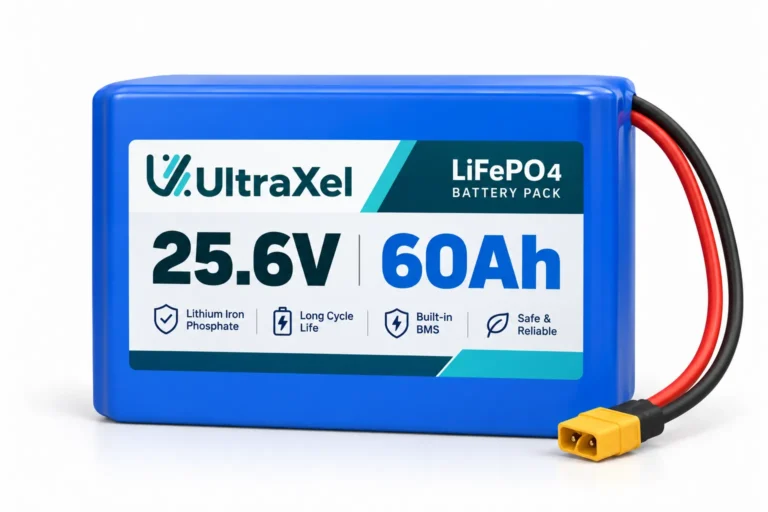
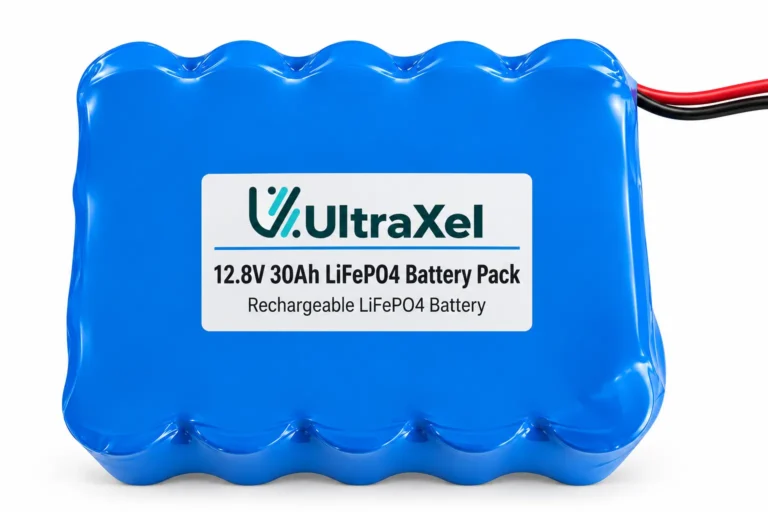
UltraXel HL32140L LiFePO4 Battery Cell
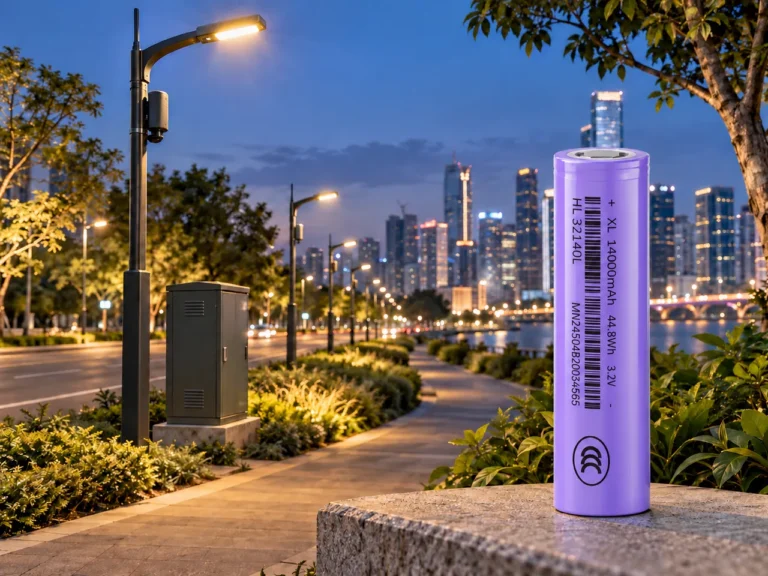
The UltraXel HL32140L is a 3.2V 15Ah cylindrical LiFePO4 battery cell for applications requiring high discharge capability and operation across a wide temperature range. Ideal for outdoor monitoring, solar energy systems, industrial equipment, and backup power applications.
- Wide-Temperature Operation: Supports charging from −20°C to +60°C and discharging from −40°C to +80°C.
- Reliable Low-Temperature Performance: Retains ≥60% capacity at −40°C under 1C discharge conditions.
- High Discharge Capability: Delivers up to 45A discharge for power-demanding equipment.
- 15Ah High Capacity: Provides 48Wh nominal energy per cell for extended runtime and battery pack integration.
For more options of formats and chemistries, contact UltraXel and tell us your technical requirements. We can help you find the best wide temperature battery solution.
FAQ
What is the difference between a 32140 and a 32700 battery?
The main difference is cell size. A 32140 battery is approximately 32 mm in diameter and 140 mm long, while a 32700 battery is approximately 32 mm in diameter and 70 mm long.
Are all 32140 batteries LiFePO4?
No. The 32140 designation refers to the approximate cylindrical cell dimensions, not the battery chemistry. 32140 cells can use LiFePO4 or sodium-ion chemistry, among other possible designs.
Can a 32140 battery be charged below 0°C?
Many standard LiFePO4 batteries do not permit charging below 0°C because of the risk of lithium plating and cell degradation.
Specialized low-temperature LiFePO4 cells, such as the UltraXel HL32140-L, may support charging below freezing within specified temperature and current limits.
How long does a 32140 battery last?
Some LiFePO4 32140 cells can last for thousands of charge-discharge cycles (like UltraXel HL32140L) under specified test conditions.
But cycle life should not be interpreted as a guaranteed number of service years. Actual lifespan depends on how the battery is used.
Can 32140 cells be used in custom battery packs?
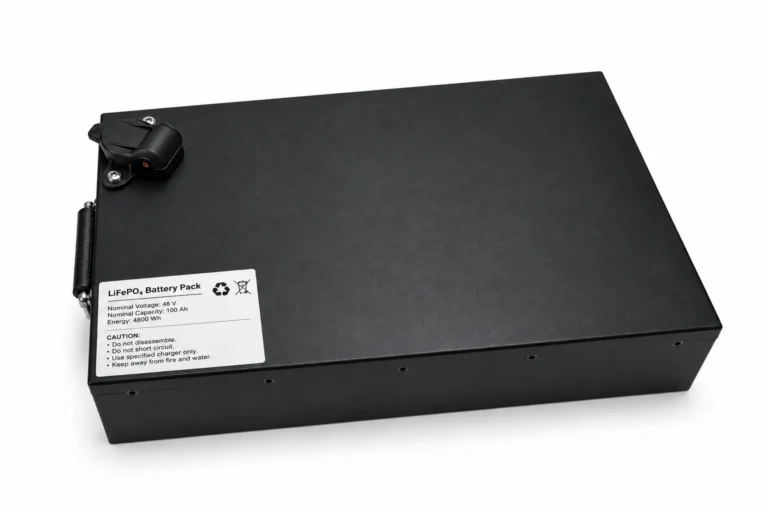
Yes. Suitable 32140 cells can be connected in series and parallel configurations to achieve the required voltage and capacity.
A custom battery pack must also account for cell matching, current distribution, BMS protection, temperature monitoring, mechanical assembly, and charging compatibility.