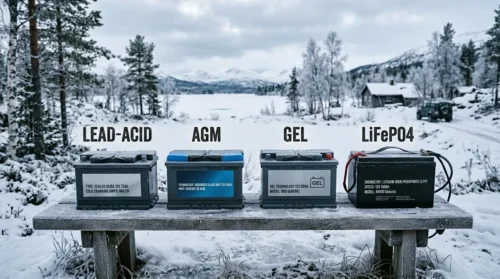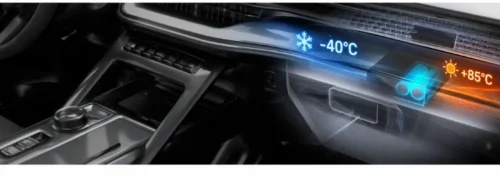
For many standard lithium-ion batteries, -20°C (-4°F) is the typical lower limit for discharging, while charging is generally restricted below 0°C (32°F). However, operating at -20°C does not mean the battery will deliver its full capacity or power.
As temperatures drop, lithium batteries may experience reduced capacity, greater voltage drop, and shorter runtime. Charging below freezing can also increase the risk of lithium plating and permanent damage.
So, how cold can a lithium battery actually get before performance or safety becomes a concern? The answer depends on whether you’re charging, discharging, or storing it. And whether you’re using a standard or low-temperature battery.
How Lithium Batteries Perform at Different Temperatures
| Temperature | Effect on a standard lithium-ion battery | Recommended action |
| 10°C to 30°C (50°F to 86°F) | Common room-temperature range for ideal operation. | Follow the specified charging and discharging limits. |
| 0°C to 10°C (32°F to 50°F) | Available power begin to decline (particularly under heavier loads). | Check the cell’s minimum charging temperature. |
| Below 0°C (32°F) | Many standard cells restrict charging. | Do not charge unless the cell specifications allow it. Use an approved heating system or low-temperature cell. |
| −20°C to 0°C (−4°F to 32°F) | A device may shut down early if its voltage falls under load. | Review low-temperature discharge data and test startup and peak loads. |
| −20°C to −40°C (−40°F to −4°F) | Below the rated discharge range of many standard cells. | Select a low temperature battery and validate performance under actual loads. |
Charging Below Freezing
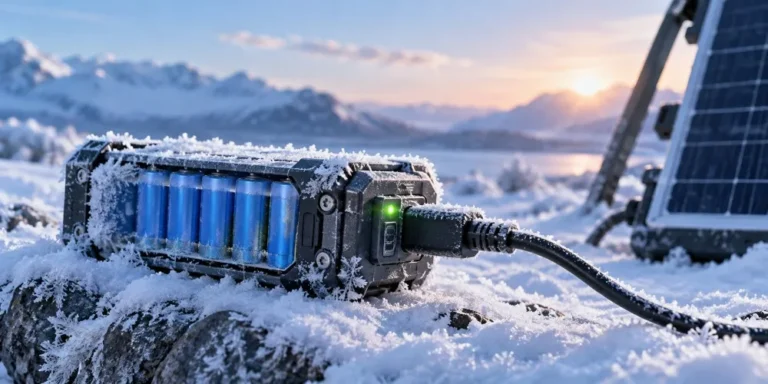
For many standard lithium-ion batteries, charging below 0°C (32°F) is not recommended or permitted. At low temperatures, lithium ions move more slowly within the cell, increasing the risk of lithium plating on the anode during charging. This can cause permanent capacity loss and increase safety risks.
Cold-weather charging systems commonly use one of three approaches:
- Low-temperature cutoff: The BMS blocks charging when the cell is colder than its permitted limit.
- Battery heating: A heater warms the cell before charging starts. The design needs to account for heater energy and warm-up time.
- Low-temperature cell: A cell designed and specified for sub-zero charging may allow it within stated temperature and current limits.
A BMS can enforce a cell’s limits, but it does not make a standard cell suitable for charging below its specified minimum. Always check the cell and pack specifications.
Discharging in Cold Weather

Many standard lithium-ion batteries can discharge at temperatures as low as −20°C (−4°F), but their available capacity and power output generally decrease as temperatures fall.
Cold temperatures slow electrochemical reactions and increase internal resistance, causing greater voltage drop under load. A battery may still contain usable energy but fail to supply sufficient voltage during startup or high-current operation.
The actual discharge performance depends on three key factors:
- Temperature: Lower temperatures generally reduce available capacity and increase voltage drop.
- Discharge rate (C-rate): Higher current demands can produce greater voltage sag and earlier cutoff.
- Device cutoff voltage: Equipment may shut down when the battery voltage drops below its minimum operating threshold, even if some energy remains.
Best Temperature for Long-Term Storage
Long-term storage has its own temperature and state-of-charge requirements. A cell rated to discharge at a very low temperature is not necessarily intended to be stored there for months.
Follow the manufacturer’s storage specifications, including temperature, state of charge (SOC), and storage duration.
Commonly recommended general reference points are:
5°C to 20°C (41°F to 68°F) and 40–60% SOC
Three factors are particularly important for long-term storage:
- Storage temperature: High temperatures accelerate battery aging, while prolonged exposure to extreme cold may fall outside the manufacturer’s validated storage conditions.
- State of charge: Storing a battery fully charged can increase aging, while storing it at very low SOC increases the risk of over-discharge.
- Storage duration: Cells gradually self-discharge, and battery-pack protection circuits may consume additional energy during storage. Periodic voltage or SOC checks may be necessary.
Before charging a battery that has been stored in the cold, allow it to reach its specified charging temperature.
What Engineers Should Check
For an OEM or industrial application, assess the battery against the conditions it will actually experience.
- Minimum cell temperature: Consider the temperature inside the device, not only the outdoor air temperature.
- Charging conditions: Confirm whether charging occurs in the cold and at what current.
- Load profile: Include continuous demand, startup current, and communication peaks.
- Performance data: Review capacity and voltage curves with test temperature, discharge rate, and cutoff voltage stated.
- Pack design: Check the BMS, temperature sensing, charger, wiring, connectors, enclosure, and any heating system.
- Application validation: Test the completed pack in the device under representative temperature and load conditions.
UltraXel HL18650V: A Low-Temperature 18650 Battery Example
For equipment that must operate in severe cold, a purpose-designed low-temperature cell may be worth evaluating.
UltraXel’s HL18650V is a standout option for applications where low-temperature discharge performance is the priority, including environmental monitoring, cold-chain tracking, field instruments, and cold-storage barcode scanners.
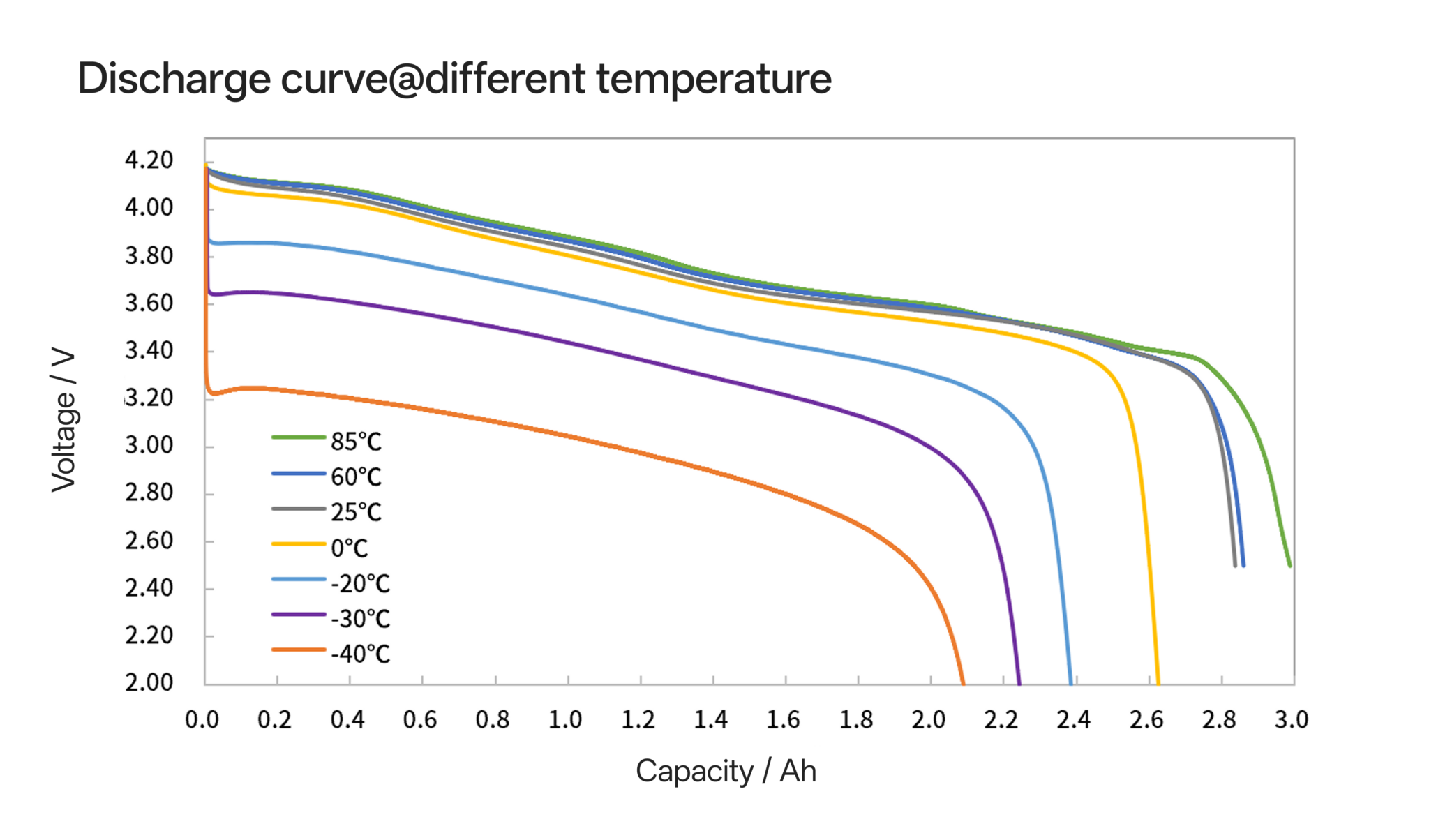
UltraXel HL18650V Discharge Curve at Different Temperature
The HL18650V is a 2,900mAh 18650 lithium-ion cell specified for discharge from −40°C to +85°C and charging from −20°C to +60°C.
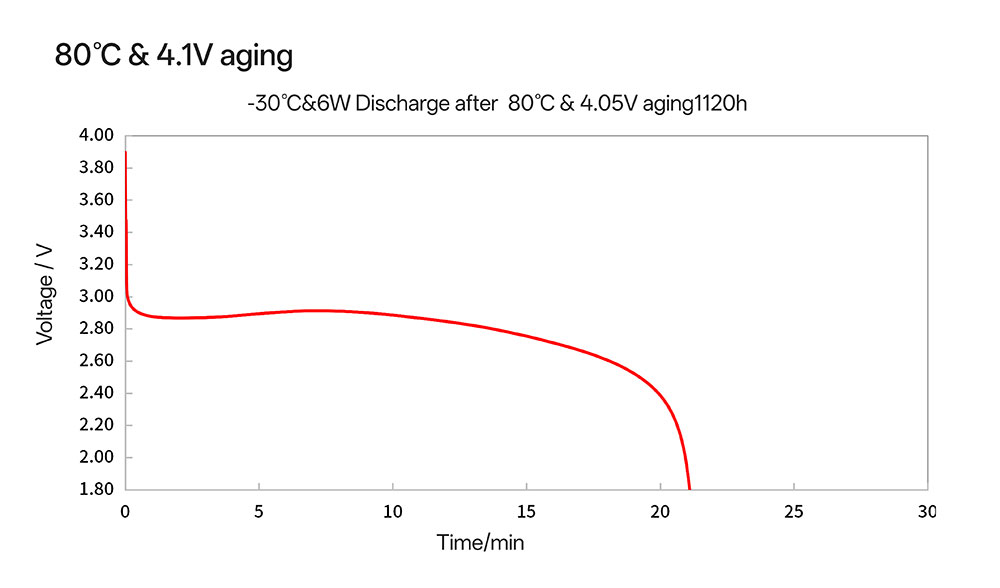
HL18650V Low-Temperature Discharge After Aging
Maintains 6W discharge at−30°C after 1,120h aging of storage at 80°C and 4.05V, demonstrating its durability under harsh environments.
Other UltraXel Low-Temperature Battery Options
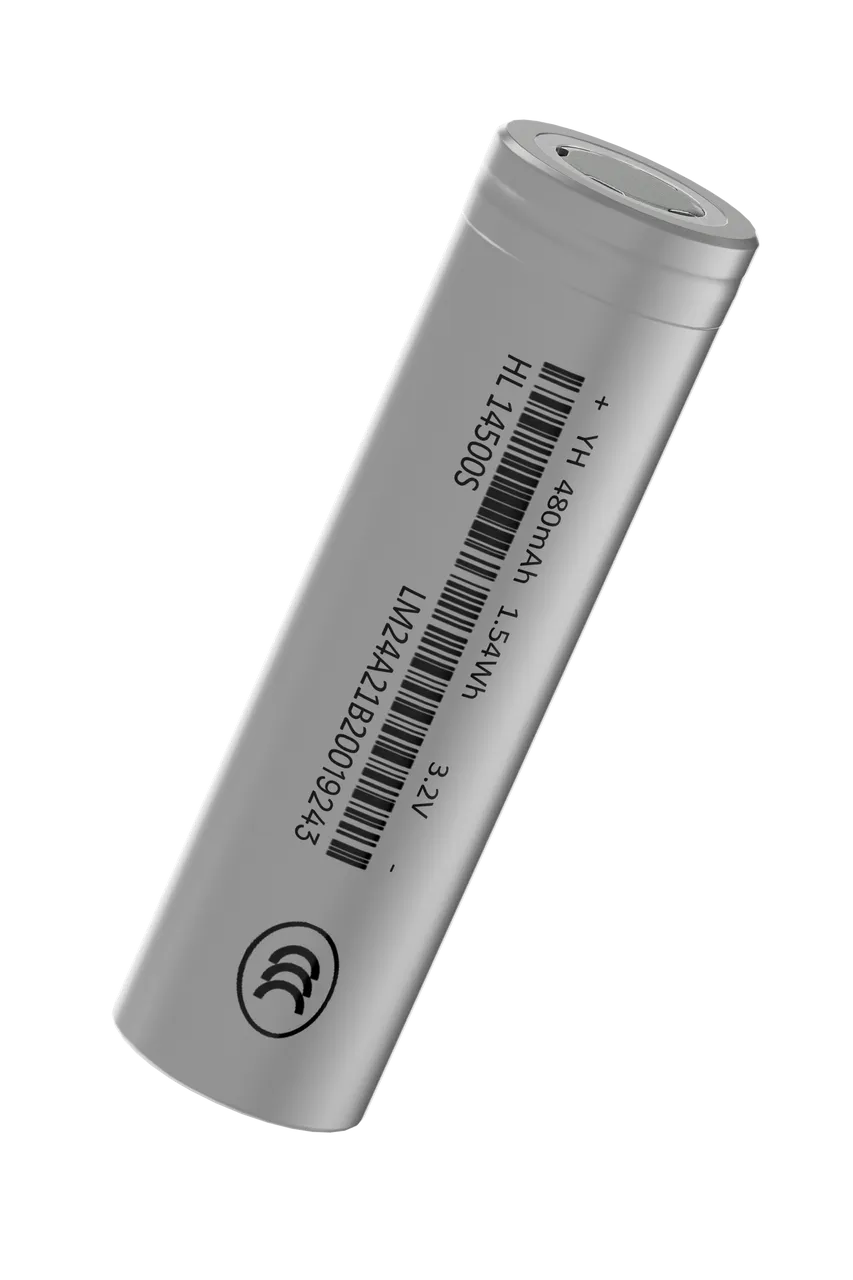
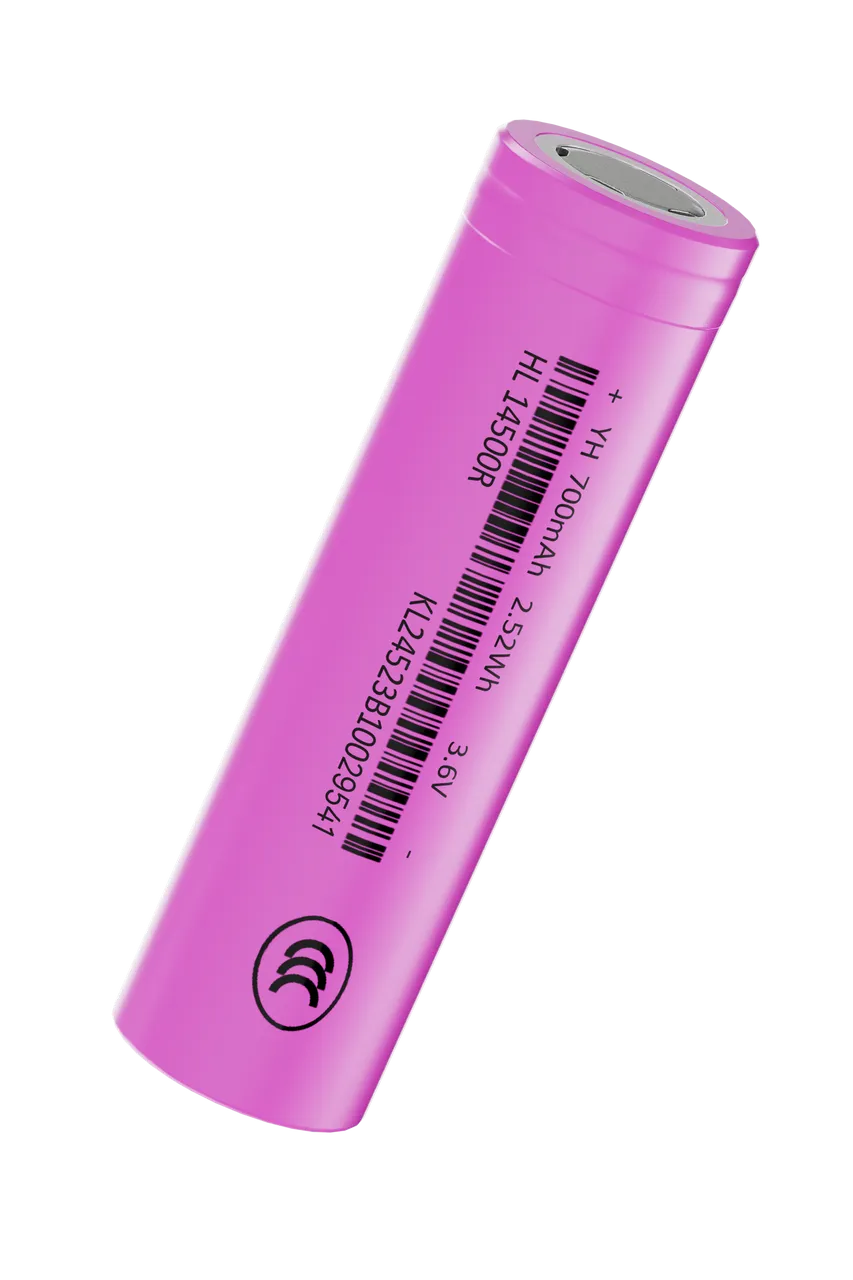
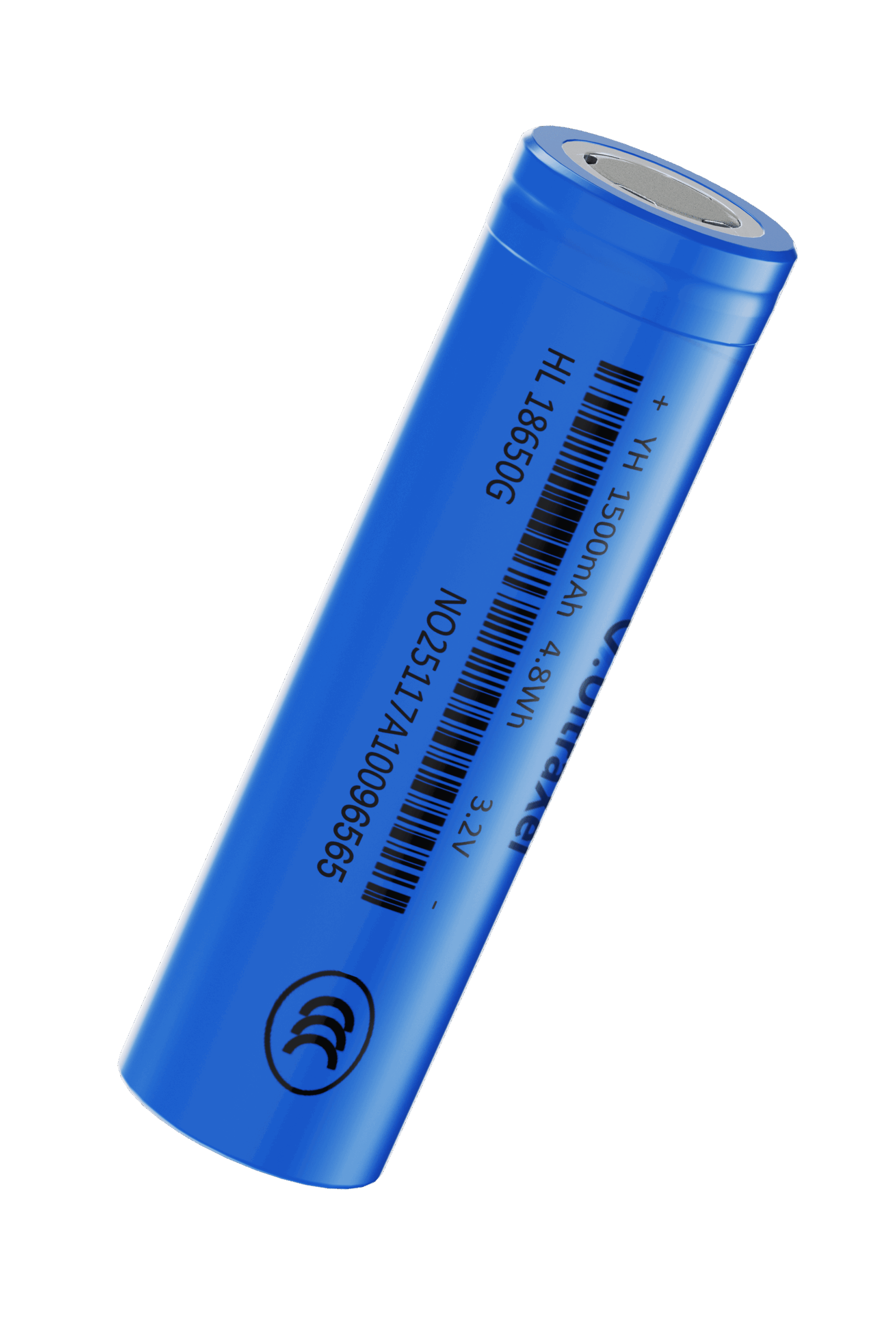
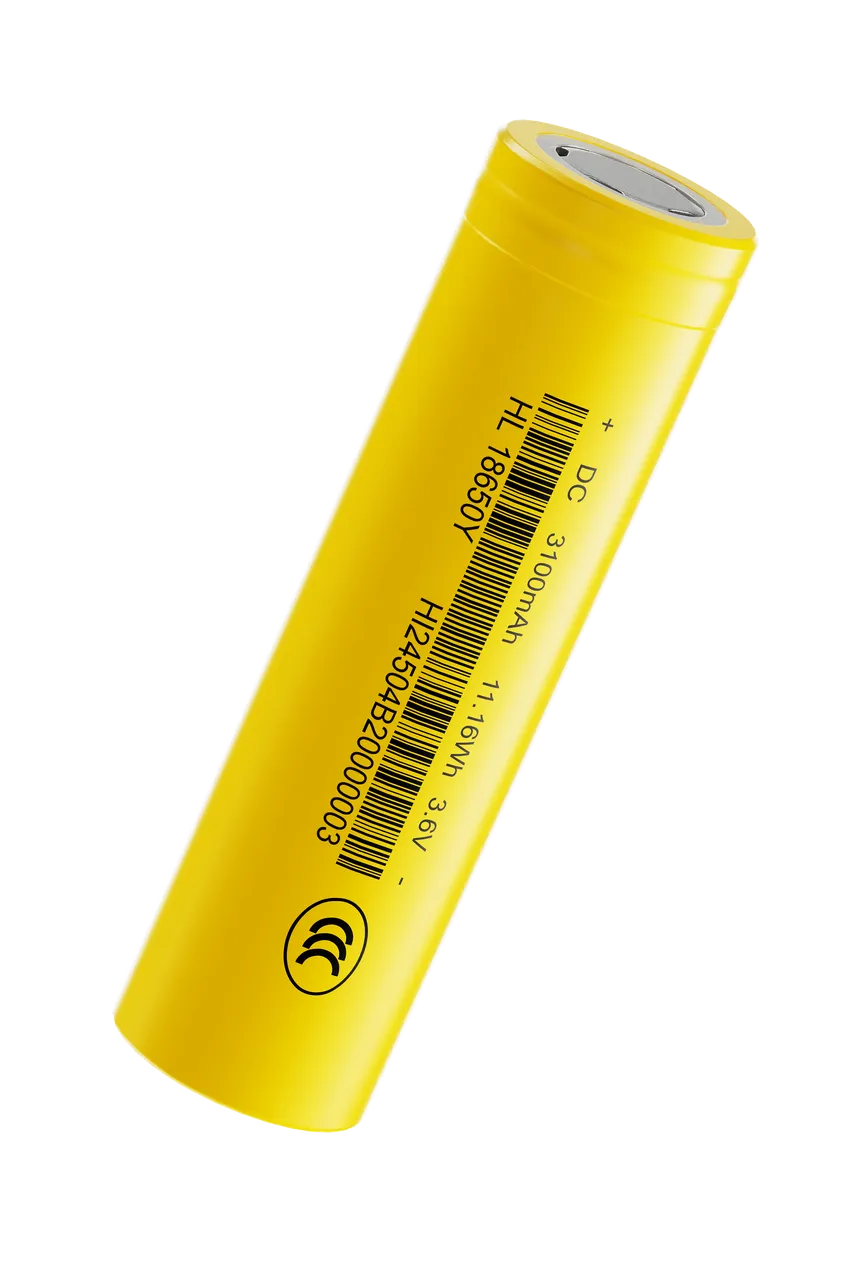
For the strongest low-temperature discharge performance highlighted here, HL18650V still remains the primary model to evaluate.
FAQ
How cold is too cold to charge a lithium battery?
Many standard lithium-ion cells restrict charging below 0°C (32°F). The correct limit depends on the exact cell; some low-temperature cells specify lower charging temperatures.
Can lithium batteries discharge below freezing?
Some can. Their minimum discharge temperature and performance vary by model. Check the cell’s discharge range and low-temperature performance data.
What is the best temperature for long-term lithium battery storage?
Follow the manufacturer’s storage specifications. 5°C to 20°C (41°F to 68°F) and 40–60% SOC are general reference points, not universal requirements.
Is the minimum operating temperature the same as the charging temperature?
No. Charging and discharging limits can differ. Check both ranges in the cell datasheet.
What information helps assess a low-temperature battery for an OEM project?
Share the minimum operating temperature, charging conditions, continuous and peak loads, required runtime, available battery space, and expected annual volume. This information helps determine whether a standard cell, low-temperature cell, or custom battery pack should be evaluated.
What is the best battery for cold weather?
A low-temperature lithium battery specifically rated for sub-zero operation is often the best choice for cold-weather applications. You can also read more about the best battery for cold weather.