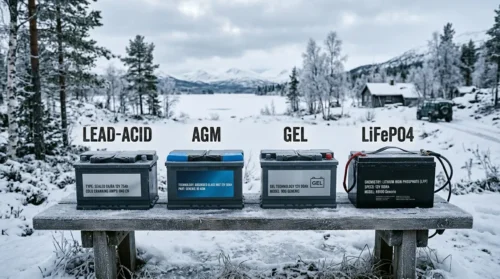
Lithium-ion and lead-acid batteries are both widely used in backup power, industrial equipment, vehicles and electronic systems, but they behave very differently in real-world operation.
Usable capacity, discharge rate, voltage stability, cycle life, weight, charging time, operating temperature and lifetime cost can all affect which battery is more suitable for a specific application.
For engineers and equipment manufacturers, the right question is:
“Which battery can provide the required energy, power and service life under my actual operating conditions?”
This guide compares lithium-ion and lead-acid batteries from both technical and application perspectives.
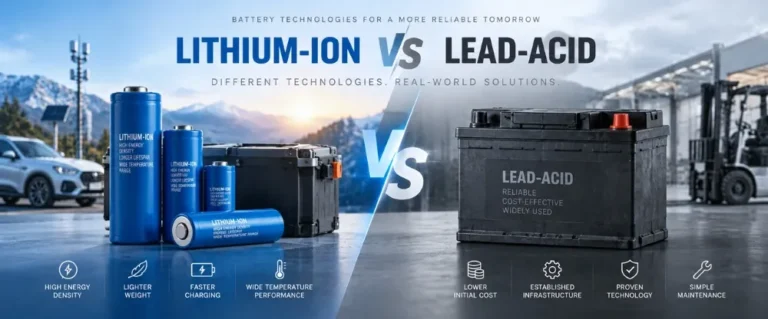
Lithium vs Lead-Acid Battery: Quick Comparison
| Parameter | Lead-Acid Battery | Lithium-Ion Battery |
| Nominal Cell Voltage | Approx. 2.0V | 3.2V LFP / 3.6–3.7V NCM |
| Energy Density | Approx. 30–50 Wh/kg | Approx. 90–160 Wh/kg LFP / 150–250 Wh/kg NCM |
| Weight | 2–4× heavier for comparable usable energy | 50–75% lighter for comparable usable energy |
| Usable Capacity | Around 50% DoD to extend service life | Commonly supports 80–100% DoD, depending on chemistry and design |
| Cycle Life | Approx. 300–1,000 cycles | Approx. 500–1,500+ cycles NCM / 2,000–5,000+ cycles LFP |
| Charging Time | Approx. 6–12 hours | Approx. 1–4 hours, depending on cell and charging rate |
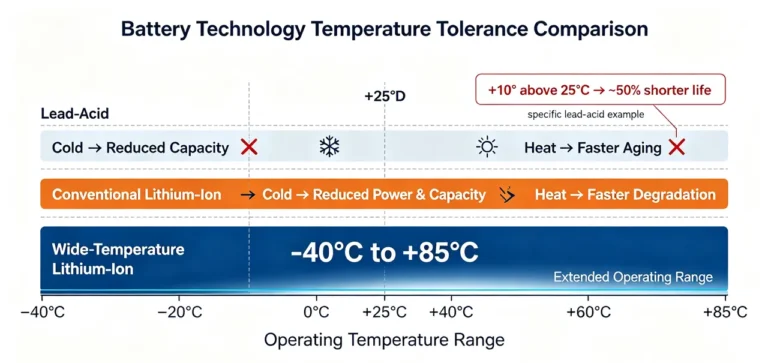
| Thermal Stability | High temperatures accelerate aging; some lead-acid products can lose about 50% service life per +10°C above 25°C | High temperatures also accelerate degradation; low temperatures reduce capacity and power. Wide-temperature cells can operate around −40°C to +85°C |
| Charging Efficiency | Approx. 70–85% | Approx. 90–95% |
| Self-Discharge | Approx. 3–5% per month | Approx. 1–3% per month |
| Cold-Temperature Discharge | Capacity drops significantly below 0°C | Around −20°C; specialized cells can reach −40°C |
| Cold-Temperature Charging | Charging below 0°C may be possible at reduced rates with proper control | Usually restricted below 0°C; specialized cells can support charging down to −20°C |
| Maintenance | Flooded types may require electrolyte checks and maintenance | Generally maintenance-free |
| Initial Cost | Lower upfront cost | Typically higher upfront cost |
| Service Life | Commonly around 2–5 years, depending on usage | Commonly around 5–10+ years, depending on chemistry and operating conditions |
Note: Values are representative ranges. Actual performance varies by chemistry, cell design, depth of discharge, charging conditions, and operating temperature.
What Is the Difference Between Lead-Acid and Lithium-Ion Batteries?
Both technologies store electrical energy through electrochemical reactions, but they use different active materials and cell structures.
Lead-Acid Batteries
A lead-acid cell uses lead-based electrodes and sulfuric acid electrolyte, with a nominal cell voltage of approximately 2V.
The lead-acid family includes several designs, such as:
- Flooded lead-acid
- Sealed lead-acid (SLA)
- VRLA
- AGM
- Gel batteries
Lithium-Ion Batteries
Lithium-ion batteries move lithium ions between positive and negative electrodes during charging and discharging.
“Lithium-ion” is also not a single chemistry. Common chemistries include:
- NCM batteries — higher energy density for compact, high-capacity applications.
- NCA — high energy density for selected high-performance systems.
- LiFePO4 / LFP batteries — commonly selected when cycle life, thermal stability or long-term durability is prioritized.
How Discharge Rate Affects Available Capacity
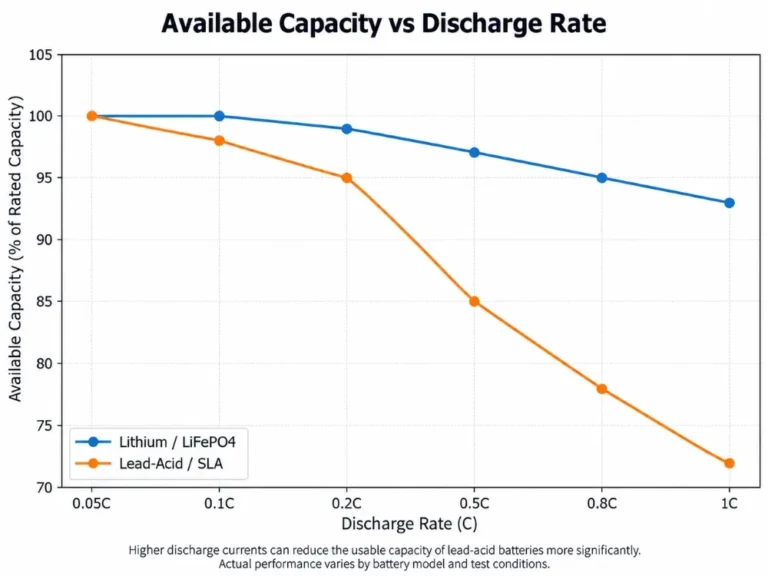
Discharge current has a particularly important effect on lead-acid batteries. As the discharge rate increases, the amount of capacity that can actually be delivered may fall because of the Peukert effect.
Lithium-ion batteries are generally less affected, although the degree depends on cell chemistry and construction.
In Power-Sonic’s published LiFePO4-versus-SLA example, its lead-acid battery delivers only about 60% of rated capacity at approximately 0.8C.
Voltage Stability During Discharge
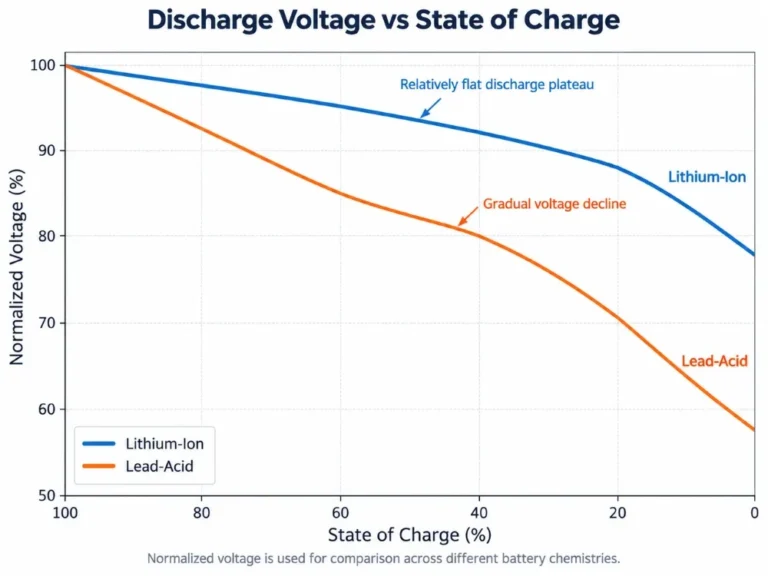
Lead-acid battery voltage generally decreases progressively as state of charge falls.
Lithium-ion batteries typically maintain a flatter discharge voltage through a larger portion of their usable capacity before voltage decreases more rapidly near the end.
For equipment requiring stable operating voltage, this can be particularly important.
Lithium vs Lead-Acid Battery Lifespan
Cycle life measures how many charge/discharge cycles the battery can complete before reaching a specified end-of-life condition.
Calendar life measures aging over time, even when the battery is not constantly cycled.
How Depth of Discharge Affects Battery Life
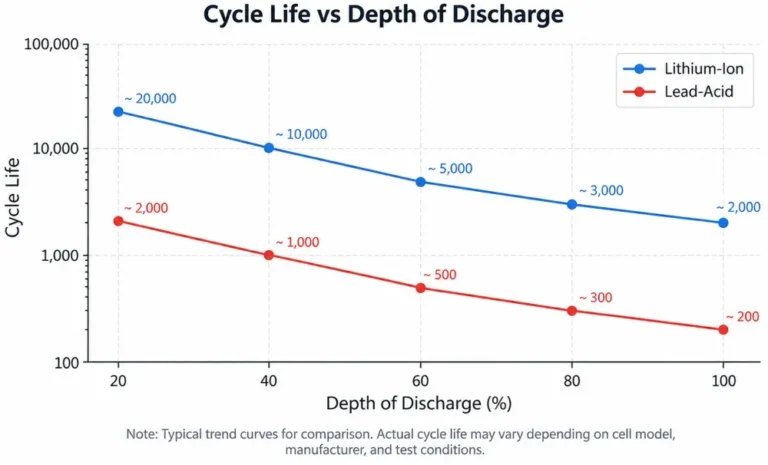
Lead-acid batteries are particularly sensitive to frequent deep cycling.
Lithium-ion batteries generally allow a larger proportion of stored capacity to be used regularly, although recommended DoD still depends on the individual battery.
For instance, EnergySage uses approximately 85% DoD for lithium-ion and 50% for lead-acid in its residential energy-storage comparison.
Lithium vs Lead-Acid Battery Weight and Energy Density
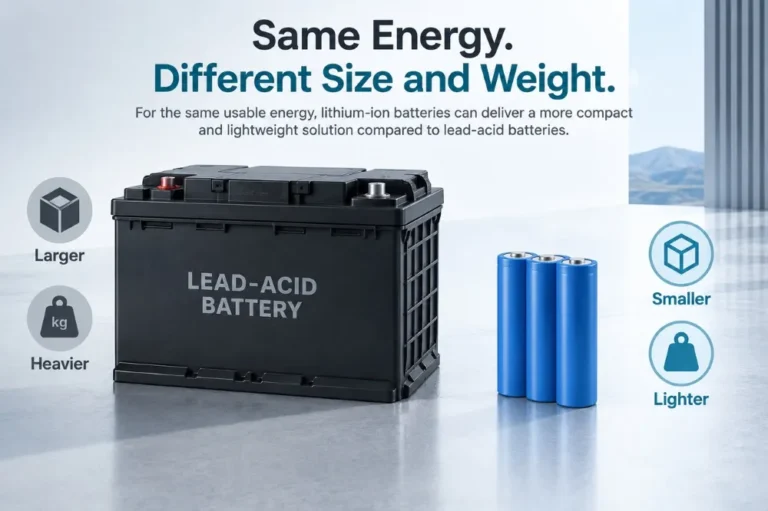
Lithium-ion batteries have significantly higher energy density than traditional lead-acid batteries.
For stationary installations, weight may not always be the primary decision factor. For mobile and embedded applications, however, it can directly affect product design.
A lighter battery provides: Smaller enclosure requirements, easier installation and lower total equipment weight.
Power-Sonic reports lithium batteries in its SLA comparison as approximately 55% lighter on average, although the actual difference depends on the specific products being compared.
Lithium vs Lead-Acid Battery Charging
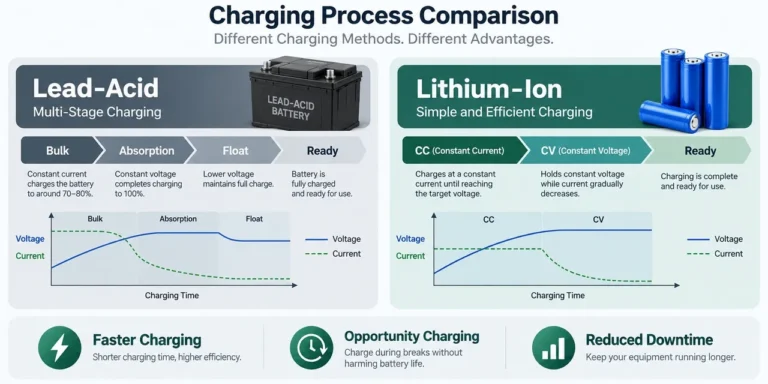
Lead-Acid Battery Charging
Lead-acid charging commonly includes:
The absorption stage slows as the battery approaches full charge. Some standby lead-acid systems are also maintained on float charge for long periods.
Lithium-Ion Battery Charging
Rechargeable lithium-ion cells typically use:
Lithium-ion batteries can often support higher charge rates and opportunity charging, depending on the cell and battery-system design.
Lithium-Ion vs Lead-Acid Thermal Stability
Temperature has a significant impact on both lithium-ion and lead-acid batteries, but their limitations are different.
- High temperature: Lead-acid battery life can decrease by about 50% for every 10°C increase above 25°C in some applications. Lithium-ion degradation also accelerates as temperature rises.
- Low temperature: Cold reduces the capacity and power of both chemistries. Lithium-ion batteries may also require charging restrictions below 0°C.
- Thermal management: Lithium-ion packs generally require BMS-based temperature monitoring and protection, especially in extreme environments.
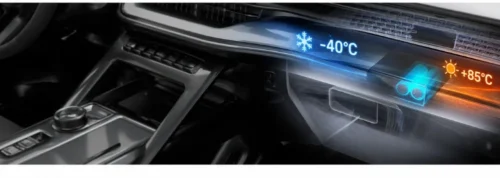
- Wide-temperature advantage: Specialized lithium-ion cells can extend the operating range to around −40°C to +85°C, providing a wider temperature window than conventional battery designs.
Lithium vs Lead-Acid Battery Performance in Cold Weather
As temperature decreases:
- Internal resistance can rise.
- Electrochemical reactions slow.
- Available capacity decreases.
- Voltage under load may fall.
- Power capability may be reduced.
Both chemistries lose capacity at low temperatures, but the degree of reduction depends heavily on the battery design.
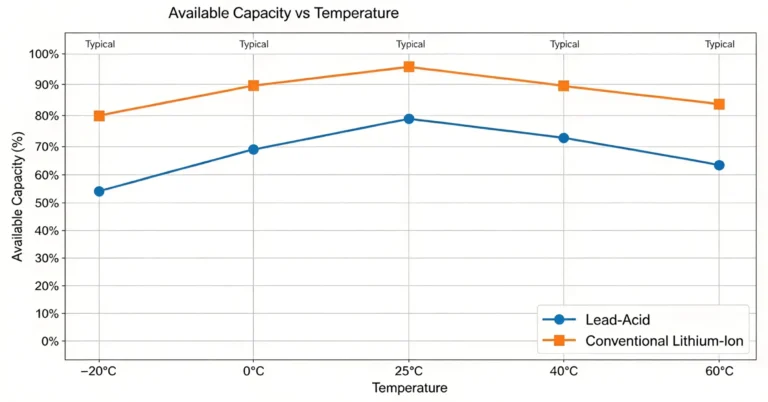
Power-Sonic reports that in its LiFePO4-versus-SLA comparison at 0°F / about −18°C, the LiFePO4 battery provides around 70% of rated discharge capacity, compared with approximately 45% for SLA.
Most lithium-ion batteries will achieve the same cold-temperature performance. Standard consumer-grade lithium-ion cells may experience substantial performance reduction as temperatures approach −20°C or −40°C.
Standard Lithium-Ion vs Wide-Temperature Lithium-Ion
Most conventional lithium-ion cells are designed around a moderate temperature range. Equipment installed outdoors, inside vehicles or in industrial enclosures may experience conditions far beyond normal room temperature.
Take UltraXel wide-temp lithium cells as an example. You can see the differences between standard Li-ion and UltraXel wide-temp Li-ion batteries in various conditions.
| Temperature | Standard Li-ion | UltraXel Wide-Temp Li-ion |
| 25°C | 100% | 100% |
| −20°C | Approx. 55% | Approx. 85% |
| −40°C | Severe limitation | Approx. 70% |
| Environmental Monitoring | Outdoor reliability, long deployment | Wide-temperature lithium |
| Smart City & Utility IoT | Long standby, communication pulses | Lithium-ion / wide-temperature lithium |
| Industrial Equipment | Power, cycle life | Lithium-ion |
| Portable Instruments | Weight, runtime | Lithium-ion |
| Backup Systems | Reliability, cost, standby | Application dependent |
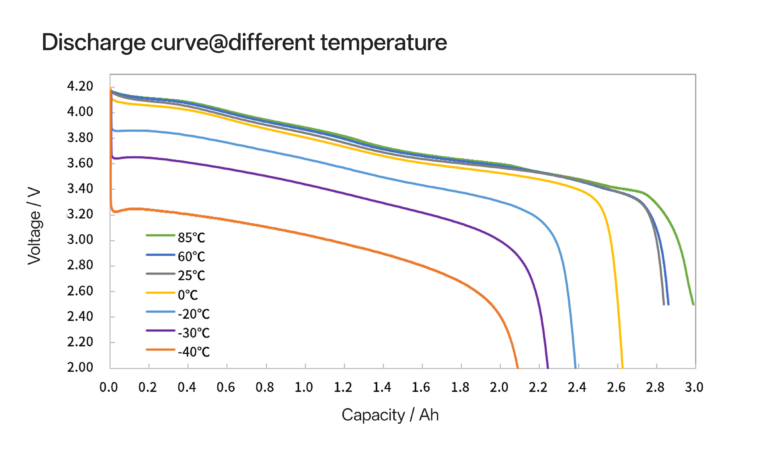
UltraXel wide-temperature lithium cells are for discharge operation from:
Selected models can support charging down to:
This provides another option for equipment that needs the size, weight and energy-density benefits of lithium-ion while operating outside the temperature range of conventional cells.
UltraXel Low-Temperature Lithium Battery Performance
For cold-weather applications, UltraXel offers lithium-ion cells specifically developed for improved low-temperature discharge.
HL18650V
The wide-temperature design can significantly improve usable capacity under freezing conditions.
UltraXel High-Temperature Lithium Battery Performance
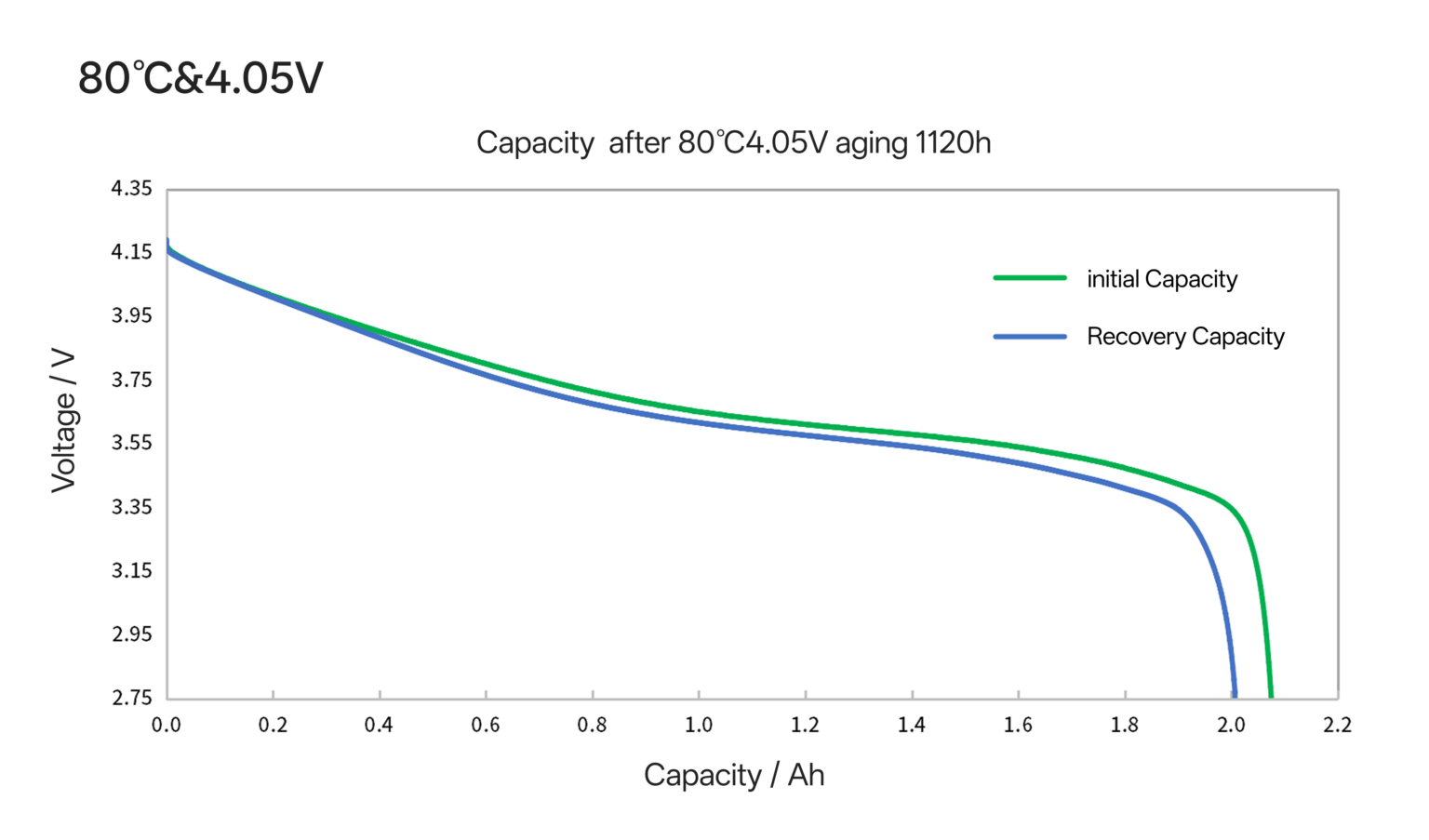
UltraXel’s HL18650T is designed for applications where high-temperature storage and long-term backup performance are key requirements.
HL18650T
These characteristics make the cell suitable for applications such as:
T-Box and eCall systems, dash cams, automotive electronics, outdoor surveillance and other equipment installed in high-temperature environments.
Other Recommended UltraXel Wide-Temperature Cells
| Model | Chemistry | Capacity | Max. Discharge | Key Feature |
| HL14500R | NCM | 750mAh | 3.5A | Compact wide-temperature solution |
| HL14500S | LFP | 500mAh | 2.4A | 1000+ cycles |
| HL18650F | NCM | 3000mAh | 30A | High-power applications |
| HL18650G | LFP | 1600mAh | 7.5A | 1500+ cycles |
| HL18650Y | NCM | 3200mAh | 10A | Maintains 70% capacity at -40°C |
| HL32140L | LFP | 15Ah | 3C | 2000+ cycles |
Can You Replace a Lead-Acid Battery With Lithium?
Often Yes — But Not by Matching Ah Alone
Replacing a lead-acid battery with lithium-ion can improve weight, usable energy, charging performance or cycle life.
However, the replacement is not automatically a drop-in solution. The same voltage and Ah rating does not automatically mean the batteries are interchangeable.
Replacing Lead-Acid With Wide-Temperature Lithium Batteries?
Send us your existing battery voltage, capacity, load current, charger specifications and operating temperature. UltraXel can help find suitable wide-temp lithium cell configuration for your custom battery pack.
Request a Battery SolutionFAQ
What is the difference between lead-acid and lithium-ion batteries?
The two technologies use different electrode materials and electrolytes, which results in different voltage, weight, energy density, charging behavior, cycle life and temperature characteristics.
Lithium-ion batteries also includes multiple chemistries, such as NCM batteries and LiFePO4 batteries, which should not be treated as identical.
Do lithium batteries last longer than lead-acid batteries?
In many cyclic applications, lithium-ion batteries provide a longer cycle life. Actual lifespan depends on chemistry, depth of discharge, temperature, charge method and operating conditions.
Do lithium batteries charge faster than lead-acid batteries?
Lithium-ion batteries generally support faster charging, although the permitted charge current depends on the specific cell.
Lead-acid batteries normally require a longer absorption stage as they approach full charge.
Are lithium batteries lighter than lead-acid batteries?
Yes, lithium-ion generally provides higher gravimetric and volumetric energy density. This allows a battery with similar stored energy to be smaller and lighter.
Which performs better in cold weather: lithium or lead-acid?
Both technologies lose capacity in cold conditions. Performance depends on the specific chemistry and cell design.
Conventional lithium-ion also has important low-temperature charging limitations, while specially developed wide-temperature lithium cells can extend both discharge and charging capability.
Can lithium-ion batteries charge below 0°C?
Many conventional lithium-ion batteries restrict charging around or below 0°C. Specially designed wide-temperature solutions can extend this range. Selected UltraXel cells support charging down to −20°C.
Can I replace a lead-acid battery with lithium-ion?
In many applications, yes, but replacement should be based on voltage range, required Wh, load current, charger compatibility, BMS, temperature range, dimensions and connector—not simply matching Ah.
Which battery is safer: lithium or lead-acid?
Lead-acid systems must manage acid, gas and ventilation risks, while lithium-ion systems require electrical protection, temperature monitoring and appropriate battery-management design.